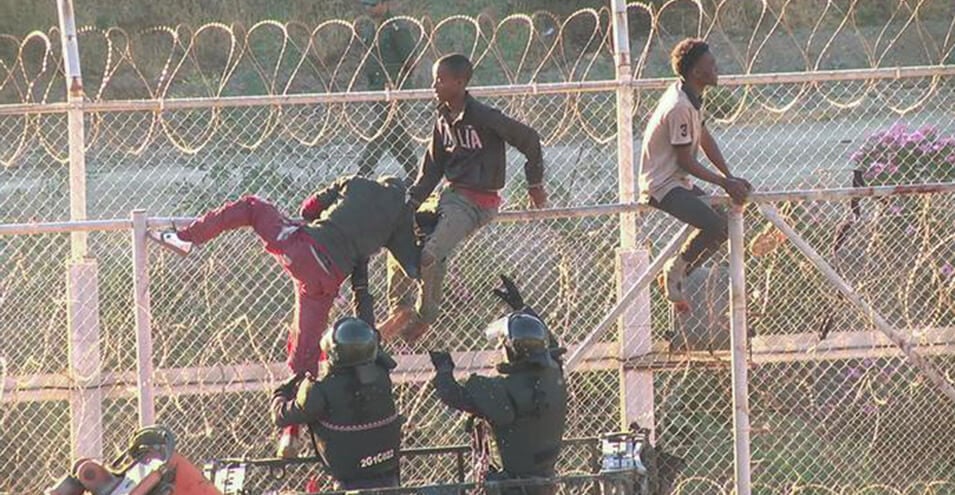
A Historic Turning Point in Sweden’s Immigration and Refugee Policy
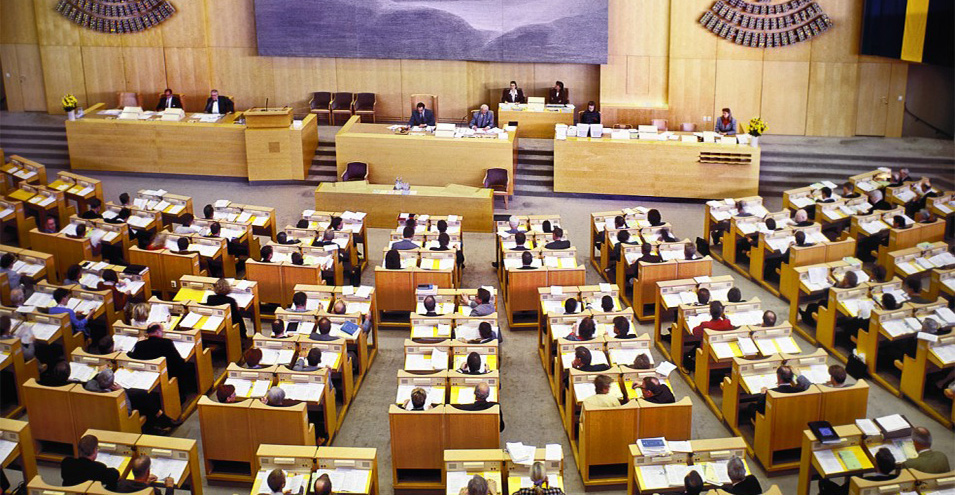
Sweden implements the strictest refugee laws in the European Union.
A Historic Turning Point in Sweden’s Immigration and Refugee Policy
Sweden implements the strictest refugee laws in the European Union
Immigration Minister:
The most difficult mission I have undertaken during my 20 years of high-level political activity
Stockholmian – The eyes of all those interested in and involved in Sweden’s refugee policy will be fixed on Parliament during Monday and Tuesday, June 20-21. Sweden is about to change its position from being the most generous country in the European Union, and perhaps the world, regarding refugee policy to the strictest in Europe by modifying its immigration and refugee laws.
At 11 AM on Monday, June 20, representatives of 8 parliamentary parties will discuss the government’s proposal to change Sweden’s immigration and refugee laws, which has been submitted by the Social Democrat-Green Party coalition government.
Tuesday, June 21 will be a fateful day when 349 Swedish parliamentary representatives will vote to approve or reject Sweden’s new immigration and refugee laws, which have been called “the strictest in the European Union.”
Simultaneously, extensive protests are planned by refugee rights organizations in front of Parliament in Stockholm during these days.
If the government’s proposal is approved in Tuesday’s parliamentary vote, Sweden’s new immigration and refugee laws, which are set to be implemented temporarily for 3 years, will take effect one month later, precisely from July 21, 2016. The new strict laws, titled
“A Proposal for Temporary Restriction of the Possibility of Obtaining Permanent Residence in Sweden,”
will apply to
all individuals who have applied for refugee status in Sweden after November 24, 2015.
However, what are the provisions of the new strict refugee laws that the government hopes will be approved by Parliament in Tuesday’s vote on June 21?
According to the Stockholmian correspondent who has reviewed the new bill, its provisions are so complex and contain various legal exceptions and stipulations that, without doubt, after approval it will become a major challenge for the immigration authority to implement, and on the other hand, it will create confusion among asylum applicants.
Even Morgan Johansson, Sweden’s Immigration Minister, at the beginning of his press conference to explain details of the new refugee laws, referred to the “legal complexity” in this regard and described its regulation as “the most difficult mission I have undertaken during my 20 years of high-level political activity.”
But what are the most important provisions of the final version of the government’s proposal to impose stricter regulations on Sweden’s refugee acceptance policies? The Stockholmian, in cooperation with the Swedish Immigrant Information Center, has extracted and translated the most important provisions of Sweden’s new immigration and refugee laws, which will be discussed in Parliament on Monday and voted on the following day (Tuesday), and presents them below for readers.
The Most Important Points in the “Proposal for Temporary Restriction of the Possibility of Obtaining Permanent Residence in Sweden”
– The new strict laws that will be voted on in Parliament on Tuesday, June 21, will be implemented starting July 20, 2016, but will also include some individuals who submitted their asylum applications before this date. Sweden’s refugee laws will be aligned with the minimum standards of the European Union, which are far stricter than Sweden’s current laws.
– Children and families with children who submitted their asylum applications before November 24, 2015, will not be subject to the new strict laws.
– After the passage of this law, asylum applicants will not be able to obtain permanent residence; instead, temporary residence will be issued to all eligible refugees.
The duration of temporary residence for applicants recognized as “refugees” under the Geneva Convention will be 3 years, and for applicants recognized as having “need for protection” will be 13 months. After the temporary residence period ends, if the need for asylum and protection still exists, it will be extended.
– Converting temporary residence to permanent residence will be conditional on meeting one of the following two conditions:
0 Having employment with sufficient income to support oneself and family. Note: Internships (praktik) and jobs provided through the employment agency with government subsidies will not be usable for converting temporary to permanent residence.
or
0 Successfully obtaining a high school diploma in Sweden for applicants under 25 years of age.
United Nations quota refugees will receive permanent residence from the beginning of their entry into Sweden and are exempt from this condition.
– Bringing family members to Sweden for asylum seekers who are not recognized as “refugees” but have successfully obtained residence due to “need for protection” will be severely restricted. Such individuals will be forced to wait years to bring their family members to Sweden, or in some cases may not be able to do so at all. Only individuals who submitted their asylum applications before November 24, 2015, and also asylum seekers recognized as “refugees” will be allowed to, despite having temporary residence, submit family reunification requests to the immigration authority for their spouse and children under 18 years old remaining in their home country.
– The condition of having sufficient income to support oneself for non-refugee immigrants with residence in Sweden who wish to bring dependents to Sweden (for example, a spouse) will also become stricter.
Such applicants will only be able to bring their dependents to Sweden if they have employment with sufficient income to support themselves and the dependent coming to Sweden. This condition does not apply to children joining their parents in Sweden. The income requirement does not apply to individuals recognized as “refugees” and those who have obtained residence due to “need for protection” and their family members if they submit requests to join them within the first three months after receiving their residence. Individuals who submitted their asylum applications before November 24, 2015, are also not subject to the sufficient income requirement for bringing family members to Sweden.
– The condition of having sufficient income to bring a dependent to Sweden (for example, a spouse) in the new laws will also apply to Swedish citizens, European citizens, and all residence holders in Sweden, regardless of nationality.
– The possibility of obtaining residence for individuals who are not considered refugees but have so far been able to obtain residence due to strong reasons indicating need for protection will be severely restricted (according to the Stockholmian expert, effectively eliminated).
– Individuals entering Sweden as “unaccompanied refugee children” will undergo specific medical tests to determine their actual age so that undocumented adults cannot misrepresent themselves as “children” by concealing their actual age.
– “Unaccompanied refugee children” who reach 18 years of age at the time of decision-making on their cases will also be subject to the new strict laws, even if they previously entered Sweden before age 18.
Simultaneously with the tightening of refugee acceptance laws, extensive measures are also being implemented in cooperation between police and the immigration authority to expel those asylum applicants who received negative responses to their asylum requests and still remain in Sweden.
Anders Ygeman, Sweden’s Interior Minister, has stated that the number of asylum applicants who will be forced to leave Sweden after the passage of the new laws is estimated at between 60,000 and 80,000 people.