New exhibition of "Dead Sea Scrolls," a reinterpretation of faith and authenticity in the modern era
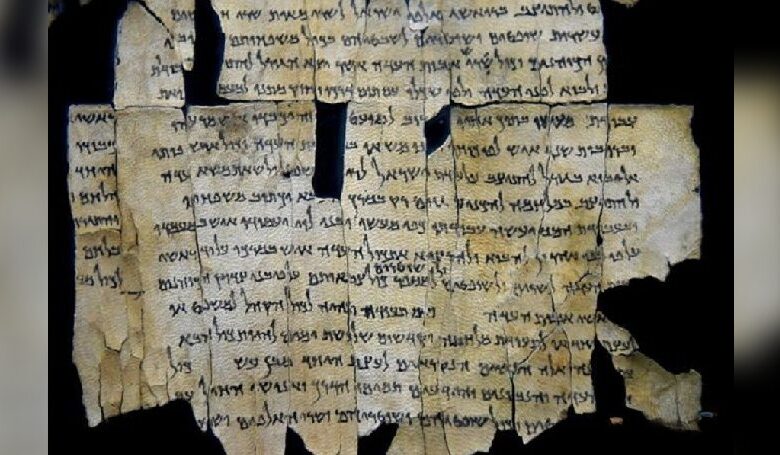
By displaying original copies of the Qumran scrolls, the Museum of the Bible invites faith, authenticity, and research into dialogue before the eyes of the world.
Washington, the capital of the United States, will witness an event in November 2025 that, for many Christians around the world, means more than just a historical exhibition: the Dead Sea Scrolls, texts that have emerged from the depths of centuries and speak of the origins of the Bible, will once again be on display at the Museum of the Bible.
A new exhibition, organized in collaboration with the Israel Antiquities Institute (IAA), is entitled “The Dead Sea Scrolls: The Exhibition is a rare opportunity to come face-to-face with the manuscripts that many scholars say have transformed our understanding of the Bible and the history of faith.
The discovery of the Dead Sea Scrolls in the 1940s in the Qumran caves on the western shore of the Dead Sea was one of the greatest archaeological discoveries of the 20th century. Containing portions of the Old Testament and the liturgical writings of a Jewish community in the centuries BC, these texts not only established the authenticity of the sacred texts but also revealed the historical and spiritual depth of the faith.
For millions of Christians, these scrolls are living testimony to the promise found in the book of Isaiah: “The grass withers, the flower falls, but the word of the Lord stands forever.” (Isaiah 8:40)
The Museum of the Bible, which in previous years had faced challenges regarding the authenticity of some of its earlier examples, emphasizes complete transparency and scientific verification of the works in its new display.
In 2020, independent research revealed that several of the scrolls on display in the museum's early years were forgeries. The museum now exhibits only authentic, authenticated specimens, working directly with Israeli archaeologists and reputable academic institutions.
"This exhibition is not just about ancient artifacts, but about our integrity in preserving the Word of God. Our faith is not based on objects, but on truth," the museum's director said in a statement.
In the Christian media, the news of the new exhibition of the Qumran Scrolls has been met with enthusiasm. “Every time we see the Dead Sea Scrolls, we are reminded of our faith: that God has spoken in history and is still speaking,” Father Jonathan Michael, a theology professor at the University of Notre Dame, told Christianity Today.
Among church leaders, the exhibition is seen as an opportunity to discuss the relationship between faith and science. “The display of the scrolls in the U.S. capital is a reminder that faith and scholarship are not in conflict but in service to each other. Truth, whether it is in the pages of the Bible or in the caves of Qumran, belongs to God,” said Cardinal Thomas Martin of the World Council of Churches.
The exhibition of the Qumran Scrolls in Washington is not only a cultural event, but also a sign of the global connection between Christians, Jews, and all seekers of divine truth. In this exhibition, visitors will not only see ancient manuscripts, but also encounter new technologies that allow the digital study of the texts and their translations.
"Every time I see one of these pieces, I feel like a bridge is being built between the past and the present, built on the pillar of faith," says Dr. Elizabeth Strong, a researcher of Hebrew texts at Boston University.
The display of the scrolls in Washington also holds special meaning for many Christians in the Middle East. The scrolls, which were found in the Holy Land, are now being displayed in a country where millions of Christians live.
In Lebanon, Jordan, and Iran, local church leaders have seen the event as “a call to return to the original word.”
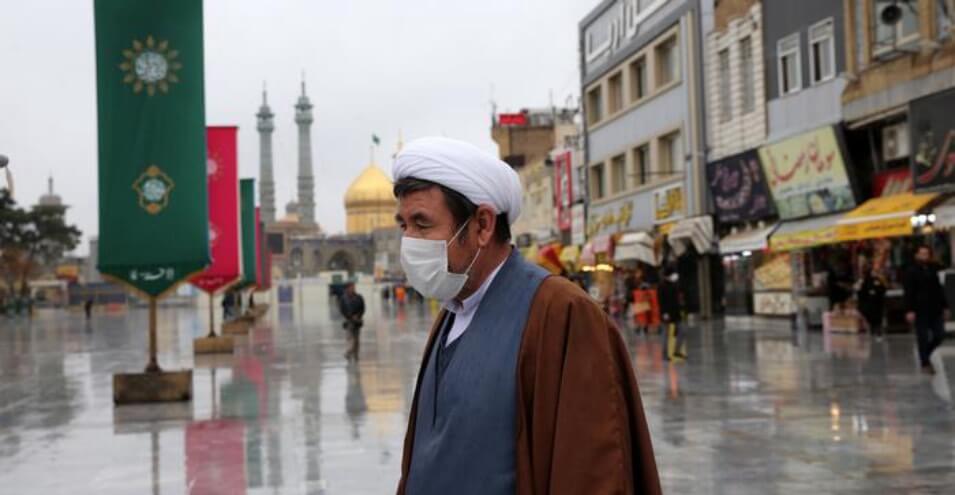
“Seeing these works anywhere in the world is a reminder of our unity in faith. The word of God knows no borders,” said an Assyrian priest in Tehran in an informal conversation.
In a world where truth is often lost in the noise of information, the display of the Dead Sea Scrolls has a simple but profound message: “The word of God endures, though times change.”
This event can be an opportunity for a new generation to reconnect with the roots of faith and sacred history, not as a relic of the past, but as an invitation to the living presence of God in the human present.
The new Dead Sea Scrolls exhibit at the Museum of the Bible in Washington, D.C., is a fusion of science, faith, and humility in the face of truth. From the caves of Qumran to the modern halls of Washington, D.C., these scrolls testify that the word of God rose from the dust to dwell anew in the hearts of men.
And perhaps this exhibition, more than anything else, is a response to the call of the prophet Isaiah: “Come, everyone who thirsts, to the waters.” (Isaiah 55:1)