Officials warn of increase in robbery gangs due to poverty and unemployment

Officials in Iran attribute the increase in the activity of "gangs" stealing homes and cars in the country to the closure of factories, rising youth unemployment, increasing economic inequalities, and impoverished families.
Statistics from the Greater Tehran Police alone show that in the past 10 months of 2018, more than 193 car theft gangs were arrested.
Alireza Lotfi, head of the Greater Tehran Police, confirmed the "increase" in the number of car thefts and said that police activity in dismantling these theft gangs has increased by about 22 percent compared to 2017.
He did not explain the increase in the number of these gangs, but at the same time said that the number of police discoveries of these thieves' hideouts has increased by nearly 16 percent compared to 2017.
Police statistics in the capital and provincial capitals also indicate an increase in the incidence of theft and various crimes, such that in the first six months of 2018 alone, six million and 500 thousand phone calls related to incidents were received by the capital's police, in 3,600 of which operational officers were involved.
Higher poverty line, more crimes
The Majlis Research Center has considered the increase in thefts and crimes to be one of the results of impoverished families and unemployment of young people, especially educated youth, and announced that the poverty line has increased by 9 to 11 percent in all different regions of Iran from the spring of 2017 to 2018.
Iranian news agencies, citing economic and labor representatives and activists, liken poverty in cities and villages to a "rebellious and unbridled horse" that tramples on the lives of families, and this causes crimes to take shape in inappropriate and "tight" conditions.
Hassan Lotfi, a member of the Iranian Parliament's Social Commission, links the increase in theft, violence, divorce, and addiction in the country to increasing social inequalities and "inefficient management" by officials.
Some, like Habibollah Keshtzar, a member of parliament, question the neglect of young people and ask: "Haven't people's homes gradually become mental asylums for young people?"
Addressing the country's officials, this MP considers the "main threat" to Iran today not to be Trump and ISIS, but rather unemployment and poverty.
Theft in “the prevailing economic conditions”
Poverty and the closure of many workshops and factories in recent months have been considered the root of many social problems and crime.
Homayoun Hashemi, a member of the Omid parliamentary faction, refers to the closure of factories and the formation of some labor protests and strikes, and attributes the protests of the people and workers to "hunger and poverty."
Previously, the Attorney General of Iran had reported an increase in the number of robberies in the country and cited "prevailing economic conditions" and unemployment as reasons for the increase in robberies.
According to Mohammad Jafar Montazeri, the Attorney General of Iran, based on statistics from the judiciary and law enforcement, theft, with a growth of 19 percent, ranks second in the country's crimes after drug-related crimes.
Montazeri considered the closure of factories and workshops to be among the structural factors behind the increase in theft and warned officials to be aware that the "current state of society" is causing an increase in crimes in economic terms.
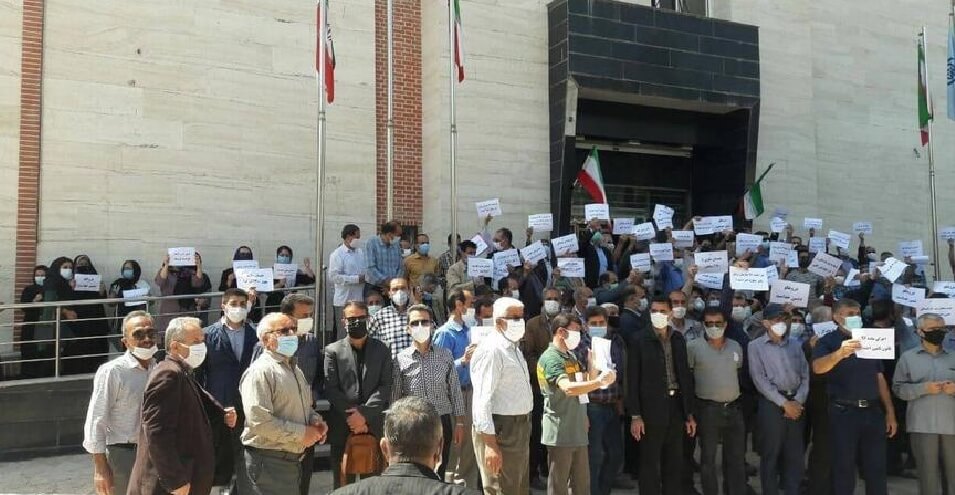
In recent months, a large number of workers in Iran, including workers at the Haft Tappeh sugar cane factory in Khuzestan, the Isfahan steel factory, and dozens of other workshops and factories, have protested the closure of their workplaces and the failure to receive their arrears of wages.
Esmael Bakhshi, a spokesman for Haft Tappeh Sugarcane, during these same labor protests, referred to the issue of social harm caused by unemployment and lack of money for families and asked officials whether they could tolerate their family members going without food for a day.
The current poverty alleviation policies of the Hassan Rouhani government, such as the 45,500-toman subsidy and the distribution of baskets of goods, which are currently accompanied by long lines for the distribution of frozen meat, have not been able to help households, according to experts at the Majlis Research Center. Everyone believes that a new plan must be put in place.
Source: DW