The Islamic Republic's reaction to the Atomic Energy Agency's report on the Karaj complex
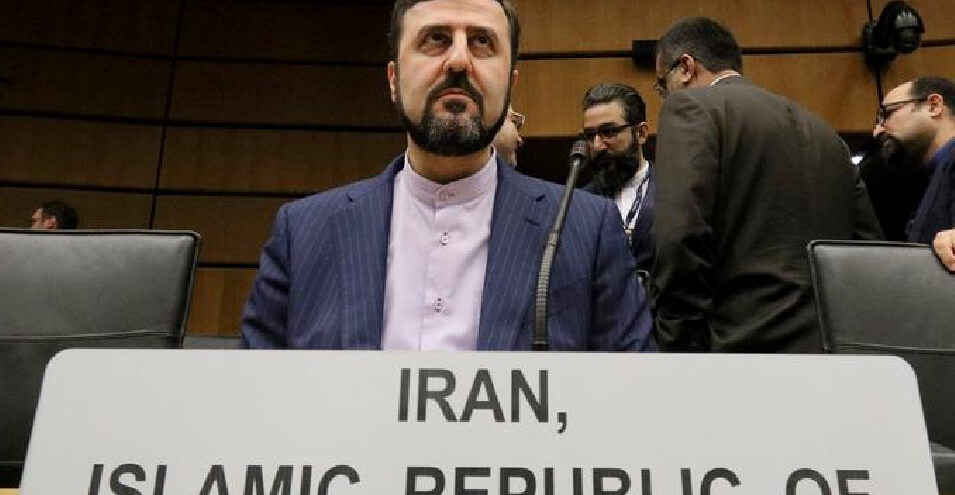
The Ambassador and Permanent Representative of the Islamic Republic to the Vienna-based international institutions called the International Atomic Energy Agency’s report “inaccurate.” In his recent report, Rafael Grossi had mentioned the advanced centrifuge parts production complex in Karaj.
Kazem Gharibabadi, the Ambassador and Permanent Representative of the Islamic Republic of Iran in Vienna, called the recent report by the Director General of the International Atomic Energy Agency regarding the Agency's lack of access to surveillance cameras at the Karaj Tsai complex "inaccurate" and referred to it as an issue "beyond the understandings reached" in the agreement between Iran and the Agency.
Gharibabadi was referring to the recent visit to Tehran by Rafael Grossi, Director General of the International Atomic Energy Agency. Grossi traveled to Tehran in connection with the monitoring of the agency's inspectors and reached an agreement with Mohammad Eslami, head of the Atomic Energy Organization of Iran. Now, the agency says in its latest report that the Islamic Republic is "not fully implementing this agreement."
The German news agency, publishing a report from Vienna, addressed the statements of the spokesperson for the International Atomic Energy Agency regarding the level of cooperation between the Islamic Republic and the agency.
On the evening of Sunday, September 26, Rafael Grossi, Director General of the International Atomic Energy Agency, published a new report on the monitoring of the agency's inspectors on Iran's nuclear activities.
After the publication of the Grossi report, a spokesman for the agency said that the Islamic Republic "prevented agency inspectors from inspecting a complex where parts needed for advanced centrifuges are produced."
The IAEA spokesperson is referring to the Karaj Tsai complex. The restrictions imposed on the monitoring of the agency's inspectors are contrary to the agreement announced on June 12 by Grossi with the head of the Atomic Energy Organization of the Islamic Republic of Iran.
According to the aforementioned agreement, the Islamic Republic agreed to replace the memory cards of the Agency's surveillance cameras at its nuclear facilities.
The Islamic Republic of Iran has claimed that the agency's cameras at the Karaj workshop were damaged during a "terrorist attack."
In several Twitter posts, Gharibabadi claimed that the Islamic Republic's decisions regarding the Agency's monitoring equipment were based on "political, not legal, considerations" and that, therefore, the Agency cannot "claim any right" to monitor the Islamic Republic's nuclear activities.
The Islamic Republic of Iran has succeeded in increasing uranium enrichment to more than 60 percent by using advanced generations of centrifuges.
The IAEA report states that enriching uranium to this level would allow Iran to very quickly obtain the material needed to produce a nuclear bomb. To make a nuclear bomb, uranium must be enriched to about 90 percent.
The German news agency, while publishing this news, reported the "serious concern" of the Agency and the international community about the Islamic Republic's nuclear activities.
Source: DW