Widespread reactions to the execution of Mehdi Yarahi's flogging sentence
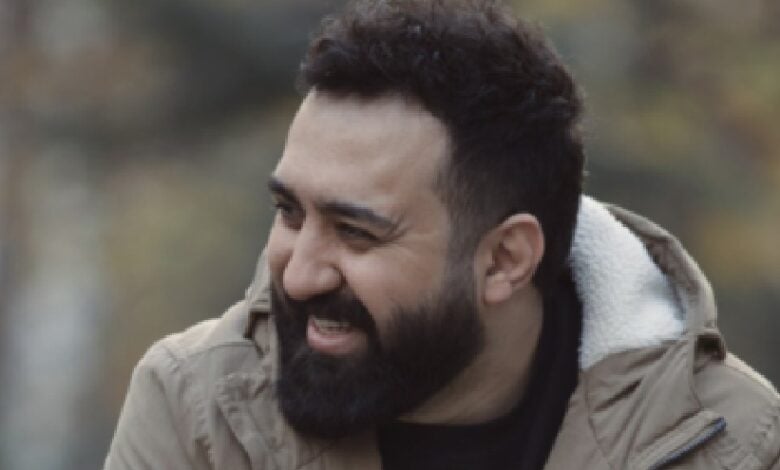
The execution of the flogging sentence of Iranian protest singer Mehdi Yarahi sparked widespread reactions.
Following the announcement of the execution of 74 lashes against Iranian protest singer Mehdi Yarahi, widespread protests and expressions of solidarity with him were held. The news was widely covered in international media.
Iranian protest singer Mehdi Yarahi released the song "Rossrito Darbyar" in Shahrivar 1402, and was arrested by intelligence agents immediately after the song was released. He was temporarily released in October after posting a bail of 15 billion tomans. Since the beginning of the "Women, Life, Freedom" movement, he has sung several protest songs and by releasing them, he has declared his support for the people.
He was sentenced to 2 years and 8 months in prison and 74 lashes in January 1402, with a one-year prison sentence still in effect. His lawyers had stated that the charges against him were “encouraging corruption and prostitution,” “producing and publishing content that violates public morality and decency,” and “inciting and inciting individuals to commit crimes against decency and propaganda against the system.”
Many civil society activists and artists have called the sentence against him a repressive measure and a sign of the government's fear of the power of art and freedom of expression. They believe that such sentences not only do not silence the voice of protest, but also increase the power and resistance of popular movements.
Mehdi Yarahi's lawyer, Zahra Minoui, announced the execution of his sentence of 74 lashes on Wednesday, March 6. She announced that following the execution of this sentence, his case has been completely closed.
Before the execution, Mehdi Yarahi posted a message on social media describing the flogging sentence as "inhuman torture" and saying, "I am ready to carry out this sentence and have no request to cancel it." After the flogging sentence was carried out, he posted another message appreciating the support of the people and his lawyers, writing, "He who is not willing to pay for the freedom of a Baha'i does not deserve freedom."
The execution of the singer-protester sparked widespread reactions inside and outside Iran. Human rights activist Narges Mohammadi called Yarahi's execution a revenge for her support for the women of Iran and called on everyone to be her voice. She wrote in a post on Instagram: "The whipping of Mehdi's body is a whipping of the proud, resistant women of Iran and the flourishing and powerful soul of the women's movement, life, freedom."
Mehdi Yarahi had released a video about holding a concert a few days ago, saying that he stands with Iranian women and will never seek permission to hold a concert. Even if they do, he will not hold a concert due to the gender discrimination that exists against women in Iran, as he considers it to be the use of "gender rent."
Narges Mohammadi also referred to Mehdi Yarahi's message about not holding a concert and wrote: "On the eve of March 8 (Women's Day), Mehdi Yarahi has once again stood up and stood by the protesting women and the people, by turning his back on gender rent to sing."
Mohsen Borhani, a lawyer, jurist, and university professor, while criticizing the flogging of Mehdi Yarahi, published a post on X Network and wrote: "Based on Article 134 of the Regulations on the Execution of Sentences of Punishment, Deprivation of Life, Flogging, etc., approved in 2019, and existing procedures, the method of executing Ta'zir flogging is usually in a way that does not involve pain, but is extremely humiliating and distorts the dignity of the convicted person. Artists should be respected, not humiliated."
Mustafa Nili, one of Mehdi Yarahi's lawyers, criticized Mohsen Borhani's comments and wrote: "It was expected that the execution of Mehdi Yarahi's flogging sentence would be an opportunity to address the fact that flogging is a punishment that violates human rights and efforts should be made to eliminate it."
He also stated that he was standing behind the door during the execution of the flogging sentence and heard the sound of the whips on Mehdi's body. He wrote about this: "I am sure that if you were like me behind the door at the execution site and heard the sound of the whips on Mr. Mehdi Yarahi's body and his cry of "Thank God, I am free," and you saw his painful but smiling face after the execution of the sentence, and if you knew that since yesterday he has not even been able to lean his back on anything, you would never have made such a comment."
"Mojgan Shajarian," the daughter of Ustad Shajarian, also posted a post with a video of Mehdi Yarahi on Instagram and wrote: "O great man of the path of truth and courage, the pain of every unjust whip that was inflicted on your body has settled on our souls and souls, and the beautiful hadith of your soul has become a balm for the wounds of the daily whips of time on our painful bodies. I bow to your courage, steadfastness, and zeal, for you have stood like a mountain, brotherly behind all your fellow countrymen."
Cinematographer Mohammad Rasoulof wrote on Instagram: "Dear Mehdi, you know very well that the whips that fell on you are not a sign of power, but a sign of terror. Your voice has shaken the rotten walls of religious tyranny, and now millions of Iranians are humming your songs. Their tools of repression are becoming more and more discredited every day. We will not turn back, in the face of the brutality of this oppressive power, we still have art."
Protest rapper Hamed Fard also posted a story on Instagram in response to the execution of this sentence, along with a photo of Mehdi Yarahi, and wrote: "Dear Mehdi Yarahi, today when I heard the news of the unjust sentence of 74 lashes on your body, it was as if each blow landed on the soul and heart of every single person in this land. You, who have always been the voice of the voiceless, stood by the people and defended the women of your land. Today, you paid the price for speaking the truth and your honor with cruel wounds. But know that these wounds did not fall on your body. This pain is a wound on the soul of all of us."
Iranian singers Saba Zameni and Ardavan Hatami also published a short piece of music with a poem by Mehdi Mousavi on social media in support of Yarahi, writing: "May it reach Mehdi. Nothing will destroy us. Not whips, not prisons, not bullets, not batons, not executions. We are Iran."