Reactions to the dismissal of the Golestan governor; did it cure the pain?
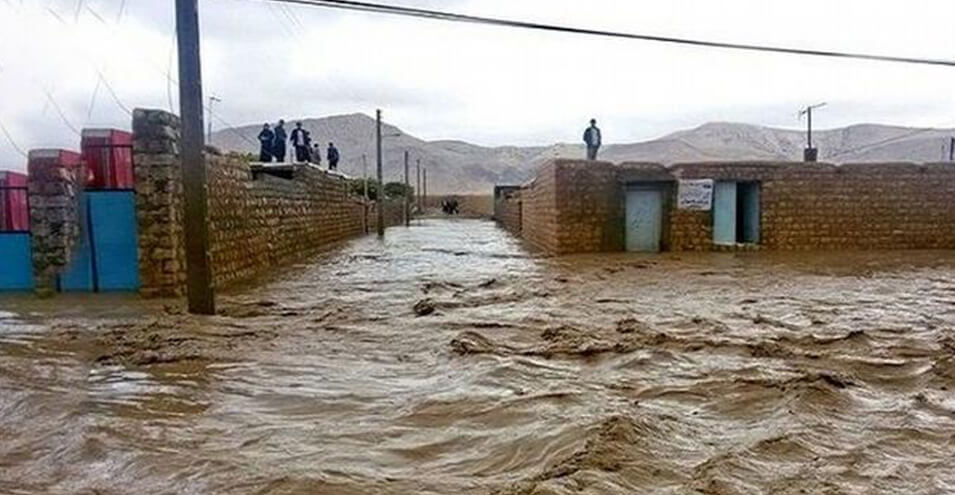
The dismissal of the governor of Golestan province following the loss of life and property in the flood has led to mixed reactions. Many say the government's profit-seeking plans have caused the disaster and that dismissing the governor will not heal the pain.
First Vice President Eshaq Jahangiri dismissed Golestan Governor Manaf Hashemi on Saturday, March 23, saying his absence from the region in the early days of the flooding was “absolutely unacceptable.” Eshaq Jahangiri appointed Deputy Manaf Hashemi Ali Qorabi as acting governor of Golestan. Manaf Hashemi was traveling abroad when the flooding hit Golestan province.
But the floods in the provinces of Golestan, Mazandaran, and North Khorasan unleashed a flood of criticism of the inefficiency of officials, mismanagement, and the government's profit-seeking policies, which even the dismissal of the Golestan governor could not prevent.
Some say that dismissing the Golestan governor is “clearing the air” because the officials, whether they are or not, are not doing anything useful for the people.
Some, despite acknowledging the inefficiency and inability to manage the crisis, have considered this dismissal to be the right step.
A group has also called for the scope of dismissal of officials to be expanded.
Government policies: Four decades of environmental destruction
In the last days of March, heavy rainfall in eastern Golestan province caused the Golestan, Golestan 2, and Bustan dams to overflow. The water in the Gorganrood, Chehelchay, Gharesu, and Oghan rivers rose sharply and overflowed their riverbeds.
The Governor of Golestan's interview with Khabar Online, which took place three days after the flood, presents a picture that critics see as evidence of the incompetence and irresponsibility of those in charge. In the interview, he says that we thought that "everything had been done" and that he had "put the province in the best possible condition," that they had done "everything they should have done," but what happened was that "the flood was five times the capacity of all the rivers in the province."
Is the real cause of the disaster that has befallen the people of Golestan and Mazandaran provinces, drowning them in water, mud, and mud, because the rainfall has been heavier than the authorities expected? If so, then a major disaster is on the way. The Iranian Meteorological Organization has predicted heavy rainfall in the coming days (Monday and Tuesday), and the Ministry of Energy has issued a flood warning for 10 Iranian provinces. The Ministry of Interior has also announced a state of alert in five western provinces.
Experts believe the cause of the flood and destruction was not nature but government interference.
Experts and environmentalists point to the way surface water has been managed in Iran over the past four decades, including the excessive construction of dams and the destruction of forests and pastures. Some believe that the daily destruction of 123 hectares of forest is one of the main factors in the flash floods. Forest trees act as a natural barrier against flooding during heavy rains. The soil of the land where the trees have been cut down cannot withstand heavy rainfall and is washed away by a flood of mud and suspended matter.
Journalist Yashar Soltani wrote on Twitter that the government brought the "Forest Breathing Bill" to the parliament in 2016 and called for a halt to forest harvesting, but three Friday imams, Noor Mafidi, Tabarsi, and Ghorbani, the Friday imams of Golestan, Mazandaran, and Gilan, were among its main opponents.
Jabbar Kouchakinejad, a representative from Rasht in the parliament, also expressed concern about the losses suffered by contractors in the wood industry. He said that these contractors “are going bankrupt despite having signed a legal contract, spent money, equipped the workshop, and spent time.”
The way in which shortcomings and "faults" are dealt with in the case of the Golestan flood and the destruction it caused is, like many other problems in Iran, fraught with threats.
On April 23, Ebrahim Raisi, the head of the Judiciary, gave the head of the General Inspectorate of the country a mission to "immediately visit the flooded areas, evaluate and monitor the various dimensions and angles of the incident and the process of providing relief to the flood victims, and in the event of any possible negligence or fault on the part of any of the agencies, whether in the context of a lack of necessary forecasts that led to damage or deficiencies in providing assistance and services to the people, report the matter for further investigation."
At the same time, Javad Javidnia, the Deputy Attorney General for Cyberspace Affairs, said: "Any collection of public donations by well-known individuals and organizations is prohibited except through the Red Crescent Society and the Relief Committee."
He asked people to report their account numbers and notification card numbers in the complaints and public protests section of the website of the Cyberspace Department of the Attorney General's Office if they encounter these cases, "so that action can be taken to immediately block these accounts."
The Deputy Attorney General has warned well-known individuals and figures, "If any action is taken, the accounts will be blocked and the collected amounts will be confiscated and handed over to the aforementioned organizations, so refrain from any action in this regard."
So far, most of the help and care has come from the people themselves. A memorable example was the wave of public assistance to the victims of the Kermanshah earthquake two years ago. But it seems that this too has now become a subject for investigation.
Ali Daei, a popular figure in Iranian football, told Khabar Online that he will rush to help the people despite these warnings and hopes that “government officials themselves will do their duty” so that there will be no need for people like him to do such things. He said: “We will go too and if we can do something, we will help. Hopefully, the government will be ahead of all of us in coming to the aid of the people.”
Source: DW