When Ali Khamenei fears women's voices more than poverty and insecurity

Ali Khamenei's fatwa on women's voices in music indicates that he fears women's voices more than poverty and insecurity in the country.
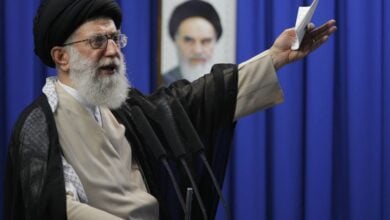
Ali Khamenei has issued a new fatwa declaring that it is “forbidden” for men to listen to songs performed by a female voice, even if the voice is generated by artificial intelligence software, provided that they have a “lyrical” quality. The fatwa reflects the traditional policies of the Islamic Republic, which are tied to the suppression of cultural and social freedoms beyond art.
The text of this fatwa states: "In cases of sanctity, there is no difference between whether the source of this sound is a real person or artificial intelligence."
This stance reflects the approach that has been followed towards music and art since the beginning of the Islamic Republic's formation: a strict, traditional, and controlling policy against any form of cultural freedom, even when new technologies enter the arena.
Since the 1979 revolution, the Iranian government has repeatedly tried to impose severe restrictions on music and singing, especially for women. Now, with the advent of new technologies, including the production of synthetic voices by artificial intelligence, Ali Khamenei has continued to uphold the same red lines, emphasizing that there is no difference between “real voice” and “machine voice.”
In addition to reflecting the government's traditional view of art, this fatwa also reflects the Islamic Republic's deep concern about cultural and social changes caused by new technologies; a concern that is particularly focused on the issue of "gender and music."
The issuance of such fatwas comes at a time when Iranian society is grappling with a series of serious crises. Rampant inflation, unemployment, insecurity, suppression of freedom of expression, freedom of belief, and widespread livelihood problems have made life difficult for millions of Iranians. In such an environment, the government’s focus on “the prohibition of the female voice” or even “the female voice generated by artificial intelligence” shows how deep the gap is between the concerns of the people and the priorities of the government.
The reality is that Iran's problems go beyond whether or not women's voices are heard. More than anything else, Iran today needs to respond to economic, social, and security crises, not issue fatwas that will only further restrict cultural freedoms.