When the name of "Cyrus the Great" is dragged into today's Middle East politics
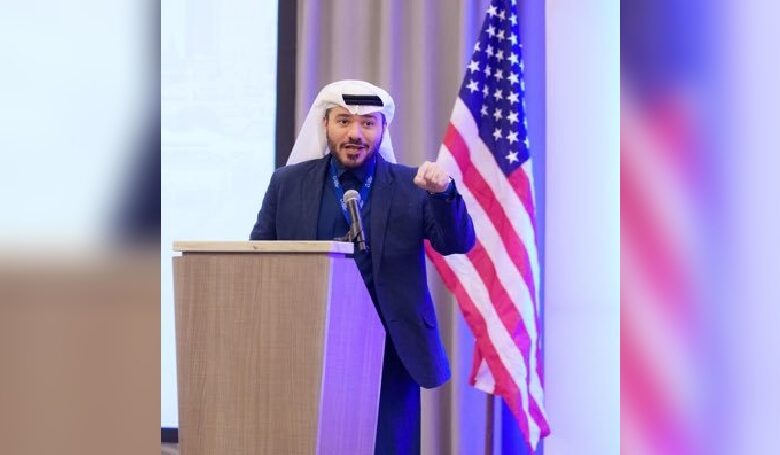
"Louis Al-Sharif's controversial statements, centered on Cyrus the Great, Iran, and Israel, have sparked new debates about history, historical indebtedness, and today's Middle East politics.
A video of "Louis Al-Sharif," an Arab activist and supporter of normalizing relations with Israel, has been published on social media, in which he presents a political and highly controversial message about the current situation in Iran by referring to Cyrus the Great and ancient Iranian history.
Loay Alshareef is an Egyptian activist based in the UAE who is known for his work promoting better relations between the Arab world and Israel and has also worked in the media as a television host.
Born in 1982, he has been featured in the media as a figure who supports improving Arab-Israeli relations, especially after he published a message in Hebrew in 2018 that aimed to reassure Zionists and emphasize the possibility of coexistence and dialogue.
In recent years, as discussions about the Abraham Accords and the normalization of relations between some Arab countries and Israel have expanded, his name has been heard more than ever in the regional media.
According to this released video, Louay Al-Sharif says in part of a speech:
"All of you Jews or Israelis owe a debt to the Iranian people. Cyrus the Great liberated your ancestors 2,500 years ago, and now it's time to repay your debt to Cyrus and liberate the Iranians so that we can make Iran great again."
These sentences were quickly reposted in cyberspace and provoked different and sometimes harsh reactions among Iranian, Arab, and even Israeli users; from the welcome of some users for referring to ancient Iranian history, to the severe criticism of others who consider these words to be a simplification of history or a tool for intervening in today's complex political issues.
The central part of his speech refers to Cyrus the Great, King of Persia; a figure known in historical and religious texts, especially in Jewish tradition, as the king who, after the conquest of Babylon, allowed the Jews to return to their land and rebuild their temple.
This historical narrative, although reflected in various sources, is politically charged in today's world, and its use for contemporary geopolitical conclusions has always been controversial. Critics say that linking an ancient event to the political responsibilities of modern states and nations can lead to simplistic or emotional interpretations.
This video is published under the following conditions:
- Iran is facing one of its most critical domestic periods.
- Iran-Israel relations are at their highest level of tension.
Some users have seen these remarks as a symbol of a change in discourse in part of the Arab world towards Iran as a people, not as a sovereign Iran, while others have described them as interventionist, propaganda, or even a distortion of history.
Louay Al-Sharif's statements indicate the entry of ancient history, identity, and power into today's political conflicts in the Middle East, where Cyrus the Great, Iran, Israel, and the concept of "historical debt" are intertwined in one sentence.
The extent to which such narratives can fuel dialogue, or conversely, new tensions, is a question whose answer will be determined not by ancient history, but by today's politics in the region.