After the pasta crisis, the head of the National Union of Chain Stores announced an oil shortage.
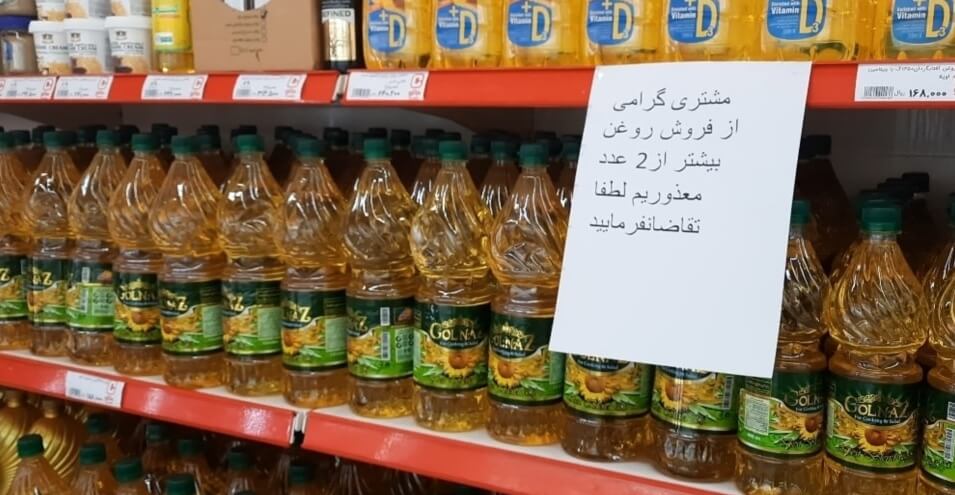
Following reports related to the multiple increase in the price of flour and related industrial products, including pasta and fancy bread, in Iran, reports indicate a shortage of oil supply in stores and the supply of pasta produced last year at the newly approved price.
According to IRNA news agency on Sunday, May 8, a pasta factory has launched its fall 2017 products at new approved prices.
Following the reduction in the variety of pasta in stores, the Organization for the Protection of Producers and Consumers announced in a notification on May 2 that the price of this product in various packages would increase, according to which "the maximum consumer price of 500 grams of plain string pasta, including VAT, has changed from 6,300 to 17,000 tomans, 700 grams from 8,600 tomans to 24,000 tomans, and 1,000 grams from 12,500 tomans to 34,000 tomans."
On the other hand, the head of the National Union of Chain Stores said: "There is no problem in the production and supply of pasta, and it is expected that all stores will be filled with pasta by the end of the week, but there is not enough oil supplied."
According to ISNA, Mansour Alipour, referring to the shortage of pasta in recent days, added: "After the announcement of the new approved price for this product, factories started producing again," but "the process of registering barcodes for new products in stores and shipping the goods takes time."
Alipour emphasized that he did not know the reason for the shortage of oil supply from factories to stores, saying, "Conditions are not good in terms of oil supply in stores."
In another report, Asadollah Ahmadi Shahrivar, head of the Tehran Food Vendors Union, announced that the price of a simple baguette had increased from 5,000 tomans to 10,000 tomans, saying that the share of bread is "at least 15 percent" of the price of a sandwich and that this price increase has caused the falafel sandwich, which was "popular with low-income groups," to become an expensive commodity, and "according to our colleagues, the purchase rate of falafel has increased to 2 pieces for every 4 people."
A day after Ebrahim Raisi claimed that his government's economic decisions were "the result of seven months of intensive expert work and consultation with elites," members of the Islamic Consultative Assembly and the speaker of the parliament sharply criticized Ebrahim Raisi's government's economic performance, especially the increase in flour prices, in a public session on Sunday, declaring that people are more worried than before.
Despite the slogan of spreading justice, the 13th government has been unable to control inflation and shortages of basic goods, while public livelihood protests are flaring up again.