After Soleimani, the Revolutionary Guards also threatened the Bahraini government.
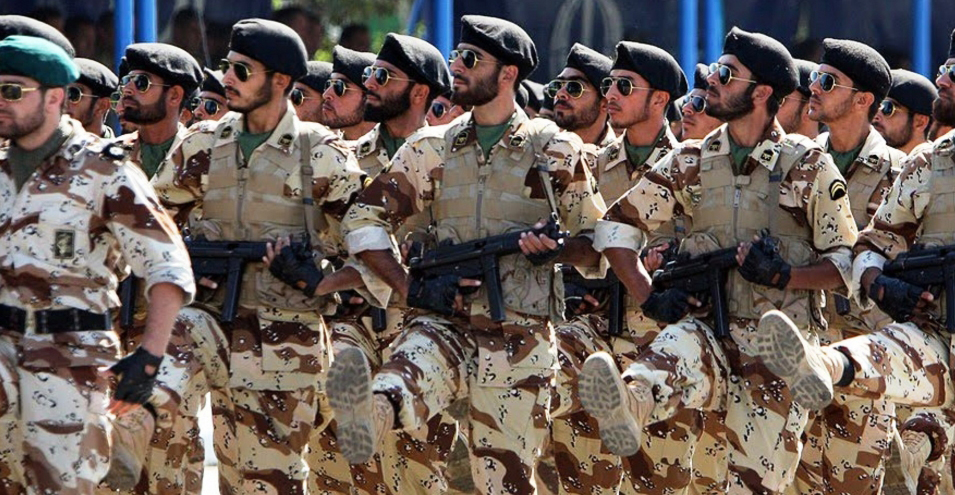
Following Qassem Soleimani's unprecedented statement, the Iranian Revolutionary Guard Corps has also warned the Kingdom of Bahrain to stop its "pro-Zionist adventures," or it will suffer the "fate of the funeral dictators of other Islamic countries."
The statement issued by the Revolutionary Guards on Tuesday (June 21) is full of warnings and threats. The military body condemned the revocation of Sheikh Isa Qassem's citizenship, saying the move would "further fan the flames of the Bahraini Islamic revolution and hasten the collapse" of its government.
The IRGC has called the Bahraini monarchy’s action “inhumane and contrary to citizens’ rights,” and has not hesitated to use words such as “the brutal regime” or “the racist” Al Khalifa. The IRGC has warned that this action “will further ignite the torch of the Islamic Revolution in Bahrain and lead to a devastating uprising against the dependent and ruling regime in this country.”
The Bahraini government announced on Monday (June 20) that it had revoked the citizenship of Sheikh Isa Qassim, the country's Shiite leader. He is one of the leaders of the Shiite protests in Bahrain. About a week before revoking Qassim's citizenship, the Bahraini judiciary had suspended the activities of the Al-Wefaq Party, the largest Shiite opposition group, and ordered the confiscation of all its assets.
Today's statement by the IRGC is in fact a reiteration of the statement issued yesterday by Qassem Soleimani, commander of the IRGC's overseas branch (Quds Force). In an unprecedented response, he described the "violation of the privacy of Ayatollah Sheikh Isa Qassem" as a red line that "will leave no choice for the people except armed resistance" and that will result in "the destruction of the brutal Bahraini regime."
Qassem Soleimani's statement, followed by the IRGC's statement, both written in an extremely hostile tone, could be seen by Arab countries in the region as an affirmation of their "concern" over Iran's foreign policy. Some of these countries have consistently claimed that Iran seeks to destabilize their countries.
The attack by “arbitrary forces” on the Saudi embassies in Tehran and Mashhad in the final days of last year also proved this claim and dealt a severe blow to the credibility of the Rouhani government’s foreign policy of engaging with neighboring countries. Following the attack, Saudi Arabia and Bahrain severed diplomatic relations with Iran, and the Bahraini foreign minister sent a message to Iran to change its approach in the Middle East, or else the Persian Gulf countries would be prepared to confront Iran’s foreign policy.
The revocation of Sheikh Isa Qassim's citizenship has also met with international reactions. The United States has expressed concern about the move and called on the Bahraini government to "exercise restraint."
Ravina Shamdasani, a spokesperson for the UN Human Rights Office, has also called on the Bahraini government to refrain from taking actions that could lead to increased crisis and instability in the region. The UN Human Rights Office has not considered the revocation of Sheikh Isa Qassim's citizenship to be justified and has called for the release of political prisoners.
Source: DW