Five years of war in Yemen; a devastated land, displaced and sick citizens
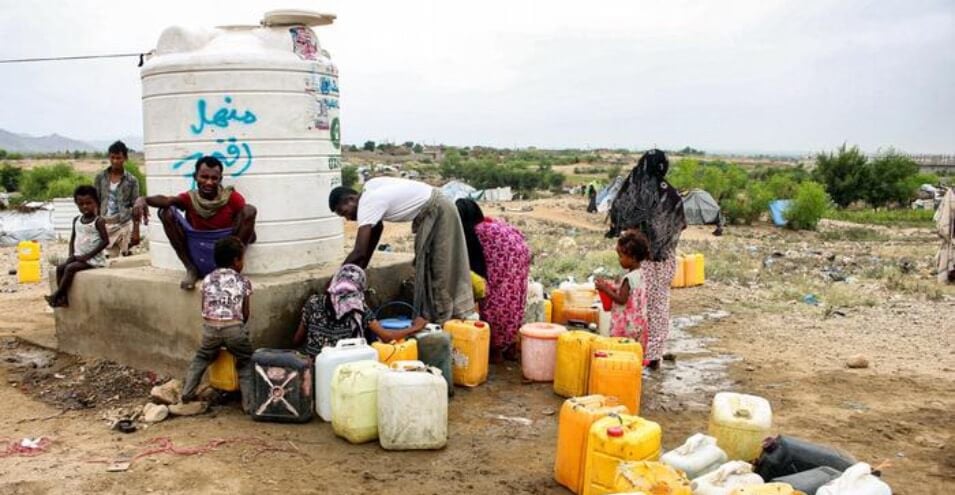
The war, which Saudi Arabia claimed was supposed to end in a matter of weeks, has dragged on for five years and its end is still in sight. The Yemeni conflict has displaced millions and left many citizens suffering from disease, hunger and homelessness.
Millions of Yemenis have lost their homes and are struggling with food and medicine shortages; disease and cholera are rampant, and while the United Nations describes the country as the world's most catastrophic crisis, the prospects for an end to the war remain uncertain.
In March 2015, when Saudi-led coalition forces first bombed the positions of Shiite Houthi rebels in Yemen, officials in Riyadh predicted that the war in the neighboring country would last no more than a few weeks.
The German news agency, in a report on March 24, examined the situation in Yemen and wrote that Saudi Arabia entered a war five years ago from which there is no prospect of emerging victorious.
Taking advantage of the chaos that had gripped much of the region during the events known as the “Arab Spring,” the Shiite Houthi movement seized control of large swathes of Yemen, including the capital, Sanaa. Saudi Arabia has made the most important goal of its military operation the retaking of the captured areas.
The Saudi-led coalition hoped to push back the Houthi militias, who are trained and equipped by the Islamic Republic, through rapid ground and air strikes.
Five years after the start of the offensive against Islamic Republic-backed rebels, Yemen has been reduced to ruins, with 80 percent of its 30 million population unable to manage their own affairs without foreign humanitarian aid.
While government institutions are increasingly collapsing due to the corrosive internal war, the service network for citizens has almost completely collapsed, and the economy of Yemen, which was considered one of the poorest countries in the world before the war, has ground to a halt.
According to UN estimates, by the end of 2019, about 233,000 people in Yemen had been killed in military conflicts or due to poverty and shortages of food and medicine caused by the war. Access to drinking water is severely limited, and thousands have contracted cholera.
According to the German news agency, it seems that the international community has gradually become accustomed to the critical situation in Yemen; apparently, the violent clashes in northern Syria, the continued fighting in Libya, the dire conditions of refugees at the gates of Europe, and finally the coronavirus crisis have diverted the world's attention from the civil war in Yemen and turned it to themselves.
Four million Yemenis displaced
Meanwhile, rebels backed by the Islamic Republic and Yemeni government forces are preparing for a new confrontation in the north of the country, in an area with a population of about 800,000 people, and the fighting could force thousands more to flee their homes. The United Nations estimates the number of Yemeni refugees at up to four million.
In such circumstances, the spread of the coronavirus in Yemen could be very catastrophic because only half of the country's hospitals are still able to accept patients and their facilities for dealing with patients with acute respiratory problems are very limited.
However, although cases of COVID-19 have been identified in more than 190 countries around the world, no official report has yet been published about the entry of the coronavirus into Yemen.
A resident of Sanaa sarcastically told AFP in a telephone interview that being under siege has its advantages and could prevent the spread of coronavirus. The roads to the northern regions of Yemen, which have been under the control of the Houthi militia since the beginning of the conflict, have been closed by the Saudi military and its allies ever since.
The nightmare of the coronavirus outbreak in Yemen
However, it seems almost certain that the coronavirus will reach Yemen, only the timing is uncertain. Lise Grande, the UN's emergency relief coordinator, speaks of the "potential nightmare" of a coronavirus outbreak in Yemen.
Referring to years of civil war, displacement, food shortages, and the spread of cholera, he says that Yemen's citizens and health system have been severely weakened, and its resilience to a crisis like the coronavirus outbreak has reached its lowest possible level.
The UN emergency relief coordinator told AFP that due to water shortages, Yemenis lack even the most basic preventive measures against the spread of the coronavirus, such as hand washing.
It is estimated that about 24 million people in Yemen are in need of humanitarian assistance, and it is said that in areas controlled by Yemeni rebels, there are no more than a few dozen hospital beds suitable for admitting patients with coronavirus.
Accordingly, it is predicted that if the coronavirus spreads in Yemen, the ratio of victims to infected people will be several times the global average, and this could lead to a full-scale humanitarian disaster in this crisis-ridden country, which has been the scene of a bloody proxy war between Tehran and Riyadh for five years.
Source: DW