The book "We Defend Our Iran", a project that shapes the identity of Iran's future generation
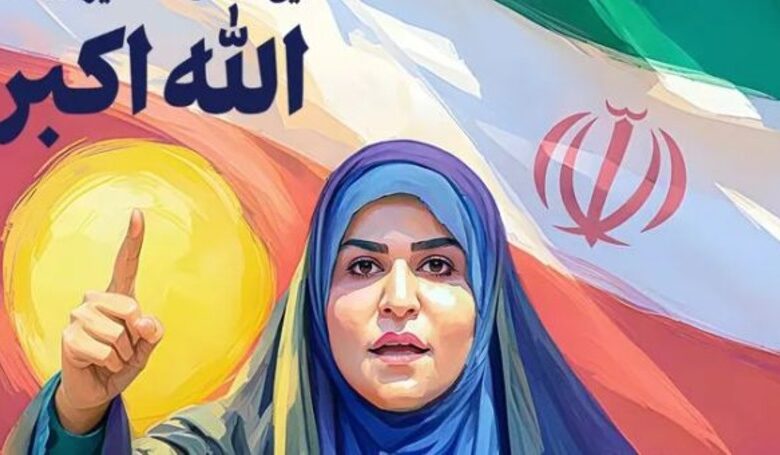
Newly published books with the theme "We Defend Our Iran" reproduce the 12-Day War with Israel in the form of an ideological identity that is not unlike the Holy War in the classroom.
In recent weeks, a new set of textbooks titled “We Defend Our Iran” has entered Iranian schools, an educational package designed not just to impart information but to forge a distinct identity in a generation of teenagers. The books’ release, just weeks after the end of the 12-day Iran-Israel war, reflects a hasty and calculated decision: “to turn a brief military conflict into the foundation of students’ national and religious identity.”
This move is reminiscent of similar projects in countries where the government is trying to turn wars into a "fundamental myth" of society; an issue that raises many moral, legal, and religious sensitivities in the field of education, especially for Christian audiences who place the values of peace, truth-seeking, and freedom of conscience at the center of their faith.
New books call the 12-Day War "an example of combined warfare" and introduce the three pillars of victory as follows: "unity of the people," "power of the armed forces," and "unifying leadership." But what separates this narrative from a simple political analysis is the sanctification of war.
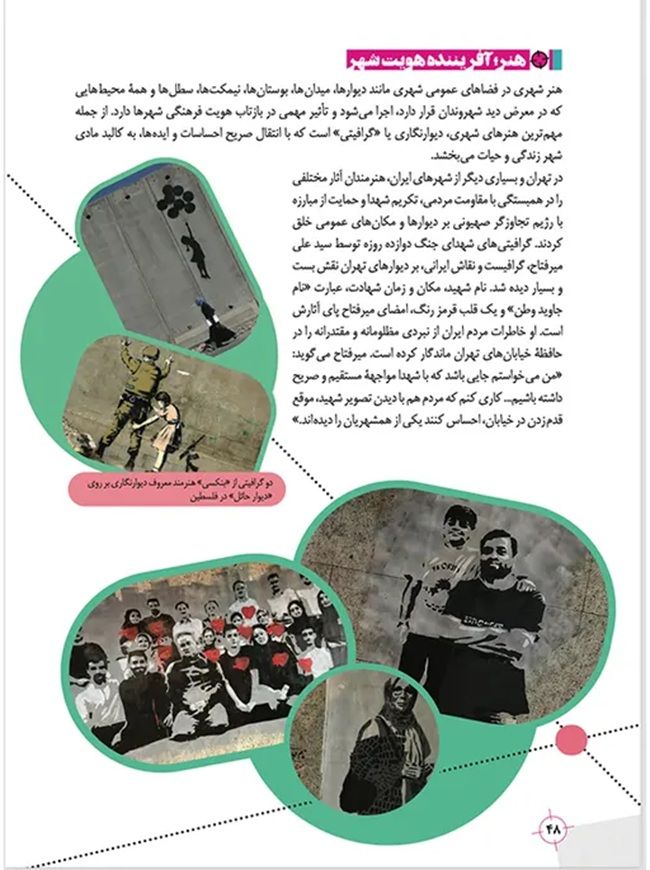
From the very first page, the quote from the founder of the Islamic Republic serves as an ideological preface: “We proved our own injustice and the oppression of the aggressors in war. In war, we recognized our friends and enemies.”
Such statements turn war into a source of collective self-knowledge, the analysis of war is set aside and replaced by a theology of war, a war that reveals the truth, disgraces the enemy, and sees victory as a sign of "divine victory."
In this narrative, the student is invited to see the world in terms of dichotomies of right/wrong, us/them, and faith/hostility; dichotomies that later leave tangible effects on social, media, and even religious policies.
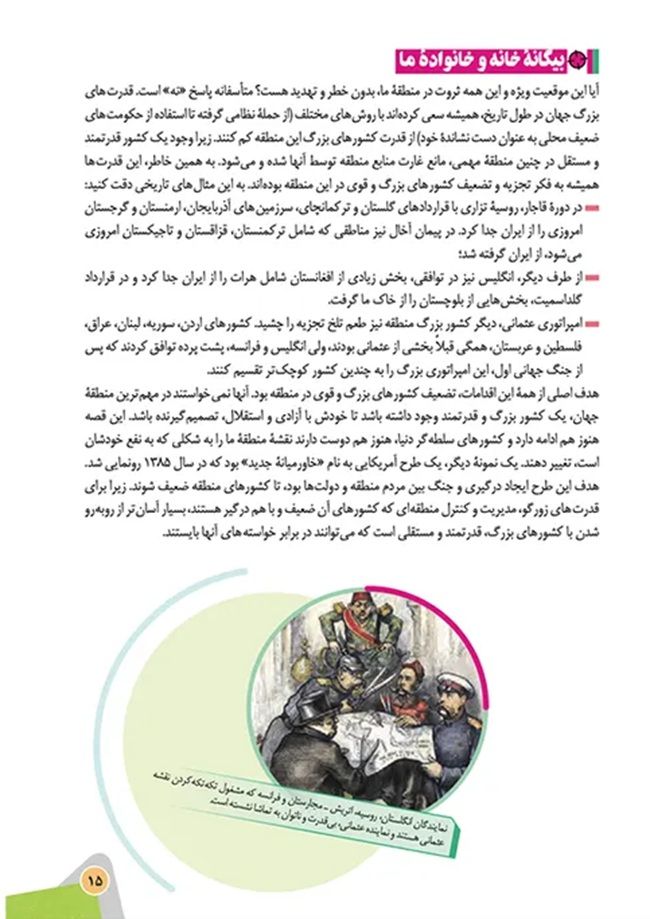
Reports indicate that in these books, Israel is presented not as a political actor, but as an “unconventional neighbor,” “artificial,” “lawless,” and “born of colonialism.” These words carry a heavy load: Israel is portrayed as an illegitimate entity, while Iran and the surrounding region are presented as “home” and “family.”
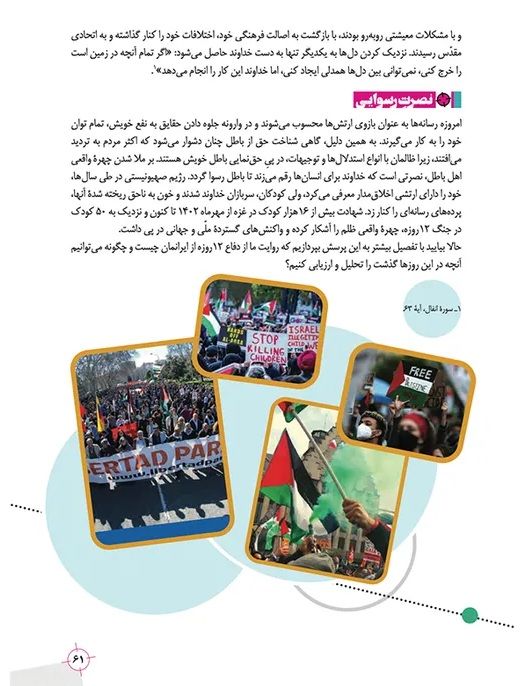
From here the main structure of the book’s worldview is formed: “a world in which identity is constructed not on the basis of historical reality, but on the basis of doctrinal boundaries.” For a Christian audience, this section is of particular importance. Because in Christian traditions (Catholic, Protestant, and Orthodox), the ethical issue in politics requires distancing oneself from absolute antagonism and emphasizing human dignity. The transformation of a nation or country into a “desacralized other” is the starting point of structural violence.
One of the books’ most notable features is the narrative it constructs about Iran’s military technology. The missiles are presented as “moral” because they are accurate and avoid killing civilians. These claims are in stark contrast to international reports about the devastating consequences of Iran’s proxy wars in the region, but the books make them seem “obvious.”
Also, nuclear energy is portrayed not as a technical or economic issue, but as a pillar of "Iran's survival" and "the nation's natural right."
Indigenous knowledge is an unsanctionable asset and a driver of national authority. In this view, science and technology are combined with religious ethics to create a dual image: “Iran oppressed but powerful; besieged but victorious; damaged but helped by the hand of God.”
This narrative model diverts the concept of human progress away from the path of peace, sustainable development, and global cooperation, and directs it towards the field of "sacred armament."
Books consider the role of art to be “mightier than weapons.” Graffiti, epic songs, and images of war martyrs are introduced as tools to prevent forgetting and consolidate war identity.
This use of art bears similarities to the propaganda models of the Cold War, Maoist China, and some authoritarian regimes. Art, which by its very nature invites reconciliation, reflection, and truth-seeking, becomes a weapon in this context to reproduce sacred anger.
In the narrative of the books, the enemy is present everywhere: "on social networks, in diplomacy, in the economy, in cyberspace, and even in the adolescent's mind." The adolescent is required to always be vigilant, to consider external analyses suspicious, and to keep himself on cognitive alert.
This structure, rather than strengthening critical thinking and dialogue skills, reinforces a spirit of suspicion, political anxiety, and ideological sensitivity.
From an international perspective, the integration of war into formal education has well-known precedents: "After the invasion of Ukraine, Russia introduced a section called "Important Dialogue" into schools," "North Korea has had "sacred hostility" in its curriculum for decades," "China incorporated the concept of "political patriotism" into education after the 2017 reforms," but the difference in Iran is in the direct sanctification of war, the simultaneous connection of politics, battle, technology, and theology.
This combination distances the education system from its primary function (the development of independent personality, the cultivation of thought, and respect for truth).
This new government program, especially for religious minority audiences, has several key messages:
- De-pacification of education: Education, which should be a bridge between nations, becomes a field for reproducing hostility.
- Elimination of human dignity: When the enemy is introduced as unconventional and illegal, the next step is the elimination of human dignity in the adolescent's mind, which contradicts the teachings of the Bible about reconciliation, truth, and love.
- Transforming God into a guarantor of military victory: Militant theology presents God not as the source of love, but as the "guarantor of victory over the enemy," an idea that is dangerous and distorting from a Christian perspective.
The books “Defending Our Iran” are not just a narrative of a 12-day conflict, but they are an attempt to mentally engineer the next generation. In this project, “war becomes sacred,” “technology becomes myth,” “the enemy becomes absolute,” “faith becomes political,” and “school becomes a permanent battlefield of narratives.”
This trend will have profound implications for Iran’s future: a generation that may see the world with a “defensive identity,” “endless vigilance,” and “sacred division” rather than one that is oriented toward peace, truth, or justice.