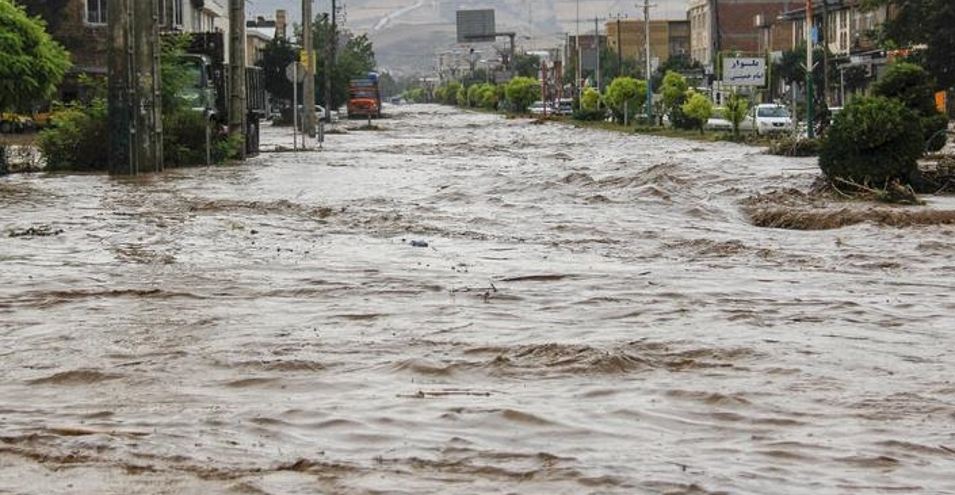
Kermanshah; Water scarcity and a destroyed environment
The vast province of Kermanshah, with an area of 25,000 square kilometers, or one and a half percent of the total area of the country, has been plundered and plundered by the most ruthless enemy over the past 42 years, turning it into a dry, waterless and grassless land. Kermanshah is in a dire state of water shortage crisis, and this problem comes at a time when the province's environment has also been destroyed.
All the rivers of the province have dried up and the last drops of their water have evaporated and disappeared. The seven major rivers of the province, Qara Su, Razavar, Grab, Marg, Gamasyab, Dinur Ab, Seymareh, etc. have all dried up and there is no trace of all those beautiful and refreshing mirages in the province anymore and nothing remains except the dry cracked soil of the mirages' bottoms. The mirage of Taghabestan, Khair Elyas, the Yavari mirage, Khedr Zandeh, the Niloufar mirage, which was previously thought to have no bottom and was connected to the boundless seas of the world, a mirage where the natives believed that the world-seeking cup of ancient Iran was thrown into by Shirveh, the unfaithful son of Khosraupar, and was never found; now it has dried up and dust and dirt rise from its bottom into the air.
With the drying up of rivers and lakes in the province and the metropolis of Kermanshah, it will soon face the dangerous problem of a lack of drinking water, because currently a large part of the city's drinking water is supplied by the Gamishan Dam in Kamyaran, and in the event of a shortage of water in the Kamyaran Dam, there will be no drinking water in Kermanshah.
Throughout the province, there is no longer even a sturdy tree with enough freshness to rest your weary body in its shade and take a breath. The entire province, except for a few small spots that have endured so far, is a pyramid of scorching heat as far as the eye can see, and the dry, parched soil groans in your landscape.
All this pain and suffering has not been caused except by incompetent officials and incompetent and unprofessional managers who have ruined this province through ignorance and irresponsibility. They have withheld its surface water and emptied its groundwater tables for agricultural purposes without accounting, and have left its dense natural forests unprotected and unprotected, and have taken all the plans studied in the future environmental perspective of the province, which were considered in the years before the Islamic Republic came into power to preserve the ecosystem, off the table and forgotten; in the end, what should not have happened has become a land that, according to experts, will become impossible to live in in less than two decades. Although this situation has happened or is happening in many other provinces of the country, Kermanshah province is bearing its own special suffering and additional problems.
Kermanshah Province on the verge of water bankruptcy
Kermanshah Province, with a population of over two million people, was one of the relatively well-watered provinces with abundant fertile lands and plains. However, due to the incompetence, ignorance, and political maneuvering of government officials of the Islamic Republic in dealing with water and soil issues and its environment in general over the past four decades, the province has now become a dry and parched region and is on the verge of water bankruptcy and land subsidence, which is being referred to as the disaster of the century.
Over the past forty years, due to misguided planning and ignorance resulting from recklessness and discrimination between cities for political reasons, all of the province's surface waters, which include 7 rivers and dozens of springs and mirages, etc., have been withheld from this province. Its waters have been drained from the province and instead, all of its groundwater reserves have been extracted over the past four decades by digging deep and semi-deep wells, both legally and illegally. Kermanshah province has become a region of dry and empty lands and is currently on the verge of a major water crisis and land subsidence.
A review of the wetland situation in Kermanshah Province
The rivers of death in Sarfirozabad, Razavar in Kamyaran, Grab in Ravansar, Gamsiab in Bisotun, Dinorab in Dinor, Qare Su and Seymareh in Kermanshah are 7 major rivers that flow in this province and all of these rivers form the source of the great Karkheh River which ultimately flows into the Hor-e-Azim. These 7 major rivers, with many seasonal rivers and wetlands and hundreds of springs and mirages, had made the face of the province lush, lush and lively.
Over the past four decades, despite the fact that detailed scientific studies and ongoing implementations had been conducted for the principled and optimal use of surface water for irrigation of the province's lands and had considered the province's water and soil prospects for the coming decades, all those efforts, scientific studies, and principled plans were set aside with the coming of the Islamic Republic of Iran. Unfortunately, the heavy volume of water from all seven rivers in the province was directed to other unknown destinations and areas without a single drop being used in the province. The government encouraged and incentivized the province's farmers to dig deep and semi-deep wells and use groundwater, and not content with this, they even provided drinking water for the cities and villages of the province from groundwater aquifers.
This has caused Kermanshah Province, after 40 years, to face a huge and insoluble water crisis and land subsidence, causing farmers and livestock keepers in this province to live on black soil, causing migration from villages to cities to continue and expand, and causing cities to face a dangerous water shortage crisis.
The fate of Garmab Dam in Kermanshah's White Mountain
Before the Islamic Revolution, the construction of a diversion dam to irrigate the large plains of Mahidasht, the largest plain in the province, Sarfirozabad, Sanjabi, Goran, Qolkhani, and Ravansar, etc. in the south, southeast, and west of Kermanshah province had been studied, and more than 25 percent of the dam's operational operations had been carried out. By creating this diversion dam, which was planned to be built in an area called Tang Garmab in the White Mountain, part of the Seymareh water was directed to the Sarfirozabad reservoir and flowed. By moving along the natural path of the Marg River bed, after irrigating the plains of Sarfirozabad, Mahidasht, Kozran, Sanjabi, Goran, Qolkhani, Ravansar, and... a total area of about 1,200 square kilometers, the water flow naturally continued its path towards the Qarasu River and flowed in a circular manner so that not a drop of its water was wasted and the excess water returned to the main river basin, which was considered one of the unique and unique projects in the watershed management sector in the world.
With the coming to power of the Islamic Republic, unfortunately, this very large and effective plan was abandoned. By abandoning this plan for Kermanshah province, new plans to control the water of the large Seymour and Karkheh rivers were put on the agenda of the governments of the Islamic Republic. Based on those plans, no basis was created for the people of Kermanshah province to use surface waters, and farmers of the province were not allowed to take even the slightest amount of water from the 7 rivers mentioned; while the water of these rivers was generally and coherently diverted from the Seymour River after leaving the lands of the province and the waters exited from it. At least 18 small and large dams were built on the Seymour and Karkheh rivers after leaving the lands of the province and continuing the Seymour River. Most of these dams have disadvantages and problems and have caused complex and insoluble problems to the ecosystem of their path in general and for various reasons.
In addition to this major project, a plan to fence the province's natural resources and plant trees in the natural forests of this part of the Zagros to maintain and cultivate the natural ecosystem of the region was also implemented and covered large areas. Unfortunately, with the coming to power of the Islamic Republic, all these plans and programs were abandoned. The Garmab diversion dam project was forgotten, and all the fences were destroyed, their barbed wires were stolen, and the newly grown seedlings in the vast oak forests were all destroyed, and the shepherds grazed their flocks in fenced pastures and protected forests, and there was nothing left in the name of environmental protection and conservation.
The pumps that completely emptied the groundwater aquifers over a period of four decades and turned the region into black soil
Instead of all those useful and studied plans, unfortunately, the dangerous project of digging deep and semi-deep wells and indiscriminate use of groundwater tables was placed on the agenda of the governments of the Islamic Republic and replaced it, based on which deep and semi-deep wells, both permitted and unauthorized, were dug in various parts of the plains of the province, and Noor Keshmi was given more permission to use groundwater than before.
Water engines worked day and night, and farmers, competing with each other, tried their best to extract as much groundwater as possible without any supervision. Meanwhile, irrigation was carried out in the traditional way, wasting tens of times the available water in irrigation, unfairly. A decade or two later, the semi-deep wells dried up, and this time, so-called floor-breaking was allowed to deepen the wells; farmers, encouraged and encouraged by the government, taking loans, etc., dug deep wells to bring up the last remaining drops of groundwater from the depths of the earth. As a result of this process, now, after four decades, there is no water left in the rivers or even in deep wells, and in some areas of the province there is no water left, either surface or underground.
The large oak forests have become dry and there is no trace of the abundant fruit orchards in the province. This trend is spreading to other regions. More than 80 percent of the traditional livestock farms in the province have disappeared due to the loss of pastures and forests and the lack of water and fodder for their livestock, and the remaining ones are taking their last breaths; while all the industrial livestock farmers in the province have gone bankrupt due to incorrect planning and the increasing and uncalculated growth of inflation and high prices in the country, and their owners have fled or been sent to prison due to bank debts.
Now, after more than forty years of this chaos, what remains for the province are scorching heat, land drought, and other violent and destructive phenomena that continue to deepen and deepen this environmental disaster in the region, and consequently the human catastrophe.
The flood of migration to cities, from areas that have run out of water and no shelter for temporary housing, began a long time ago and is spreading so rapidly that it won't be long before all the villages in Kermanshah province will be empty.
Source: HRANA