Coronavirus and Political Prisoners | From the possibility of Hengameh Shahidi and Nazanin Zaghari being infected to the families' protests
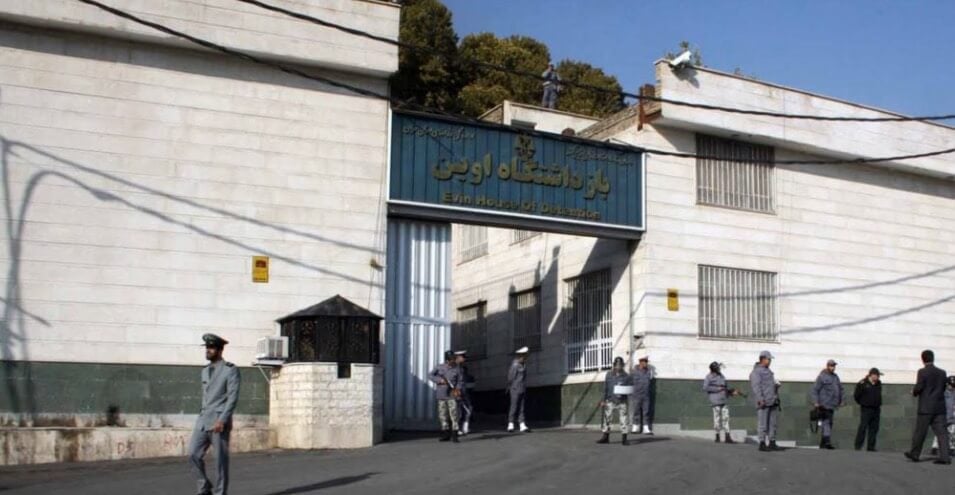
Following the widespread spread of the coronavirus in Iran, news published on social media and human rights news agencies indicate that some Iranian prisons have been infected with the virus, increasing the risk of prisoners contracting it.
News of the spread of the coronavirus in Iranian prisons is being published while the "Human Rights in Iran" website has announced in a report that Hengameh Shahidi, a journalist imprisoned in Evin Prison, was urgently transferred to the Evin Prison health department on Saturday, March 1, following the deterioration of her condition and the appearance of symptoms of the coronavirus.
According to the report, the imprisoned journalist was transferred to the prison's health center while experiencing symptoms such as a dry cough, shortness of breath, and severe pain in his body parts; each of which increases his risk of contracting the coronavirus.
On the other hand, news published on social media indicates that Amir Hossein Moradi, one of the detainees of the November protests, has contracted the virus in Fashafoyeh Prison and has been transferred to an unknown location. The Telegram channel of the Center for Human Rights Defenders announced on Saturday, March 1, that the political prisoner's coronavirus test was positive, and that a number of his fellow prisoners have also been transferred from the Greater Tehran Prison to Yaftabad Hospital.
Earlier, Voice of America reported, citing the Guardian, that Nazanin Zaghari, a British citizen of Iranian descent imprisoned in Iran, had informed her family that she may have contracted the coronavirus. Ms. Zaghari said she was feeling very bad and had not improved at all after five days. According to her, a number of other prisoners also have similar symptoms.
The Telegram channel of Nasrin Sotoudeh, a lawyer for a prisoner in Iran, also quoted Richard Ratcliffe, husband of Nazanin Zaghari, as saying that in a phone call he had with Nazanin Zaghari in Evin Prison, he suggested that she might have contracted the coronavirus and asked the British government to contact the Iranian government to conduct a coronavirus test for this political prisoner.
Concerns of families of political prisoners
On Wednesday, March 27, Ebrahim Raisi, the head of the judiciary, issued a new circular ordering limited leave for a group of prisoners sentenced to imprisonment, subject to certain conditions; one of the provisions of the circular states that political prisoners who have been sentenced to more than 5 years on charges of "acting against national security" are exempt from being sent on leave; this is despite the fact that most political prisoners on the charges have sentences of more than 5 years.
However, it seems that a large number of political prisoners are unable to take advantage of this leave, and this issue has led to protests from political prisoners and their families.
On Sunday, March 1, a group of families of political prisoners and prisoners of Ward 8 of Evin Prison protested against the prosecution's obstruction of justice in granting prisoners leave.
According to the Free Workers Union, on Saturday and Sunday, March 10 and 11, the families of political prisoners approached the prison's prosecutor's office to follow up on the prisoners' release and protested the non-implementation of the judiciary's circular granting prisoners leave four days after it was issued, but they have not received a convincing response so far.
Now, with the widespread spread of this virus, the concern of the families of prisoners regarding the prisoners' condition has increased. The families of political prisoners, while expressing strong concern for the health of their loved ones, have decided to visit the prison's prison office every day and are asking the families of other prisoners to join them.
The protest of the families of political prisoners is not limited to Evin Prison or Greater Tehran Prison. According to news published on social media, following the outbreak of the coronavirus in Iranian prisons, the families of some prisoners of Urmia Central Prison also gathered in front of the prison on Monday, March 3, demanding the immediate release of their children.
The Human Rights Network Hengav also reported on Monday, March 12 that a group of political and religious prisoners of Urmia Central Prison have published statements demanding the implementation of the new decree issued by the head of the judiciary. These prisoners say that despite the fact that at least 6 prisoners have been transferred to treatment centers outside the prison due to the corona virus, unfortunately, some provincial officials, at the head of which is the Judge Nazer (prison superintendent) with the laws of "I got you" and adding notes and articles to the issued circulars, have actually taken clear violations.
In recent days, the Free Workers Union has also issued a statement regarding the spread of the coronavirus, calling for the immediate release or granting leave until the end of the crisis for prisoners imprisoned in Iranian prisons.
The statement, referring to the fact that government officials have been concealing the official statistics on the spread of the virus in Iran, states that some prisoners have stated in contact with their families that no hygiene is observed in prisons, and not only has the prison environment not been disinfected, but also that prisoners have not been provided with hygiene materials, and even in the stores inside the prison, there are no hygiene materials and disinfectants for purchase.
The US State Department has repeatedly and on various occasions condemned the violent confrontations and widespread repression of protesters, the repeated and ongoing violations of the rights of Iranian citizens, and the ongoing cover-ups by the ruling regime in that country.
On Friday, March 29, in a meeting of the House Foreign Affairs Committee, Mike Pompeo said, considering the history of concealment by Islamic Republic officials, that the Iranian regime is reluctant to provide information about the spread of the coronavirus, and I am concerned that they may have hidden important information.
This is the second time that the US Secretary of State has expressed concern about possible cover-up by Iranian officials. Mike Pompeo warned on Tuesday that the US is concerned about the Islamic Republic's authorities' cover-up of the coronavirus outbreak.
The United States announced on Thursday that it has granted waivers from sanctions on Iran, allowing Iran's central bank to make financial transfers to send certain humanitarian services.
Source: Voice of America