Synagogues left behind by Jews in Herat
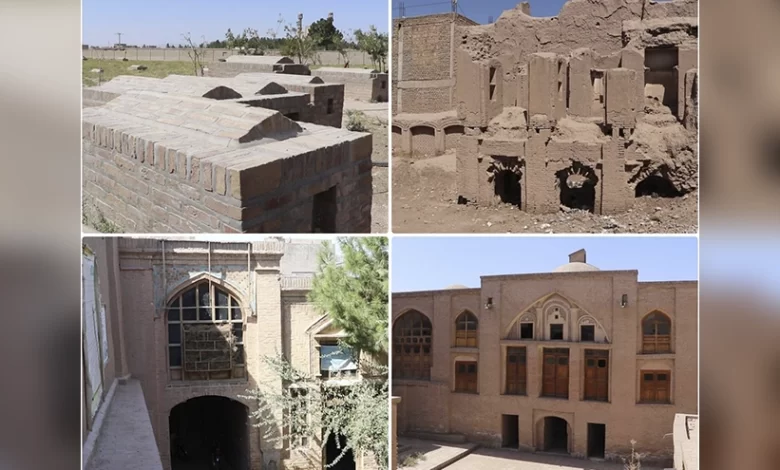
Four synagogues remain from the Jews living in Herat, which some Afghans remember.
Four synagogues, baths, and Jewish houses are located in the "Darb Iraq" area in the old city bazaar of Herat. These historical monuments have been preserved since the time when the Jews left Herat. The four synagogues are called "Yoha", "Golkia", "Shmavil", and "Gergia". Now the roof of the Gergia has collapsed and only a few walls remain, turning the synagogue into a ruin.
After the Jews left Herat, the Galkia Synagogue was converted into a mosque and the Shamuil Synagogue into a school. Among these synagogues, the Yuha Synagogue was damaged by earthquakes in Herat in previous years, and its restoration and reconstruction process has now begun. This synagogue was the largest Jewish synagogue, consisting of a large courtyard, a prayer room, and a bathhouse, which have been preserved in the same form. Also, a stone inscription in Hebrew can be seen at the entrance to this synagogue on the second floor of the synagogue, which is now considered a document of ownership of the Afghan government.
According to Herat cultural officials, after leaving Afghanistan, the Jews living in Herat handed over their synagogues to the Afghan government and sold their houses, shops, and gardens. Considering that the paintings and carvings of the Yuha Synagogue are very beautiful and eye-catching and are currently under renovation, cultural officials said regarding the restoration of this synagogue that the Yuha Synagogue is supposed to become a cultural and tourist site after renovation.
Mohammad Sediq Mir, the head of the restoration and reconstruction of historical monuments in Herat, said about the synagogue of Yuha: "Jews used to go underground to worship in the synagogue of Yuha and bathe there with water at ground level. The men's and women's baths were separate, and Jewish women wore the hijab like Muslim women."
Herat residents who lived in the same neighborhood as Jews recalled memories of the past, saying that Jews would stop their business on Saturday and devote themselves to worship, recreation, and rest. According to them, Muslims and Jews lived side by side in Herat for more than two centuries without conflict.
"Mohammed Ali," 60, is one of the people who lives next to the Juha Synagogue. He says his father bought the house of a Jew, where they still live. "Every time I pass by this synagogue, the coexistence of Muslims and Jews is fresh in my mind," he told reporters. "I have good memories of the Jews here, and I can say with confidence that they were kind and harmless people. I played with the Jewish children, and they were very good people. They went to the synagogue to pray, and we Muslims went to the mosque, and there was no difference between us. We lived together like brothers."
In addition to the synagogues, there is also a Jewish bathhouse and cemetery, which is being demolished. The cultural figures had offered the previous Afghan government the purchase and renovation of the building, but the previous government rejected the offer.
Some people knowledgeable in the field of culture and history claimed that the Jews living in Herat migrated from Iran to Herat due to pressure to convert and pay the jizya (a religious tax imposed in Islam on followers of other religions). The immigrants to Herat were more than 300 Jewish families, the last of whom left Afghanistan in 1357 AH, and the main reason for their migration was the war in Afghanistan and a better life in Israel.
Before the Taliban government came to power, some Jews had gone to Herat to visit the graves of their ancestors and paid the cemetery custodian to repair the cemetery wall to prevent the usurpation of their property.
Zebulon Simintoft was the last Jew living in Afghanistan, responsible for the only Jewish synagogue in Kabul, who left Kabul after the Taliban came to power, fearing retaliatory attacks. He was born in Herat and after moving to Kabul, he converted the top floor of his house into a synagogue, where many Jews living in Afghanistan went to worship.
It has been about half a century since the outbreak of war in Afghanistan, and after the end of the reign of Mohammad Zahir Shah, Jews refused to travel to Herat and visit their homes, synagogues, and cemeteries because they might face danger; but with the coming to power of the Taliban government, which puts more pressure on religious and ethnic minorities, Jews have become discouraged from traveling to their homeland.
According to many Afghans and even Iranians, before the extremist Islamist government came to power, all people, regardless of ethnicity or religion, lived together as brothers and sisters, without any conflict or judgment; but with the coming to power of the Islamic government, division and conflict arose between different ethnic groups and religious minorities in Iran, Afghanistan, and other neighboring countries with European countries, and that peaceful and brotherly life gave way to war, hatred, division, conflict, and the pursuit of power.