UN report warns of groundwater use
The United Nations, in its annual report on the state of the world's water, called for more efficient and sustainable use of groundwater. The report says that in most parts of the world, the importance of groundwater in meeting human needs is not properly understood.
The UNESCO Commission Office in Germany, located in Bonn, published a summary of its annual report on the state of water in the world at the beginning of spring (March 21/Farvardin 1401).
This report, commissioned by the United Nations, pays special attention to groundwater resources in different regions of the world and their excessive use.
UNESCO emphasizes that in many regions, the importance of groundwater resources in meeting human needs is almost ignored and these resources are poorly managed.
Devastating gaps in knowledge and oversight
According to "Tagsshow", the website of German Channel One television, Ula Borshard, a member of the board of the UNESCO Commission in Bonn, says that the World Water Report indicates devastating deficiencies in the field of knowledge and monitoring of the use of groundwater reserves.
The United Nations is calling on governments to better protect groundwater reserves and exercise greater oversight over their optimal use.
Groundwater is the source of more than half of the water consumed by households, and its excessive use in many countries of the world has seriously threatened sustainable public access to drinking water. In agricultural activities, on average, about a quarter of the water required is supplied from these sources.
According to Ola Borchardt, in many parts of the world, groundwater resources are being over-extracted, without considering the long-term consequences of this.
Land subsidence risk in 500 plains of Iran
In some areas of the world, the rate of excessive use of groundwater is so high that it is not possible to restore groundwater aquifers, and excessive water withdrawal from these aquifers leads to land subsidence in some areas.
Iran is one of the countries that has been facing land subsidence in large parts for years. The Geological Survey of Iran announced last year that out of the country's 609 plains, about 500 are facing land subsidence, and in some areas, land subsidence has extended into cities.
In October last year, the Tejarat News website quoted Ali Baitollahi, director of the Road, Housing and Urban Development Research Center, as saying that Iran ranks fourth among countries in the world in terms of land subsidence, and this phenomenon can be seen in almost all plains.
Asia is the top consumer of groundwater
According to "Tags Shaw," the latest UNESCO report indicates that the Asian continent is at the top of the world's regions in terms of overuse of groundwater.
The United Nations specialized agency, which operates in the fields of education, science, and culture, emphasized in its annual report that the use of groundwater resources for agricultural activities in Asia is more than twice the average consumption in all other continents combined.
It is estimated that in large parts of China and South Asia, excessive and excessive use of groundwater resources is leading to faster and greater depletion of these resources. Furthermore, the continuation of this trend has led to severe pollution of groundwater resources in some areas.
Europe and groundwater pollution
The problem of groundwater pollution is not unique to areas that overuse it. According to a UNESCO report, in Europe, which accounts for only 6 percent of global groundwater use, about 38 percent of water resources are affected by pollution caused by agricultural activities.
Contrary to popular belief, the excessive use of natural water resources is not the same in all arid and semi-arid regions and developing countries.
According to the annual United Nations report, in many countries in southern Africa, the vast groundwater resources are not being used much, mainly due to poor infrastructure and a lack of equipment and specialized personnel.
UNESCO warns that the importance of groundwater reserves will increase in the future as available surface water continues to decline due to climate change.
More than 2 billion people lack access to safe water sources.
The organization predicts that water consumption will increase by one percent annually over the next three decades due to population growth, economic growth, and changing consumption patterns.
According to the assessment of the United Nations Scientific, Cultural and Educational Organization, the water crisis can only be managed with the help of groundwater resources, and for this reason, in addition to saving and using them optimally, solutions to strengthen these resources must be put on the agenda. One of these solutions is to control and direct seasonal surface water to groundwater layers.
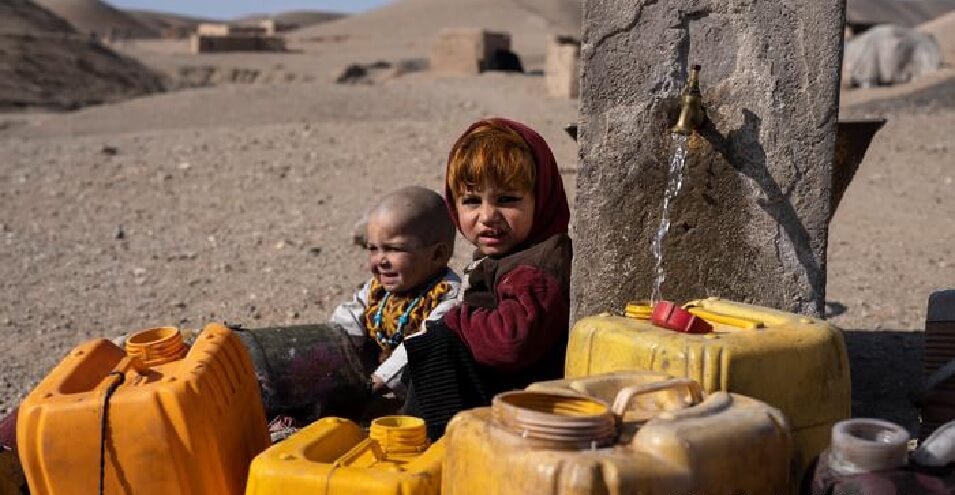
The organization estimates that 2.2 billion people in the world currently lack access to safe drinking water sources.
The full text of this year's UN report on the state of water will be presented on Monday, April 2, at the World Water Forum in Dakar, the capital of Senegal.
Source: DW