A report on the latest situation of the 4 Gonabadi dervishes in Tehran and Shiraz prisons
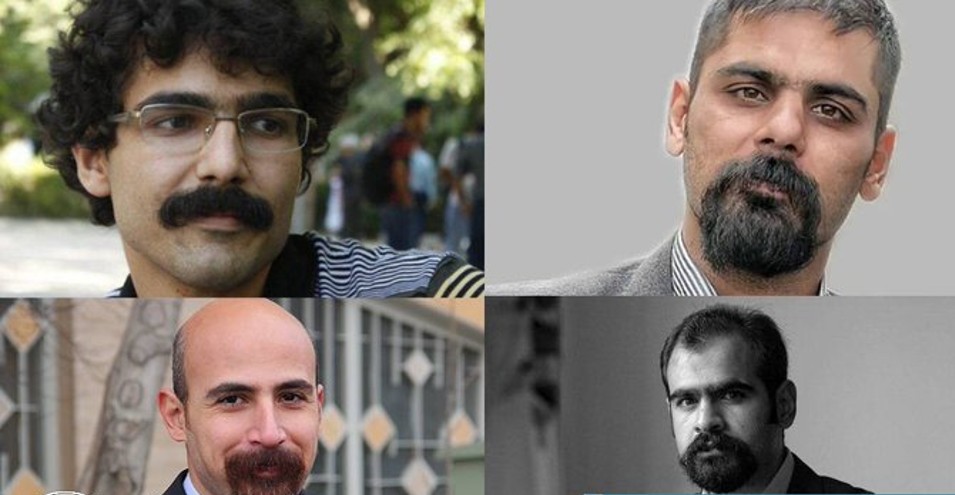
HRANA News Agency – Mohammad Sharifi Moghadam, Mostafa Abdi, Kasra Nouri, and Abbas Dehghan, four Gonabadi dervishes, are serving their sentences in the prisons of Greater Tehran and Adelabad in Shiraz. These citizens were arrested in the early hours of March 2, 2017, along with hundreds of other dervishes.
According to HRANA News Agency, the news agency of the Human Rights Activists in Iran, today, Friday, June 10, 2022, Mohammad Sharifi Moghadam, Mostafa Abdi, Kasra Nouri, and Abbas Dehghan are serving their sentences in Greater Tehran and Adel Abad prisons in Shiraz.
A source familiar with the situation of these prisoners told HRANA about their latest situation: “Mohammad Sharifi Moghadam, Mostafa Abdi, and Abbas Dehghan, the three Gonabadi dervishes, are currently being held in Hall 2 of Andarzgah 2, Brigade 5 of Greater Tehran Prison, in a room with double restrictions on movement and communication with other parts of the prison.”
In mid-April of this year, HRANA reported that Mr. Moghadam, Abdi, and Dehghan were banned from visiting the prison. Mr. Sharifi Moghadam was also banned from visiting the prison library. The ban on these three Gonabadi dervishes came after an argument with Pirouzfar, the deputy warden of the prison.
These Gonabadi dervishes were arrested during the Golestan 7 incident at dawn on March 2, 2017, and transferred to Greater Tehran Prison. Kasra Nouri was transferred from Greater Tehran Prison to Adel Abad Prison in Shiraz in December 2019. He was transferred to Evin Prison in February 2019, and was finally returned to Adel Abad Prison in Shiraz on March 29 of the same year.
Mr. Sharifi Moghadam was previously sentenced by Branch 15 of the Tehran Revolutionary Court, presided over by Judge Abolghasem Salavati, to 12 years of imprisonment, 74 lashes, 2 years of exile to Borazjan, 2 years of social deprivation, and a ban on leaving the country. This sentence was confirmed and communicated to him, given that he did not appeal. By applying Article 134 of the Islamic Penal Code, the most severe punishment, namely 7 and a half years of imprisonment, is applicable.
Mostafa Abdi was also sentenced by the Tehran Revolutionary Court to 26 years and three months of imprisonment, 148 lashes, 2 years of exile to Sistan and Baluchestan, 2 years of ban on leaving the country, and 2 years of deprivation of membership in political and social groups, parties, and groups, and media activity. By applying Article 134 of the Islamic Penal Code, the most severe punishment, namely 7 and a half years of imprisonment, is applicable.
Abbas Dehghan was interrogated for seventy days in 2018 for a case opened against him in a criminal court. He suffered a type of stroke and severe infection as a result of the repeated blows to his ear during interrogation. Mr. Dehghan was also transferred from Greater Tehran Prison to Ward 2-A of the Revolutionary Guard in Evin Prison on October 28, 2018, and returned to Greater Tehran Prison some time later. This Gonabadi dervish was held in the Shapur Police Detention Center for six months after his arrest.
Mr. Dehghan was finally sentenced to imprisonment, whipping, and payment of blood money on February 29, 2020. In the first part of the case, he was sentenced to 5 years of imprisonment by Branch 28 of the Tehran Revolutionary Court, headed by Judge Mohammad Reza Amozad, on the charge of “gathering and colluding against the internal security of the country.” This sentence was confirmed on appeal by Branch 36 of the Tehran Provincial Court of Appeal, headed by Judge Ahmad Zargar Eina. In the second part of his case, Mr. Dehghan was also sentenced by Branch 1146 of the Tehran Criminal Court, headed by Judge Alireza Pashafer, on the charge of “disturbing public order” to 1 year in prison and 74 lashes, on the charge of “insulting officials,” to 6 months in prison, on the charge of “assaulting Basij members,” to 2 years in prison and 140 million tomans in blood money, and on the charge of “attempting to murder Mohammad Hossein Haddadian,” to 3 years in prison, a total of 6 years and 6 months of imprisonment, 74 lashes, and payment of blood money. Mohammad Hossein Haddadian was one of the Basij members present at the Golestan 7 incident, and security agencies had reported that he had been killed during the protests.
By applying Article 134 of the Islamic Penal Code, the most severe punishment, namely 6 years and 3 months in prison, will be applicable to him.
Also, in August 2018, Kasra Nouri was sentenced by Branch 26 of the Tehran Revolutionary Court, presided over by Judge Ahmadzadeh, to 12 years of imprisonment, 74 lashes, 2 years of exile in the Babajani prison, 2 years of banishment from the country, and 2 years of deprivation of membership in political and social groups, parties, and groups, and media activity. This sentence was confirmed and communicated to him, given the lack of appeal. By applying Article 134 of the Islamic Penal Code, the most severe punishment, namely 7 and a half years of imprisonment, is applicable.
It is worth mentioning that this imprisoned Gonabadi dervish was expelled from the University of Tehran in the summer of 1402 for allegedly not attending university. After repeated follow-ups, Shokofeh Yadollahi, Kasra Nouri's mother, requested that the university visit her, and a letter was obtained canceling the expulsion of this imprisoned dervish from the university. According to this letter, Kasra Nouri was allowed to continue his studies after the end of his sentence.
Mr. Nouri had previously served a term of imprisonment in Prison No. 100 in Shiraz, Adelabad Prison in Shiraz, and Evin Prison in Tehran from 2011 to mid-2015 due to his media activity for the Gonabadi Dervishes.
Mustafa Abdi also has a history of previous arrests and convictions. In July 2013, he was sentenced by Judge Salavati to three years in prison on charges of gathering and collusion with the intent to disrupt national security, and was released from Evin Prison in December 2015 after serving his three-year sentence.
Mohammad Sharifi Moghadam was born in 1991 and is married, Mustafa Abdi was born in 1985, Kasra Nouri was born in 1989, and Abbas Dehghan was born in 1987 and is the father of two children.
Gonabadi Dervishes have been experiencing unprecedented pressure from the ruling establishment, especially in recent years. This pressure took on a more external and concrete form, especially after the “Golestan 7th” incident.
The Seventh Golestan refers to a series of events that began at midnight on February 4, 2017, with the presence of a large number of security and law enforcement forces around the home of Dr. Noor Ali Tabandeh, the center of the Gonabadi Dervishes, during which hundreds of dervishes were arrested and then sentenced to flogging, imprisonment, and execution.
It is worth noting that on November 1, 2018, HRANA published the identities of 382 of those arrested in a comprehensive report while investigating the Golestan 7 incident. According to available information, 202 of these Gonabadi dervishes were sentenced by the Tehran Revolutionary Court to a total of 1 execution, 1,080 years and 2 months of penal servitude, 5,995 lashes, 46 years of curfew, 114 years of exile, and 72 years of deprivation of social activities. In February 2018, Behnam Mahjoubi, a Gonabadi dervish who was serving his sentence in Evin Prison despite a forensic diagnosis of being unable to bear the punishment, was transferred from the prison to the hospital following drug poisoning and ultimately died on March 20 in Loghman Hospital in Tehran.
Source: HRANA