One of the signatories of the letter calling for Khamenei's resignation has contracted the coronavirus in prison.
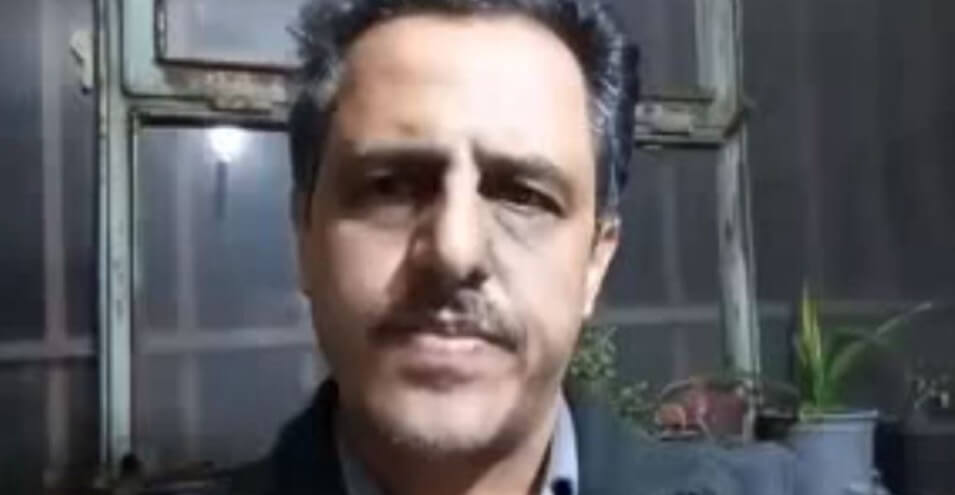
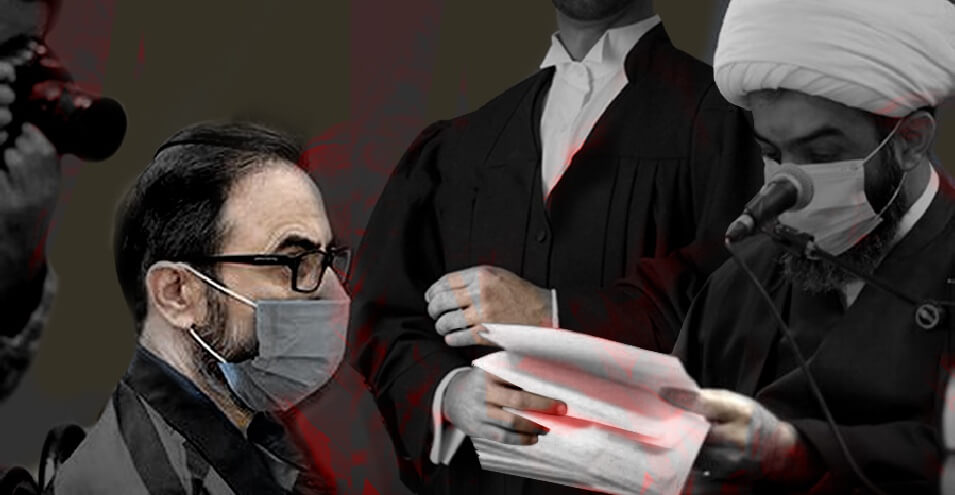
Mohammad Hossein Sepehri, one of the signatories of the letter calling for Ayatollah Khamenei's resignation and serving his sentence in Vakilabad Prison in Mashhad, has been infected with the coronavirus.
Asghar Sepehri, brother of Mohammad Hossein Sepehri, announced on Sunday, April 7, by publishing several audio files of this political prisoner on his Twitter that symptoms of the coronavirus appeared in Mohammad Hossein Sepehri on Saturday, April 29, and that he is currently being held in quarantine and is deprived of receiving medical and treatment services.
In the published audio file, Mohammad Hossein Sepehri announced that despite his symptoms of coronavirus infection, including fever and chills, dry cough, severe shortness of breath, and his transfer to the health department of Vakilabad Prison in Mashhad on April 4, no medical attention has been provided to this political prisoner to date.
Mr. Sepehri also announced that on Thursday, April 4, he, who was infected with the coronavirus, along with Kamal Jafari Yazdi, Abdolrasoul Mortazavi, Hashem Khastar, Mohammad Nourizad, and Abbas Vahedian Shahroudi, other signatories of the letter calling for Khamenei's resignation, were transferred to the Intelligence Department detention center in this city. After returning to prison, not only was he not treated, but he was also transferred to one of the prison's solitary cells as a quarantine, where there was no medical equipment, and he is currently in quarantine.
The release of some prisoners began on Wednesday, March 27, with the issuance of a new circular by Ebrahim Raisi, the head of the Islamic Republic's judiciary. The circular, based on which a limited leave order has been issued for a group of prisoners sentenced to imprisonment, subject to certain conditions; one of the provisions of the circular states that those political prisoners who have been sentenced to more than 5 years in prison on charges of "acting against national security" "are exempt from being sent on leave." This is despite the fact that most political prisoners on the charges have sentences of more than 5 years.
This directive was issued by the judiciary at a time when a large number of prisoners in various Iranian prisons, including political and conscientious prisoners whose sentences have exceeded 5 years, are still being held in Iranian prisons. Despite the spread of the coronavirus in Iranian prisons and the infection of some prisoners with the coronavirus, they do not have the right to short-term leave or conditional release.
US Secretary of State Mike Pompeo said in a press conference on Wednesday, April 26: "We have asked not only Syria, but also the Islamic Republic of Iran to release not only American citizens, but all those who have been unjustly imprisoned in these circumstances. This is a humanitarian act, and apart from the fact that these people have been illegally imprisoned, in these circumstances the principle of humanitarianism dictates that they be released from prison."
Source: Voice of America