28 Million Iranian Women Are Economically Inactive
An infographic from the Tehran Chamber of Commerce on the employment status of Iranian women in 2018 shows that only 16.1% of those in working age have economic activity, and the share of women employed full-time is 1 million and 300 thousand people.
The Economic Research Department of the Tehran Chamber of Commerce, by publishing a chart on the employment status of Iranian women in 2018, reports that 28 million women are economically inactive. This chart is based on a female population of 40 million and 200 thousand people and statistics of 33.3 million women of working age. Of this number, 5 million and 400 thousand people are economically active, and the rest, three-quarters of whom are housewives, are classified as inactive.
The Economic Research Department of the Tehran Chamber of Commerce states that 20% of economically inactive women are currently studying, another 20% have income without work, and 1% are retired.
Creating jobs for youth and women was one of the central topics of the electoral campaigns of the twelfth presidential election. A few months earlier, Masoumeh Ebtekar, the deputy for women and family affairs in Rouhani’s government, called for strengthening and multiplying women’s entrepreneurship associations and emphasized that unemployment among female graduates is two to three times higher.
Iran ranks at the bottom of the gender gap index table, ahead of only three countries. The Human Rights Watch organization announced two years earlier, based on detailed research, that the average employment of women in North African and Middle Eastern countries is 20%, but the share of women in Iran’s labor market is around 15%.
Parvaneh Salahshouri, head of the women’s faction in parliament, had said in autumn 2017 that women should not be overlooked in managing the employment crisis. She added that the faction is seeking a 50% share of women in employment and hiring.
At the conference “Women, Economy, Employment and Development” in summer 2018 in Arak, the rate of women’s economic participation in the Central province was announced to be 6 to 7% and in the whole country 12%. At this conference, it was mentioned, among other things, that of only 109 commercial card holders out of 1,200 commercial cards issued in the Central province, the cardholders are women.
The infographic of the Economic Department of the Tehran Chamber of Commerce considers housewives as part of the population lacking economic activity; however, many housewives or those excluded from employment and hiring in the labor market contribute to household economy through self-employment. Preparing food and sweets for ceremonies or selling tomato paste, pickles, and jam are among the most common home-based occupations for women in Iran. A group is also engaged in various branches of handicrafts, painting, sewing and needlework arts, or internet businesses at home.
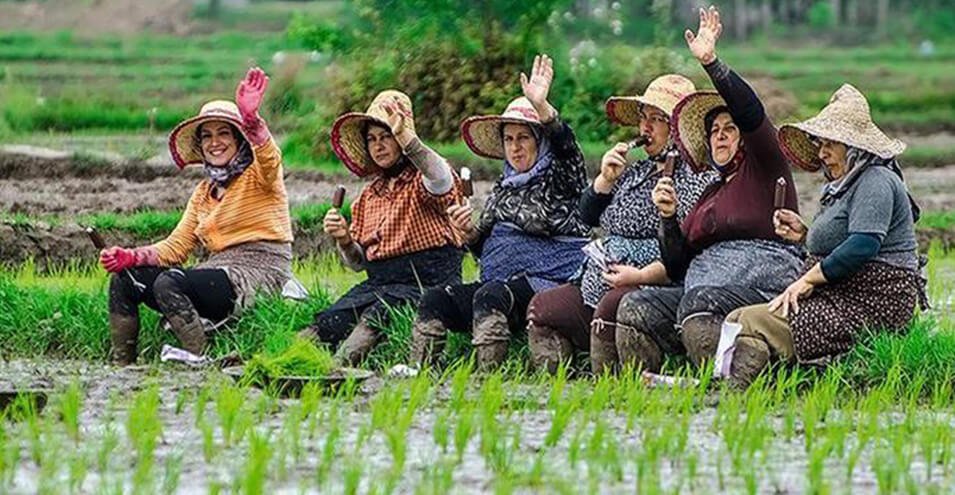
It also appears that the Tehran Chamber of Commerce has not included women in northern Iran and other women who are primarily engaged in agriculture and farming in their infographic, because they are not employed and do not have employers.
Source: DW