US Attacks on Revolutionary Guard Targets Following New Threats from Islamic Republic
While officials of the Islamic Republic have spoken of “negotiations” and “diplomatic solutions” in recent weeks, reports published by international media outlets indicate that Tehran has simultaneously continued the path of military tension-escalation in the Persian Gulf with intensity; a path that has once again increased doubts about the Islamic Republic’s commitment to any agreement and international obligation.
The New York Times reported, citing two American officials, that recent attacks by the United States on targets in southern Iran were carried out following the identification of a series of threatening movements by the Islamic Republic around the Strait of Hormuz; a region that remains one of the world’s most sensitive energy passages.
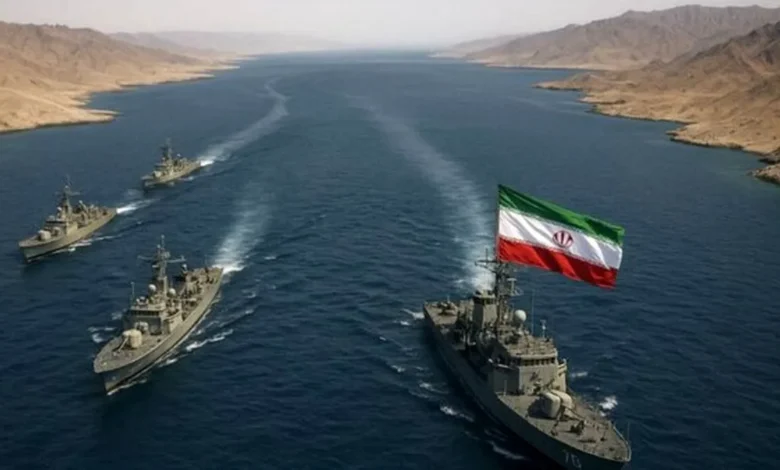
According to this report, American forces targeted and sank two speedboats of the Islamic Revolutionary Guard Corps that were attempting to lay mines in the Strait of Hormuz. At the same time, American military officials announced that the Islamic Republic’s suicide drones were also launched toward US Navy ships and vessels in the Arabian Sea and the Gulf of Oman; an action that from Washington’s perspective is considered a direct threat against American forces.
US Central Command (CENTCOM) announced that the attacks carried out were “defensive” in nature and were conducted with the aim of protecting American forces against threats from the Islamic Republic. In CENTCOM’s official statement, it also referenced the activity of the Islamic Republic’s ground-to-air missile systems near the Strait of Hormuz; systems that, according to American officials, posed a threat to US fighter jets and naval ships.
This comes as Tehran continues to claim it is pursuing negotiations and maintaining a path of diplomacy. However, the simultaneous occurrence of negotiations with military operations, naval mine-laying, and drone attacks has once again raised the question of whether the Islamic Republic is fundamentally committed to any lasting agreement or not.
Experience from past years, from the nuclear file to regional tensions, has repeatedly shown that the Islamic Republic prefers the policy of “pressure through crisis” to genuine dialogue at sensitive junctures. Now, many analysts believe Tehran is attempting to gain greater concessions in negotiations by creating insecurity in the Strait of Hormuz through threats and destabilization.
American media outlets have also reported that the Islamic Republic’s claim about shooting down the American “MQ-9 Reaper” drone has been rejected by the Pentagon. US defense officials have emphasized that none of the country’s drones were shot down in recent operations.
In recent days, several international media outlets including the Associated Press, Washington Post, and Guardian have reported on the increased danger of direct confrontation between Tehran and Washington. According to these media reports, the latest American attacks on missile sites and Revolutionary Guard vessels have left fragile negotiations between the two sides on the brink of collapse.
Despite all these developments, officials of the Islamic Republic continue to emphasize the continuation of talks; however, the ground reality in the Persian Gulf presents a different picture: a government that speaks of “understanding” at the negotiating table has simultaneously maintained the language of threats, mine-laying, and military attacks on the battlefield; an approach that once again highlights the deep distrust of the international community toward Tehran.