Islamic Republic’s Plan Fails in Strait of Hormuz with Firm Regional Rejection of Tehran’s Ambitions
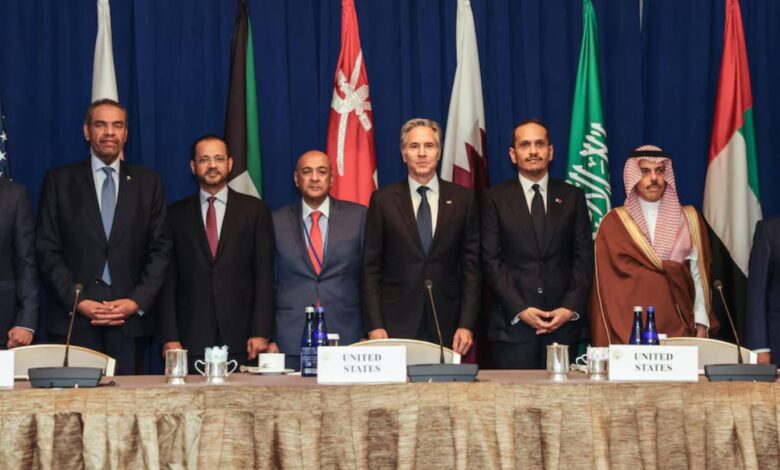
The failure of the Islamic Republic’s plan in the Strait of Hormuz with a definitive rejection by regional countries is indicative of Tehran’s growing isolation and shifting regional equations against Iran.
As regional tensions continue, a recent summit of the leaders of the Gulf Cooperation Council in Jeddah became a venue for declaring explicit opposition to the Islamic Republic’s plan regarding the Strait of Hormuz; a plan through which Tehran intended to collect tolls from passing vessels and increase its influence over this vital waterway.
This meeting, which was the first gathering of the Council since the outbreak of recent regional conflicts, was dedicated to reviewing regional developments and coordinating responses to them. However, the issue of the Strait of Hormuz and concerns about unilateral Iranian actions became one of the most important topics of discussion.
According to international media reports, Abbas Araghchi, the Foreign Minister of the Islamic Republic, during his recent visit to Oman, had proposed that control of the Strait of Hormuz be divided between Iran and Oman.
This proposal, however, was met with a cold response and ultimately outright rejection. Oman, which has always been recognized as a mediator in regional crises, this time also preferred to refrain from entering into a plan that could escalate tensions.
An informed source on the matter stated: “Gulf countries may forgive, but they will not forget what Iran has done.”
He also emphasized: “The countries have no interest in paying the cost of Iran’s reconstruction and will not allow Tehran to take control of this vital waterway.”
Experts believe that the stance of Gulf countries in this regard aligns with the views of the United States. American officials have repeatedly emphasized that Iran should not have the ability to control the Strait of Hormuz or collect tolls from vessels.
In this context, Alex Plitsakas, a former official of the U.S. Department of Defense, stated: “The countries of the Gulf Cooperation Council support the position of the U.S. government and say that Iran cannot control the Strait of Hormuz or collect tolls from it or close it whenever it wishes.”
He also warned that Tehran’s recent actions have had a counterproductive effect and have set this country’s relations with its neighbors back by decades.
The Strait of Hormuz is considered one of the world’s most important energy transit routes, with a significant portion of the world’s oil passing through it. For this reason, any instability in this region could have far-reaching consequences for the global economy.
In recent months, threats to close this strait or impose restrictions on vessel passage have become one of the tools of pressure in the foreign policy of the Islamic Republic; an approach that is now facing widespread regional opposition.
Concurrent with these developments, negotiations between Iran and the United States that were underway in Islamabad have been halted, and there is no clear prospect for their continuation. This situation has intensified concerns about escalating tensions.
Meanwhile, Qatar has called for a swift end to the war, but emphasizes the durability of peace. A spokesperson for the Foreign Ministry of this country stated: “We do not want to witness a return of conflicts in the region in the near future.”
He also added: “We do not want to witness a frozen conflict that ignites again each time for political reasons.”
The sum of these developments shows that the Islamic Republic, in its attempt to expand its influence in one of the world’s most sensitive points, has faced serious and coordinated resistance from regional countries.
At a time when the level of distrust in Tehran has increased and the patience of regional countries is wearing thin, any escalatory action could have far-reaching and unpredictable consequences.
What is now more evident than ever is that confrontational policies have not only failed to strengthen Iran’s position but have placed it in a more difficult and isolated situation.