Ghalibaf: From Bloody Crackdown on Youth to Iran’s De Facto Ruler in Negotiations with America
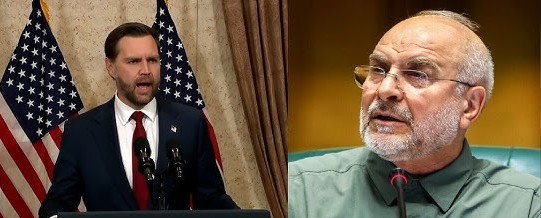
American officials have reported unprecedented negotiations with Ghalibaf, who had a hand in the bloody crackdown on youth, describing these negotiations as unprecedented.
In a notable development in diplomatic exchanges between Tehran and Washington, “J.D. Vance,” Vice President of the United States, announced the holding of negotiations that he said have been unprecedented in recent decades. His remarks come at a time when discussions about the actual location of power in Iran’s political structure and the role of figures such as “Mohammad Baqer Ghalibaf” have become the focus of attention.
Vance, in a press briefing referring to his meeting with Ghalibaf, described him as a figure playing a key role in managing Iran’s affairs. On this matter, he said: “I negotiated with Ghalibaf, the person who actually runs Iran. He sat across from the Deputy President of the United States. Such a thing has never happened before.”
These remarks are being made at a time when Ghalibaf has been recognized in recent years as one of the influential figures in the power structure of the Islamic Republic, and his role in different periods (from commanding the police force to presence at high political levels) has always been the subject of debate. Both domestic and international critics have repeatedly accused him of involvement in suppressing protests and violent confrontations with demonstrators, particularly young people.
In continuation of this briefing, the U.S. Vice President addressed the atmosphere of distrust between the two countries and emphasized: “After 49 years, there is a great deal of mistrust between Iran and the United States of America.” He also added: “This matter is not going to be resolved overnight. I think those people were looking for an agreement.”
Vance, reiterating this point, said: “There is great mistrust between Washington and Tehran, and it cannot be overcome overnight.” At the same time, he emphasized that the dialogue process will continue.
According to him, the U.S. government is not seeking a limited agreement, but rather pursuing broader goal-setting: “Trump is not looking for a limited agreement with Iran, but rather seeks a comprehensive agreement that will completely end the conflict.”
He also referred to Washington’s nuclear policy and said: “Trump’s policy is clear and unambiguous. We will never allow Iran to have nuclear weapons.” Alongside this hardline stance, Vance spoke of economic proposals as well: “Trump proposes to turn Iran into an economically prosperous country if it commits to ending its nuclear ambitions.”
The U.S. Vice President, also referring to the overall negotiation process, added: “We will continue to negotiate and I will continue efforts to reach a big deal with Iran because it will be beneficial for our country and the world.”
In conclusion, he once again emphasized the importance of these talks and said: “Our sessions with Iran have been historic and unprecedented in the past 49 years. We know that there is a legacy of mistrust with Tehran, but we are negotiating in good faith and under the orders of the President.”
These remarks are being made at a time when analysts, simultaneously with examining the prospects of a possible agreement, are also paying special attention to the role of figures who have actual power within Iran; a matter that could be influential in determining the future course of Tehran-Washington relations.