Beyond Ancient Enmity; Reza Pahlavi’s Vision for Iran-Israel Peace Under Scrutiny
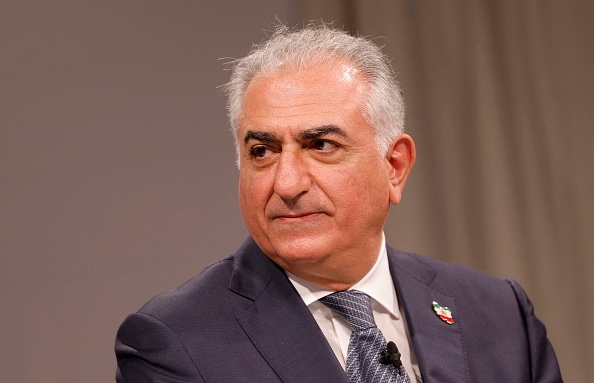
The “Jerusalem Post” examined Reza Pahlavi’s vision for peace between Iran and Israel amid doubts and geopolitical realities.
As regional tensions continue to cast a heavy shadow over Iran-Israel relations, the Jerusalem Post, in a recent editorial, examined the views of Reza Pahlavi regarding Iran’s future, describing these views not as mere speculation, but as a thoughtful proposal—a proposal that, according to the newspaper, deserves to be heard and carefully evaluated.
This editorial, referring to Reza Pahlavi’s recent speech at the “Conservative Political Action Conference” (CPAC) in Texas, emphasizes that his message must be weighed simultaneously against the region’s complex political realities. Pahlavi, in this speech, called for the complete end of the Islamic Republic and asked his audience to imagine a new Middle East where Iran is Israel’s friend. He also stressed that if the political system were to change, Iran could become a democratic partner for the United States and Israel.
The Jerusalem Post’s analysts, meanwhile, have reminded that this future vision, despite its appeal, also faces serious limitations. According to the newspaper, Pahlavi has presented not an immediate executive program, but an intellectual framework that emphasizes a key distinction: “that the Islamic Republic does not represent all Iranians and hostility toward Israel is part of ruling ideology, not an inherent feature of Iranian identity.”
This distinction, particularly from an Israeli perspective, holds strategic importance. Over the past decades, the Islamic Republic, through financial and military support for groups such as Lebanon’s Hezbollah, Shiite militias in Iraq, and Yemen’s Houthis, has created a network of regional pressure against Israel. In such an environment, changing the narrative about Iran requires a deep redefinition of mutual understanding between the two sides.
In another section of this analysis, reference is made to the historical dimension of Reza Pahlavi’s remarks. By referring to ancient periods of Iranian history and invoking Cyrus the Great, he attempts to present a different image of Iran; an image based on religious tolerance and coexistence that existed before the formation of the Islamic Republic’s adversarial discourse. This return to history, according to the editorial writers, is an attempt to create an alternative narrative that can lay the groundwork for future dialogues.
Nevertheless, the Jerusalem Post warns against ignoring ground realities. The newspaper clarifies that a speech, however important, cannot change the region’s security equations or eliminate current threats. Particularly after recent violent incidents, deep mistrust between the parties has formed that cannot be easily resolved.
At the same time, this editorial emphasizes the importance of “recognizing moments of opening” and recalls an example such as the Abraham Accords—accords that seemed impossible to many before their realization. From this perspective, Reza Pahlavi’s effort to raise the possibility of a different regional order could be part of a process that gradually challenges entrenched perceptions.
The Jerusalem Post also points to the fragmentation of Iran’s opposition and considers it one of the main obstacles to realizing such a vision. According to the newspaper, political transition, even if it occurs, would not by itself lead to stability, democracy, or effective institutions and would require extensive planning and consensus.
In summary, this media outlet calls on policymakers in Israel and the United States to adopt a balanced approach: on one hand, avoiding a romantic view of figures like Reza Pahlavi, and on the other, avoiding the dismissal of voices that offer a different narrative of Iran’s future. In the authors’ view, one of the West’s recurring mistakes regarding Iran has been remaining confined within a framework that assumes the Islamic Republic as the sole representative of the country.
This editorial concludes by emphasizing that although the prospect of peace between Iran and Israel still seems distant, raising it in public discourse is itself an important step; a step that can lay the groundwork for imagining a different future in the region, a future in which, instead of perpetual confrontation, the possibility of coexistence and cooperation is also considered.