UN Rapporteur ‘Mai Sato’ Warns of Escalating Religious Freedom Violations in Iran: People Demand Fundamental Changes
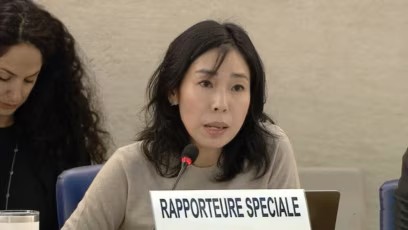
“Mai Sato,” United Nations Special Rapporteur on religious freedom violations in Iran, stated: “The Islamic Republic, through suppressing protesters and pressuring religious minorities, has disregarded the people’s demands for fundamental changes and the right to self-determination.”
Mai Sato, UN Special Rapporteur on human rights in Iran, warned in her latest report that human rights violations in Iran continue to increase, and religious minorities including Christians, Baha’is, and other religious groups face widespread pressure and restrictions.
Speaking at the UN Human Rights Council session in Geneva on Monday, March 16, corresponding to Esfand 25, she announced that since beginning her mandate in August 2024, she has received numerous reports of widespread arrests, suppression of protesters, and increased pressure on civil and religious activists. According to her, this process demonstrates that the Iranian government continues to use security and judicial tools to control society and silence dissenting voices.
Sato, referring to nationwide protests in Iran, said: “Tens of thousands of people were arrested during these protests; among them were doctors, nurses, lawyers, and citizens who merely sought political and social change.” She also noted that there are reports indicating that some detainees have been forced to make confessions under pressure.
The UN Special Rapporteur also criticized the method the Iranian government uses to discredit protesters. She stated that Islamic Republic officials often label protesters as “terrorists” and accuse religious minorities of “espionage” for foreign countries; accusations that according to human rights observers have repeatedly been used to justify the suppression and detention of religious activists.
She warned that even some children in connection with protests have faced severe judicial sentences, and reports have been published about death sentences issued for some of them; an issue that has raised deep concern among human rights organizations.
Human rights activists say that in Iran, religious minorities have faced structural discrimination for years. Christian citizens, Baha’is, and other religious groups have repeatedly faced arrest, trial, and social and economic restrictions. In many cases, charges such as “propaganda against the system” or “action against national security” are used to suppress religious activities.
Critics of these policies believe that the Islamic Republic has viewed religious minorities from the beginning with a security perspective and has sought to restrict any independent religious activity; a measure that according to them is a flagrant violation of freedom of religion and conscience.
Sato emphasized in another part of her remarks that the international community must not ignore the demands of the Iranian people. She said that the people of Iran desire a different future and must be able to determine their own political and social destiny.
She stated: “The people of Iran demand the right to self-determination, and this issue must be the central focus of any solution to Iran’s crisis.”
Many observers believe that the continuation of political repression and religious discrimination in Iran has not only deepened the human rights crisis but has also increased social discontent; discontent that in recent years has been repeatedly expressed in the form of popular protests and demands for freedom and justice.