Claims of Friendship with Christians by Arafai, in the Shadow of Decades of Repression and Imprisonment
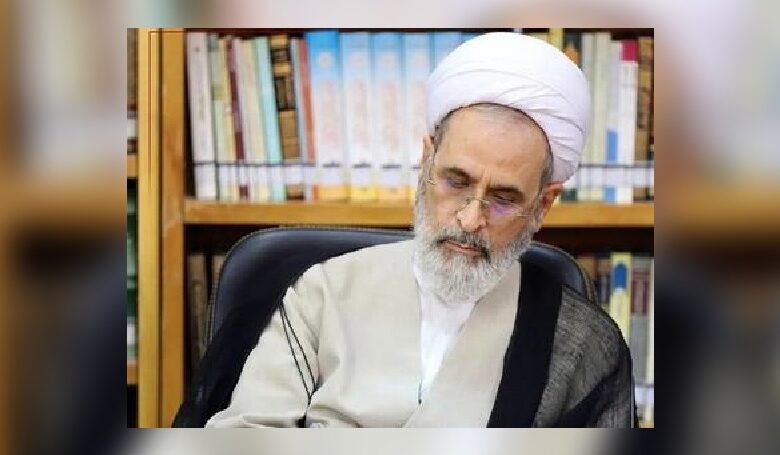
When the government is accused of detaining, torturing, and confiscating the property of Christians in Iran, correspondence in defense of Christians appears to be less an expression of sympathy and more a political effort for survival.
While military tensions between the Islamic Republic of Iran and a coalition consisting of the United States and Israel have reached an unprecedented level, one of the senior officials of the Islamic Republic has attempted to seek support from Christian leaders around the world; an action that stands in stark contrast to decades of the Iranian government’s treatment of the Christian community.
According to published reports, Ayatollah “Alireza Arafai,” director of the seminaries and a senior official of the Islamic Republic, wrote a letter to Pope Leo XIV, asking him to condemn recent military attacks against Iran. In this letter, he referred to an attack that occurred on February 28, 2026 (Esfand 9, 1404), claiming that as a result, Ali Khamenei, the former leader of the Islamic Republic, was killed along with some of his companions.
Arafai wrote in this letter: “With a heart full of sorrow and a spirit grieved by the severity of tyranny and oppression, I write this message to Your Eminence in circumstances where the Iranian nation and the world of Shi’ism have fallen into unprecedented and great mourning. The pen refrains from writing and the tongue from speaking, but human and religious duty requires that the cry of the oppression of a nation reaches the ears of the world, especially to spiritual leaders who call for peace and justice.
As Your Eminence is aware, in the early hours of Saturday, Esfand 9, 1404 (February 28, 2026), America and the usurping Zionist regime, with a satanic coalition, committed an unprecedented and massive crime against the independent and Islamic nation of Iran.
In this dishonorable aggression that mocked all international laws and humanitarian principles, His Eminence Ayatollah al-Uzma Seyyed Ali Khamenei, the supreme authority of the Shi’ite world and the wise leader of the Islamic Revolution, while performing his duties in his office in Tehran, along with a group of companions and family members, were granted the great blessing of martyrdom by the enemy. He was a serious supporter of the rights of minorities, especially Christians in Iran.
But this dishonorable assassination was not merely a simple war crime. Deliberately targeting the highest religious authority of a faith with hundreds of millions of followers, whom nearly two billion Muslims worldwide also hold in special regard, this action, which is considered an unprecedented crime in the history of religions and an open insult to all followers of divine religions, opens a new “door of audacity” through which any tyrannical power may in the future consider the life of any spiritual leader as a legitimate target!
Certainly, what caused threats to the life of this esteemed authority over past decades was the unwavering and fearless defense of this esteemed authority of the oppression of the Palestinian people and the courageous resistance of the people of Gaza against genocide and occupation; an issue that Your Eminence yourself has repeatedly and clearly condemned and described as a clear example of the killing of innocents.
On the other hand, simultaneously with this attack, the aggressor regime, with full savagery, in a heartbreaking and unforgettable action that shook the conscience of awakened humanity, targeted a girls’ elementary school in the city of Minab with aerial bombardment. In this horrific crime, close to 170 innocent students between 8 and 12 years old were killed.
The images of the bodies of these little angels with their remaining shoes and schoolbags under the rubble pain the heart of every free person. Today, defending the children of Minab, like the children of Gaza, is a moral, religious, and human responsibility for all of us to prevent the repetition of these tragedies against children.
You, as the leader of Catholics and standard-bearer of interfaith dialogue and world peace, have always been a defender of the oppressed and a champion of human dignity. Today, the peaceful and religious nation of Iran is in acute suffering in the view and sight of the awakened consciences of the world.
It is hoped that the Holy See, as an independent religious and moral institution, condemns these heinous crimes, which are clear examples of “war crimes,” “crimes against humanity,” and “audacity against the sanctity of religious leaders,” with a clear voice and denies the connection of these crimes to the compassionate teachings of Christianity.”
However, a point that has astonished many observers is Arafai’s claim regarding Ali Khamenei’s position in supporting religious minorities. He wrote in this letter that Khamenei was a serious supporter of the rights of minorities, especially Christians in Iran; a claim that does not align with multiple reports from human rights organizations about the situation of Christians in Iran.
According to reports from human rights organizations and religious freedom advocacy groups, the Islamic Republic has pursued a systematic policy since the 1357 Revolution to restrict Christian activities, especially Christian converts, to the present day. In many cases, Christian religious activities have faced accusations such as “actions against national security” or “propaganda against the system,” and possessing a Bible was considered contraband for them.
Reports show that leaders and members of house churches are often targets of arrest and prosecution, and even participation in these gatherings can lead to several years in prison. In some cases, organizing or administering these gatherings has resulted in up to ten years imprisonment.
In recent years, numerous cases of arrest and conviction of Christians have been reported. For example, in 2024, several Christian citizens were sentenced to lengthy prison terms, and others were detained simply for religious activities or attendance at house churches.
According to other reports, in 2024 alone, dozens of Christians in Iran were sentenced to a total of more than 250 years in prison; a figure that indicates intensified pressure on this religious community.
Reports also indicate that hundreds of Christians in recent years have been detained due to religious activities, and many Persian-language churches have been closed, so that many Christians have been forced to gather in homes and in secret.
In such circumstances, Arafai’s letter to the leader of Catholics worldwide to seek support for Iran reminds many observers of a serious contradiction. The institution he heads, namely the seminaries, is considered one of the most important ideological centers of the system, and many of the ideological and judicial forces operating in cases related to religious minorities are educated within this structure.
In past decades, multiple reports have been published of security forces raiding house churches, arresting priests, confiscating property, and pressure to force other Christians to return to Islam. This process has forced many Iranian Christians to leave the country and seek asylum abroad.
Furthermore, in this letter, while he speaks of the attack on a school in Minab, over the past two months and as a result of nationwide protests, many underage children have been directly targeted by bullets from regime suppression forces and lost their lives, and even many children between 12 and 17 years old have been arrested and imprisoned. (It should be noted that according to investigations conducted and analytical reports published, the attack on Minab school was not carried out by Israel or America, but rather the missile in question was of the KH55 type, an old Soviet weapon belonging to Iran, which fell on Minab school.)
In such circumstances, the effort to present the leader of the Islamic Republic as a “supporter of Christian rights” appears to be a desperate attempt, more than a reflection of reality, an effort to reshape the government’s image at the international level.
Especially in circumstances where the Islamic Republic faces widespread political and military crises, seeking support from Christian leaders of the world can be a sign of an effort to gain international legitimacy.
In the view of many critics, this action is an example of double-dealing policy: a policy that has been accompanied by restrictions, arrests, and pressure on Christians within the country, but is presented on the global stage with rhetoric based on “human dignity” and “support for minorities.”
Ultimately, this question remains: Can claims of defending Christians be accepted from a government that has been accused for decades of repressing Christians, closing churches, and imprisoning Christian activists?