Shocking Revelation of Islamic Republic’s Sinister Plan to Sacrifice Citizens in Case of US Attack
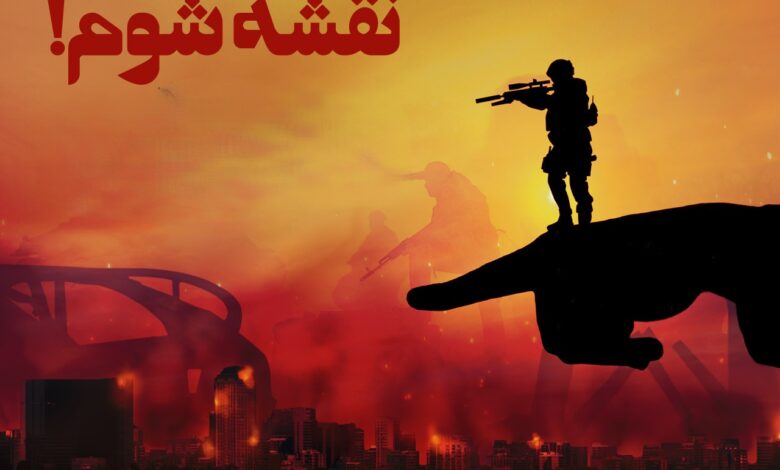
A message attributed to a security source reveals the Islamic Republic’s sinister plan to target residential areas and exploit citizens’ blood for propaganda purposes.
A message attributed to a security source regarding the Islamic Republic’s sinister plan to target residential areas and exploit citizens’ blood for propaganda purposes is circulating on social media networks simultaneously with intensifying internet restrictions in Iran.
At a time when Iran’s political and security atmosphere has become more volatile than ever due to regional tensions and mutual threats between Tehran and Washington, a warning message has been published in Persian-language social media networks, claiming to have been sent by an internal source within security institutions; a source that has not revealed its identity due to security concerns.
According to this message, what is described as “issued directives” suggests that in the event of a military attack by the United States, the Iranian government will target a number of residential areas and cities within the country with missile and drone attacks in the initial minutes of the assault. A claim that, if true, would mean instrumental use of Iranian citizens’ lives in a security and propaganda scenario.
The message claims that immediately following these attacks, images of victims, particularly women and children, will be widely distributed to shape global public opinion in favor of the Iranian government. In other words, the purpose of this action is described as creating a “victim” image of the Islamic Republic on the international level and changing the equation of global public opinion.
This claim is being raised under circumstances where, in recent years, multiple reports from human rights organizations have been published regarding violent crackdowns on protesters, widespread arrests, and bloody suppression of nationwide protests in Iran; events that have faced the government’s international image with serious challenges.
Another section of this message refers to severe internet restrictions in recent days. According to the alleged source, these restrictions are being implemented with the purpose of preparing the infrastructure for a “white-line internet” across the country; a limited network that will be available only to specific institutions so they can promptly send images and videos to allied media outlets and news agencies in the Arab world.
If such a claim is confirmed, it would suggest that internet cutoffs or widespread disruptions are not merely a security measure, but part of a media scenario and public opinion engineering.
The message emphasizes that the leader of the Islamic Republic, Ali Khamenei, by implementing such a plan, pursues two goals simultaneously: “First, revenge against the Iranian people, and second, deceiving domestic and global public opinion by shedding the blood of innocent citizens.”
Continuing these claims, an intelligence document is also referenced, which allegedly states that the number of deaths on the 18th and 19th of Dey (January 8 and 9) has reached 95,000 people; a very heavy figure that no independent and international source has confirmed to date. The accuracy and validity of this document and the presented statistics require careful examination and verification by impartial sources.
The publication of this message has sparked a wave of concern and anger among Iranian users. Many users, referring to the history of suppressing protests and security crackdowns, have described these claims as “credible”; conversely, others have expressed doubts about its accuracy and have called for documented evidence.
Under circumstances where Iran’s media environment faces widespread restrictions and free access to information faces serious challenges, such revelations, regardless of their accuracy, represent a reflection of deep public distrust toward the structure of power in the country.
What is certain is that in light of increasing tensions between Tehran and Washington and given the bitter experiences of recent years, Iranian public opinion is more sensitive and concerned than ever about citizens’ security and the transparency of governmental decisions.