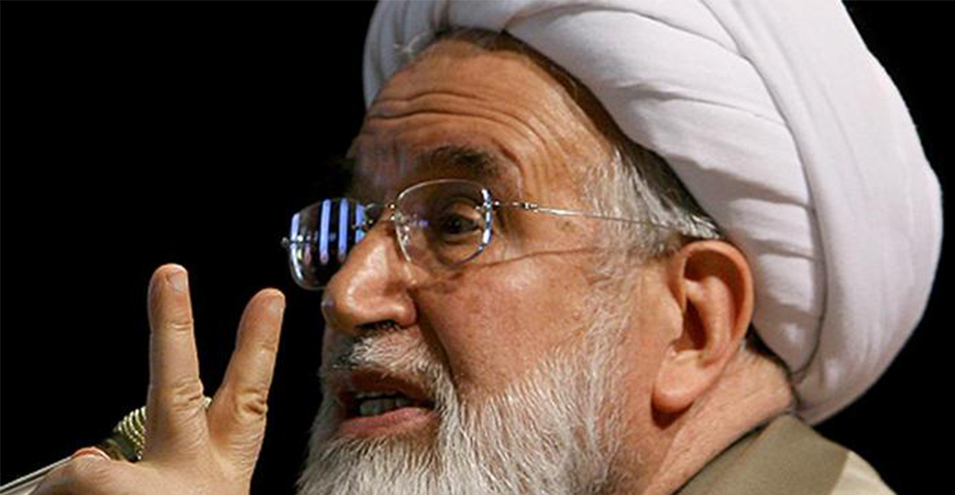
The ‘Crown of Thorns’ Scenario: Assassination Option Against Ali Khamenei at Peak Iran Crisis and U.S. Confrontation

As Washington and Tehran’s confrontation moves closer to a breaking point, a scenario titled “Crown of Thorns” has been presented by a former CIA official, proposing the assassination of Ali Khamenei as an operational and possible option with Israeli cooperation.
Amid escalating tensions between the United States and the Islamic Republic of Iran and increasing threatening rhetoric from the White House, a former officer of the Central Intelligence Agency (CIA) has presented a complex scenario aimed at the physical elimination of Ali Khamenei, the leader of the Islamic Republic, a scenario that, according to him, could be carried out with the support and cooperation of Israel.
Concurrent with the strengthening of U.S. military presence in the Persian Gulf and increased pressure on Tehran, U.S. President Donald Trump, emphasizing that “time is running out,” has called on the Islamic Republic to negotiate toward reaching “an agreement without nuclear weapons.”
“Abbas Araghchi,” Iran’s Deputy Foreign Minister, in response to mounting threats, stated in his remarks that Iran’s forces, with fingers on the trigger, are ready to deliver an immediate and powerful response if any action is taken against their country.
In a report published by the British website “Daily Express,” “Andrew Bustamante,” a former CIA covert operations officer, described a scenario that he called “Crown of Thorns,” a plan that, according to him, could be implemented with the goal of eliminating the leader of the Islamic Republic should the confrontation between America and Iran intensify.
He said on this matter: “All the necessary tools for changing behavior or the power structure in Tehran are in Washington’s possession, but rather than arresting the leader of the Islamic Republic (which is not a priority due to its operational costs and political consequences), eliminating the target is a cheaper, faster, and more operational option.”
Bustamante emphasized that the option of arresting Khamenei requires direct and overt presence of U.S. military forces on Iranian soil, an action that, in his view, is strategically unnecessary and costly.
According to this former official, if the “Crown of Thorns” scenario were to be implemented, Washington could place financial, intelligence, and logistical resources at the disposal of its allies, particularly Israel, to carry out the assassination operation.
He added: “America could remain behind the scenes while Israel plays the main operational role, but ultimately America’s primary objective—the weakening of the Islamic Republic—would be achieved.”
These remarks have been made at a time when tensions between Washington and Tehran have increased in recent months to an unprecedented degree. The White House, following the failure of talks with Tehran regarding limiting nuclear and missile programs, has reviewed reports that include broad military options against Iran’s government.
During this period, Trump has explicitly warned that if no agreement is reached on Iran’s nuclear program, the next U.S. attack will be far more severe, a clear reference to the possibility of intensified military action against the Islamic Republic.
Simultaneously, within Iran itself, economic and social crises have deepened and significant international pressures exist; including reports of extensive financial infiltration of Iranian elites outside the country, which indicate that Iran’s power structure faces multiple challenges.
Bustamante referred to the experience of the assassination of “Ismail Haniyeh,” former leader of the Hamas movement, in Tehran, and emphasized that the same pattern used in that operation could be applicable to Khamenei as well.
He also said on this matter: “What was done to the leader of Hamas could be done to Khamenei as well.”
Haniyeh was targeted in an attack during his visit to Tehran in August 2024, which the Islamic Revolutionary Guards Corps described as being caused by a missile strike via mobile phone tracking, and Israel accepted responsibility for that attack.
Some security analysts believe that increasing pressure and military options against Iran, particularly if related to the physical elimination of senior leaders, could have dangerous consequences for regional and global stability. Given Iran’s probable reactions and the role of regional actors such as Israel, any action at this level could lead to increased tensions and broader instability.
While the “Crown of Thorns” plan has been presented as a theoretical scenario, analysts believe that adopting such an approach could bring new security and political threats not only to Iran but also to the region and international relations.
Andrew Bustamante’s remarks about the “Crown of Thorns” scenario indicate that at the highest levels of U.S. security analysis, the option of physically eliminating the leader of the Islamic Republic is not only a hypothetical matter but part of debatable calculations should confrontation with Tehran intensify.
This scenario, which relies on Washington’s cooperation with Israel, reflects the reality that if Iran’s crisis were to intensify, it could reach a point more dangerous than what governments have stated so far.