Murder of Mohsen Rashidi, Christian Citizen, by Gunshot and Deliberate Prevention of Medical Treatment
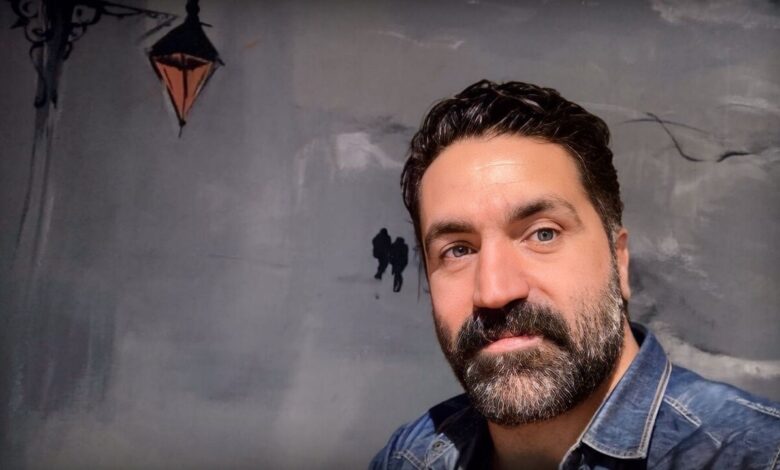
The killing of Mohsen Rashidi during protests in Isfahan, from direct shooting to prevention of access to emergency services, is a stark example of deadly suppression of protesters and systematic violation of the rights of Christians in Iran.
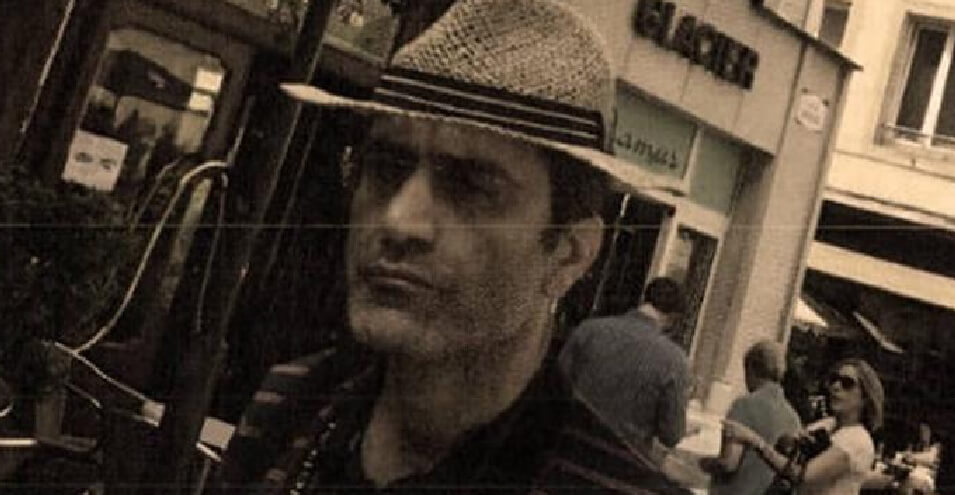
Reports published on social media describe the death of Mohsen Rashidi, a 42-year-old Christian citizen, during protest gatherings on the 10th of Dey in the Baharestan area of Isfahan; an event that led to his death not only by military gunfire, but also through deliberate prevention of medical treatment.
Based on testimony from close friends who were present at the scene, Mohsen Rashidi was present during this gathering alongside his friend “Shahram Magsoudi”; a well-known athlete and two-time champion of the national “Powerlifting” competition from the city of Izeh. During this gathering, Shahram Magsoudi was directly targeted by gunfire from security forces in the chest area and was severely wounded.
According to eyewitness accounts, Mohsen Rashidi moves toward his wounded friend to help him, but security personnel violently attack him and beat him. Mohsen initially manages to escape from the officers and leaves the scene. However, after the security forces disperse, he returns to the location once again to help his wounded friend’s body.
At that moment, security personnel shoot at him from behind with military gunfire. The bullet hits the thigh area of Mohsen’s leg, an injury that could have been controlled had there been immediate access to medical services, but due to the subsequent action of security personnel, it led to his death.
According to this report, officers stationed in front of the hospital prevented Mohsen Rashidi and his companions from entering the emergency room and denied him access to medical services. This action occurred while he was experiencing severe bleeding. Mohsen Rashidi ultimately lost his life without receiving any medical assistance.
Mohsen Rashidi’s family spent five days in complete uncertainty about the fate of their son. After repeated inquiries and in exchange for payment of money, his name was searched in the list of victims. At first, the family was informed that no one with these characteristics was registered, but a day later, his death was confirmed.
Subsequently, the family was asked to sign a form claiming that Mohsen Rashidi was a member of the Basij and government forces and had been killed by protesters, a request that the family firmly rejected. Finally, Mohsen’s body was handed over to the family only in exchange for payment of one billion tomans.
Mohsen Rashidi was the father of a four-year-old daughter. His wife also had two teenage daughters from a previous marriage, for whom Mohsen played the role of father. However, security authorities continued to pressure the family even after his death; the family was prevented from holding a funeral procession, mourning ceremonies, and even installing a gravestone.
The killing of Mohsen Rashidi occurred while Iranian Christians have participated alongside other citizens in popular protests in recent years and have paid a heavy price. According to reports from the organization “Article 18,” at least seven Armenian citizens lost their lives during the recent protests.
Christian citizens in Iran are deprived of the most basic human and civil rights. The international Christian organization “Open Doors” in its annual report released last week has placed the Islamic Republic of Iran among the top ten most Christian-persecuting countries in the world; a position Iran has maintained for years on the list of serious violators of religious freedom.
This case is situated within a broader context of bloody suppression of popular protests. Multiple reports describe the deaths of thousands of protesters, including children. According to the Hrana report, the number of confirmed detainees has reached 24,669 people.
“Mai Sato,” the United Nations special rapporteur on human rights in Iran, has stated that based on reports received from physicians inside the country, the number of civilian deaths could reach 20,000 or even more. He also said that the UN Human Rights Council will hold an emergency session, and there is a possibility that a fact-finding mission will be formed to investigate the possibility of referring Ayatollah Khamenei’s case to the International Criminal Court.
Mai Sato has also emphasized in an interview with BBC Australia that the number of victims is increasing and there is a possibility of investigating “crimes against humanity.”
The organization “Article 18” also stated in a statement on this matter: “We face a moral and political responsibility toward Iranian citizens, especially children; people who demand nothing but their fundamental human rights, yet have faced the most severe and ruthless forms of state violence. We believe that now it should be clearly and publicly pursued that Christians and all conscience-bound people demand from their elected representatives that Iranian authorities be held accountable and explicitly state that the actions of this regime are completely unacceptable and a grave violation of international law.”
Amnesty International also responded: “This week, distressed families in Iran searched for their missing loved ones in morgues full of corpses, hospitals, and even among bodies piled up in warehouses and shipping containers. The authorities of the Islamic Republic of Iran must be held accountable.”