National Uprising in Zahedan by Baloch People and Mullah Abdolhamid’s Support for Prince’s Call
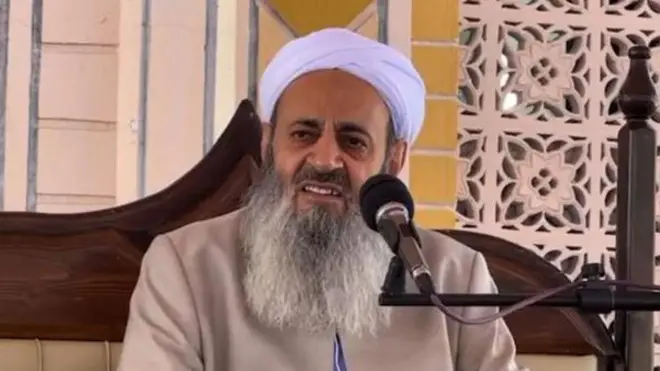
On the thirteenth day of the national uprising, internet cuts and security threats failed to stop the protests, and Zahedan became the center of the national uprising as “Mullah Abdolhamid” expressed support for the protests and the prince’s call.
Today, Friday, January 9, corresponding to December 19, while the thirteenth day of the national uprising of Iranians against the Islamic Republic was accompanied by nationwide internet blackouts and intensified security threats, reports from inside the country indicate the continuation of popular protests in several cities, particularly in Sistan and Baluchestan province. Although widespread internet cuts have seriously disrupted free information dissemination, they have failed to prevent protesters from taking to the streets.
Based on reports and information released by those with access to Starlink internet, on Friday, December 19, protesting citizens took to the streets in cities including Zahedan, Chabahar, and Mashhad. The main focus of the protests has been reported in Zahedan and surrounding areas.
Local Baloch sources reported that on Friday afternoon, coinciding with the beginning of protests by Baloch citizens in Zahedan after Friday prayers, military and security forces around Makki Mosque opened direct fire on protesters. According to these reports, a number of citizens were wounded in these shootings.
Videos released by the “Baloch Activists Campaign” show that, amid a heavy security atmosphere, a group of women in Zahedan engaged in street demonstrations, chanting slogans including “Death to Khamenei” and “From Zahedan to Tehran, I sacrifice myself for Iran.”
The campaign also reported that on Friday afternoon, protesting citizens in Chabahar took to the streets from the Grand Mosque area to Lanj Circle. According to local sources, coinciding with this gathering, the presence of military and police forces in the city’s main streets noticeably increased, and the atmosphere in Chabahar became heavily securitized.
In one of the most significant statements in recent days, “Mullah Abdolhamid,” the Sunni Friday prayer leader of Zahedan, explicitly expressed support for the nationwide protests and the call of Prince Reza Pahlavi in his Friday prayer sermons on December 19.
Referring to extensive demonstrations the previous night, he said: “Last night, everyone witnessed that people of Iran from all walks of life came to the scene.” Abdolhamid added: “There is also a call for tonight and people will return to the streets again.”
He also, while describing the living conditions of the Iranian people, said: “A large number of Iranian people are in need of bread, and many citizens barely eat one meal a day.” The Zahedan Friday prayer leader, warning about the consequences of continuing this situation, added: “Cemeteries may be created due to starvation.”
However, Abdolhamid emphasized that the protests go beyond economic demands and continued: “The Iranian people have risen for their own grandeur and honor.” Referring to corruption and mismanagement of the ruling system, he added: “Many national resources have been plundered.” He also reminded that the Iranian people have protested repeatedly in past years and have suffered casualties.
Abdolhamid stated: “The Iranian nation is determined to place qualified individuals at the helm of power, and the slogans of protesters show that people want freedom and justice.” Later, referring to his change of position, he said: “A few years ago I said referendum, but now I say surrender to the wishes of the nation.”
Finally, Mullah Abdolhamid warned the military and security forces: “Do not stand against the Iranian people.” He also emphasized: “The nation’s wish today is more emphatic than their wish in 1979.”
Hours after the massive Thursday night demonstrations, the internet in Iran remained either cut off or severely limited. This situation has made communication between Iranians inside the country with families and foreign media almost impossible and has created widespread concern among citizens both inside and outside the country.
Meanwhile, Prince Reza Pahlavi, in a video message, thanked the widespread presence of the people and called on those who still had doubts to join the protests. He said: “I am proud of each one of you who took over the streets across Iran on Thursday night.” He added: “Those of you who were hesitant, join your fellow citizens on Friday night (December 19 at 8 PM) and increase the crowd so that the regime’s capacity to suppress becomes even weaker.”
Prince Reza Pahlavi also, referring to the internet cuts, said: “I know that despite internet and communication blackouts, you will not abandon the streets. Be assured that victory belongs to you.”
Following the massive presence of people in the streets and the statements of Mullah Abdolhamid and his support for the prince’s call and people’s protests, the Islamic Republic authorities made more explicit threats against the protesters. “Gholamhossein Mohseni Eje’ei,” the head of the judiciary, called the protesters “rioters and troublemakers” and said: “They will be dealt with decisively, maximally, and without any legal leniency.”
Simultaneously, the secretariat of the Supreme National Security Council of the Islamic Republic announced in a statement that security and judicial forces would not show mercy to “saboteurs” and claimed: “Those who protested against economic conditions will not do anything to make the economic damage worse.”
Alongside domestic protests, Iranians abroad also continued their support gatherings. Among them, a number of Iranians residing in London, Manchester, Germany, and Sydney held protest gatherings on the previous day and Friday in support of the national uprising of Iranians.