Ali Khamenei’s Escape Plan, in the Shadow of Protests and Survival Crisis
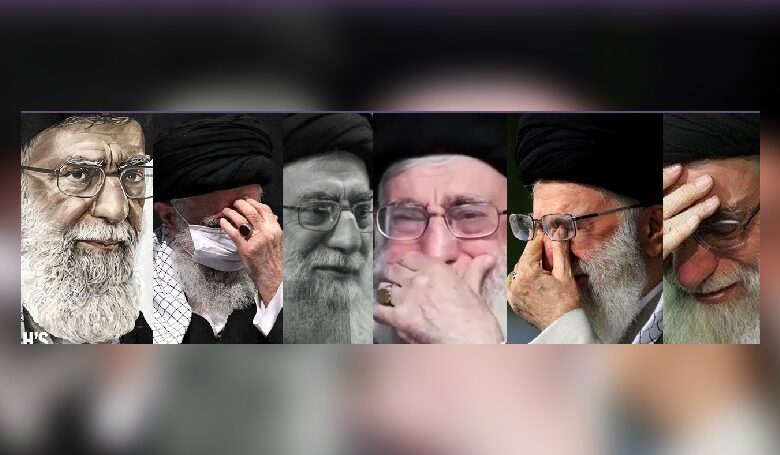
Ali Khamenei’s escape plan, concurrent with nationwide protests, has sounded the alarm bells of the regime’s survival and internal collapse.
As nationwide protests in Iran expand and signs of disobedience and defection within security forces increase, fresh intelligence reports have revealed preparations for a plan for Ali Khamenei to leave the country; a plan that, according to informed sources, will be activated if the repression machinery fails.
According to the British newspaper The Times on the morning of Monday, January 5, and based on an intelligence report from a credible source, it has been revealed that Ali Khamenei, the 86-year-old leader of the Islamic Republic, has an alternative scenario to flee Tehran; a scenario that would be executed if military and security forces are unable to suppress the protests or if they defy his orders. According to this report, the plan was designed directly inspired by Bashar al-Assad’s escape from Syria to Russia.
According to published information, in case of sensing serious danger, Khamenei would leave Tehran accompanied by a very limited circle consisting of a maximum of 20 of his closest family members and aides. This intelligence source stated: “The alternative plan is that Ali Khamenei and his close circle, including his son Mujtaba and his potential successor, would leave the country.”
In this regard, “Beni Sabti,” an Iranian-Israeli researcher who, after leaving Iran in 1987, worked for years in Israeli intelligence institutions, identified Moscow as Khamenei’s likely destination and said: “Ali Khamenei will flee to Moscow because he has nowhere else to go.”
He further added: “Moreover, Ali Khamenei admires Putin, and in his view, Iranian culture has more affinity with Russian culture.”
According to The Times, this pattern bears great similarity to Bashar al-Assad’s escape; the deposed president of Syria left the capital Damascus in December 2024, as opposition forces led by “Ahmad Shara” advanced towards the Syrian capital, and fled by plane to Moscow to join his family.
The aforementioned intelligence source added: “They have designed an exit route from Tehran to use in case of necessity to flee. This escape plan includes gathering assets, property documents abroad, and cash to facilitate their safe passage.”
This report also refers to Khamenei’s extensive network of financial assets. It is said that he controls enormous resources, part of which is managed through the Execution Headquarters of the Imam’s Order. Previously, Reuters news agency in an investigative report in 2013 estimated the value of assets under Khamenei’s control at approximately 95 billion dollars; a figure that would enable the logistical arrangements for such a plan.
The release of this report comes at a time when nationwide protests have entered their second week and, according to reports, have spread to more than 70 Iranian cities. Human rights organizations have announced that more than 15 people have lost their lives during these protests so far.
In an international reaction, Donald Trump, the President of the United States, wrote on the morning of Friday, January 2, on the social network “Truth Social”: “If the Iranian regime shoots peaceful protesters and brutally murders them, as is their custom, the United States of America will intervene to save them (the protesters). We are in a state of full readiness (armed and ready).”
At the same time, the New York Times also reported, citing three Iranian officials, that following the expansion of protests, senior officials of the Islamic Republic have acknowledged in private meetings and conversations that the regime has been pushed into a survival situation; an unprecedented expression that indicates the depth of the crisis at high levels of power.
In contrast, Ali Khamenei said on Saturday in his first public reaction to the protests: “Protest is different from rioting”
and emphasizing that: “Talking to rioters is of no use,” added: “A rioter must be put in his place.”
Security forces tasked with suppressing protests are directly under Khamenei’s command, and the activation of the escape plan depends on him feeling that these forces no longer obey his orders. However, based on a psychological assessment by a Western intelligence agency, Khamenei strongly relies on people loyal to him and personally controls key appointments and their protection, a factor that prevents rapid defection at high security levels.
In this assessment, Khamenei is described as a “paranoid” individual, and this very psychological characteristic played an important role in designing the escape scenario. At the same time, the report notes that after the 12-day war, he has become weaker both mentally and physically and rarely appears in public.
In the conclusion of this intelligence analysis, it states: “He is deeply ideological on the one hand, but on the other hand, he is very pragmatic in what he perceives. He uses tactical compromises to achieve long-term and greater ideals. He thinks long-term.”
The sum of this data shows that behind the regime’s authoritarian facade, the scenario of the Islamic Republic’s leader leaving is no longer a far-fetched hypothesis, but has become a serious option in power calculations, especially at a time when popular protests and internal and external pressures have challenged the regime’s existence more than ever before.