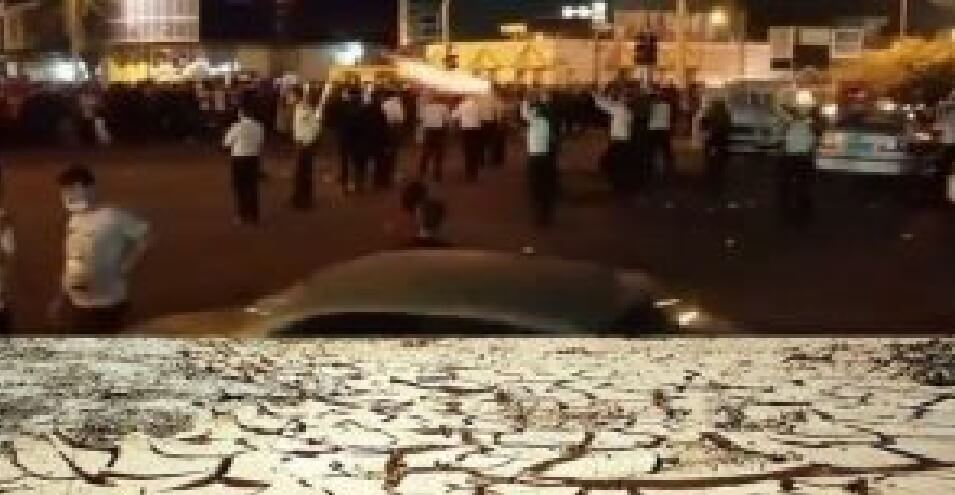
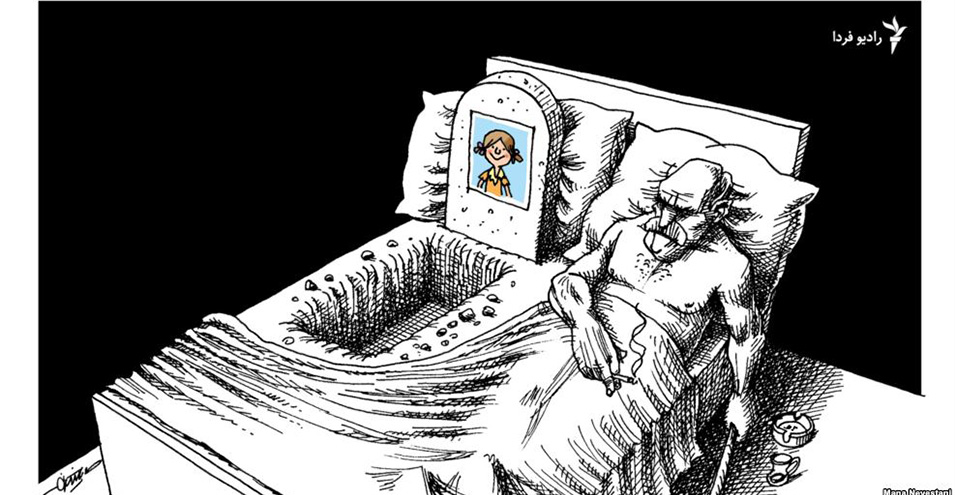
Popular Uprising Amid Historic Collapse of the Rial and Calls for the Shah’s Return in Tehran
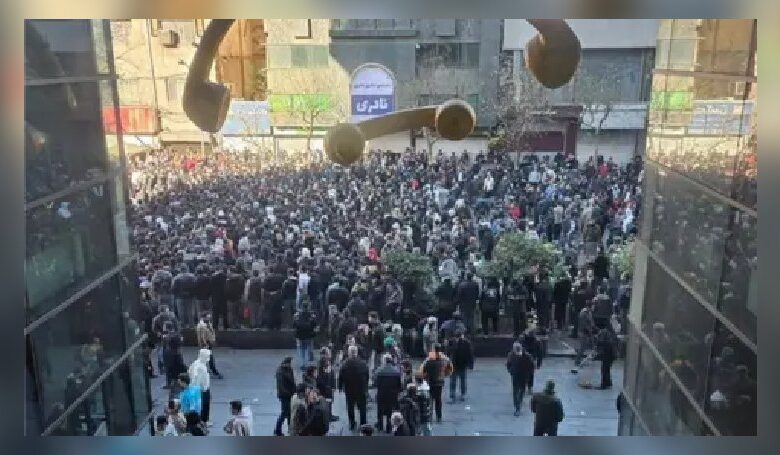
Tehran protests coincided with the collapse of the rial and the deepening economic crisis of the Islamic Republic, as cries of “bread and freedom” and demands for the return of the shah were raised in Tehran.
As Iran’s economic crisis intensifies, a new wave of street protests has swept through the capital; protests that this time emerged from the heart of the bazaar and were organized by bazaar merchants and shop owners, representing a serious indication of the depth of public dissatisfaction with the livelihood situation and economic management of the Islamic Republic.
The German newspaper “Bild” reported on these developments, writing: “Is it finally enough for them (the Islamic Republic)?”
The newspaper added that for the second consecutive day, thousands of people in Iran, particularly in Tehran, took to the streets; protesters who are mostly bazaar merchants and shop owners of the capital and, by closing their shops, have invited others in different cities to join the protests.
According to eyewitness reports, on Monday, December 29 (corresponding to December 8 in the Persian calendar), many shops in Tehran lowered their shutters and sections of Tehran’s Grand Bazaar as well as the gold market went on strike. An action that observers view as a serious warning to the ruling establishment; since the bazaar has always been one of the traditional pillars of the economy and power in Iran, and these protests have continued to this day and spread to other cities.
The primary cause of public anger is the sharp collapse of the value of the Iranian rial against the US dollar. The exchange rate on Sunday reached its lowest historical level, with one US dollar trading at 142,000 tomans; this while just a week earlier, the dollar rate was 138,000 tomans.
The rapid decline in the value of Iran’s national currency has triggered a new wave of inflation and significantly increased the prices of essential goods. According to official statistics from Iran’s government statistical center, annual inflation in December reached 42.2 percent, and economic pressure on families has reached unprecedented levels.
According to the same statistics, food prices have increased by at least 72 percent and medicine prices by at least 50 percent; an issue that has particularly placed the poor, elderly, and patients in severe hardship.
Following its usual pattern, the Islamic Republic, instead of responding to economic demands, met the protesters with security tools. Reports indicate that government forces used tear gas and water cannons against the gatherers.
Meanwhile, protesters in their slogans called for the return of the Shah; a slogan that indicates a section of society has moved beyond reformism and purely economic protest, toward demanding fundamental political change. In the midst of these developments, news of the resignation of “Mohammad Reza Farzin,” the governor of the Central Bank of the Islamic Republic, has also been released; an issue that analysts view as another sign of deep turmoil in the government’s economic structure, a matter that indicates the Islamic Republic has reached the end of the line economically.
Nevertheless, government officials continue to attempt to deny the reality of the crisis through propaganda rhetoric. “Ali Akbar Pourjamshidian,” Deputy Minister of Interior for Security and Law Enforcement, has claimed that currency fluctuations have “psychological causes” and has asked people to be vigilant, patient, and cooperative, and not to fall under the influence of the enemy’s plots. In response to these statements, the Bild newspaper writes that it seems highly unlikely that people would still be influenced by such rhetoric.
Alongside economic and security pressures, the Islamic Republic’s judiciary has also intensified threats against protesters. This body announced: “Anyone who demonstrates in the streets will be prosecuted.”
“Gholamhossein Mohseni Eje’i,” the head of the judiciary, also warned: “Anyone who ignores these warnings must be pursued and punished decisively by the relevant authorities.”
For many Iranian Christians and Christian observers around the world, what is happening in Iran today is not merely an economic crisis, but a picture of human suffering, structural injustice, and the absence of human dignity. Rising food and medicine prices have placed countless families before painful choices, and the cry of protest from bazaar merchants echoes the cry of millions of citizens who have lived for years under the burden of pressure and repression.