“Rafael Grossi” Remains Target of Pressure and Security Threats, Facing Endless Threats from the Islamic Republic
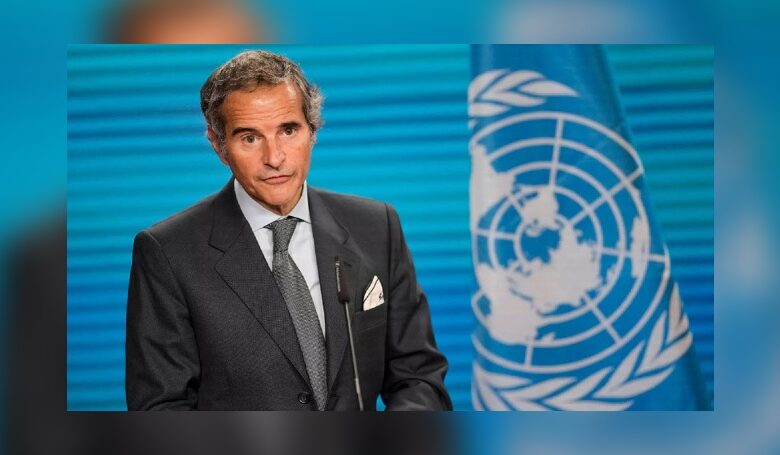
The Islamic Republic’s threats against “Rafael Grossi” demonstrate that the path of Tehran’s pressures is endless, and while Grossi faces danger, the Islamic Republic’s threats continue unabated.
Rafael Grossi, Director General of the International Atomic Energy Agency, on the eve of launching his election campaign for the position of UN Secretary-General, has once again come into the global spotlight; not only because of his diplomatic experience and slogans, but due to the pressures and threats directed at him by the Islamic Republic of Iran.
These threats, which have even reached the level of death wishes, lift the veil on the concerning nature of Tehran’s approach toward international bodies and reveal that this regime’s threats are endless, raising serious questions about adherence to international law and global security.
Rafael Grossi said in a speech launching his election campaign in “Buenos Aires”: “Despite the fact that they threaten us with death (referring to threats from the Islamic Republic against him), I remain committed to the path of dialogue and diplomacy. We must always move forward; diplomacy means opening closed doors.” He emphasized and added: “Even direct threats cannot deter me from this path.”
However, this is not merely verbal threats. Reports indicate that following receipt of explicit threats from Iran, Grossi has been placed under 24-hour protection by Austria’s special unit “Cobra,” a measure considered necessary to protect his security.
These security measures have been strengthened following a period of tension in Iran’s relations with the Agency, particularly after confrontations leading to regional conflict and harsh criticism of the Agency’s reports.
The Islamic Republic’s threats and pressure against Grossi are not limited to domestic statements. Credible sources have reported that media outlets close to the government, including Iran’s “Kayhan” newspaper, have called for his trial and even execution in recent months. These claims are part of an unprecedented level of harsh treatment toward an international official who typically operates within diplomatic circles and serves as a neutral nuclear observer.
In response to these pressures, the United States and other countries have called for condemnation of the threats against Grossi. American officials have emphasized that calls in Iran for Grossi’s arrest and execution must be condemned, and they have expressed their support for the International Atomic Energy Agency and its monitoring role.
Meanwhile, the Islamic Republic of Iran has continued its criticism of Grossi, accusing him of bias and “violating impartiality,” including through formal complaints to the Security Council calling him “unprofessional” and claiming that his reports against Iran are biased.
These reactions demonstrate that Tehran’s pressure continues not only from a security perspective, but also from political and legal angles, reflecting Tehran’s preference for confrontation with international bodies.
In contrast, Grossi has emphasized in multiple interviews that the Agency’s duty is to examine issues “impartially” and that as long as Iran does not honor its commitments to the Agency, he cannot guarantee that Iran’s nuclear program is solely peaceful—warnings that have themselves intensified tensions.
These developments are occurring amid ongoing murmurs of regional and international tensions over Iran’s nuclear program, with international analysts warning that the Islamic Republic’s endless behavior toward international bodies could threaten global stability and security.