Commemorating the 35th Anniversary of Priest “Hussain Soudmand’s” Execution

Christians in many countries commemorated the 35th anniversary of the execution of priest “Hussain Soudmand.”
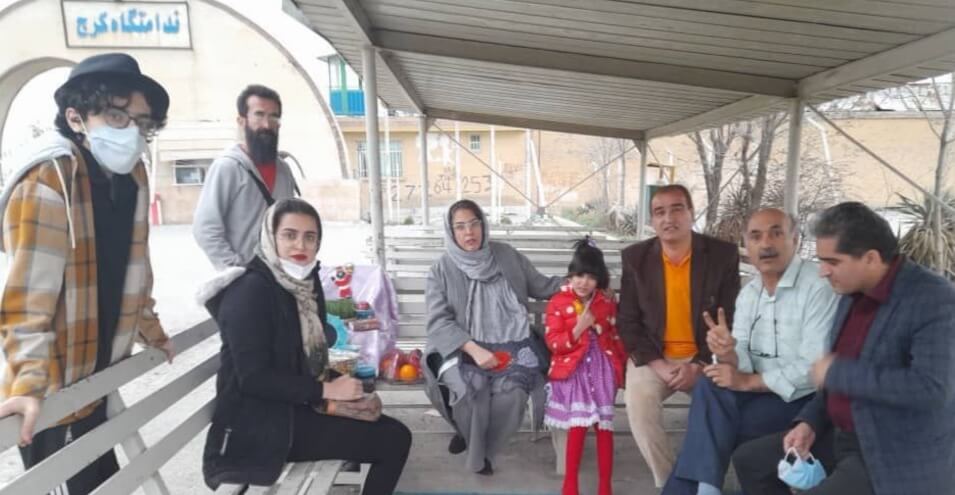
Yesterday, December 3rd, corresponding to December 12th (Azar 12th on the Persian calendar), marked the 35th anniversary of the execution of priest Hussain Soudmand. Many Christian citizens in different countries gathered to remember him and commemorate the anniversary of his execution.
Hussain Soudmand was born in Mashhad and during his military service became acquainted with Christianity through an Armenian friend and converted to the faith. After returning to his hometown, he was rejected by his family because of this belief. He then went to Tehran to study Christian teachings. Later, he moved to Isfahan and worked in a Christian organization for the blind.
He led the Jama’at-e Rabbani Church in Isfahan and conducted extensive activities in Christian organizations. He was repeatedly pressured by the Islamic Republic’s security forces to stop his preaching, but he never agreed. Arrest, imprisonment, interrogation, and torture were the price of his steadfastness in faith. After some time, he was released on bail. His friends suggested he leave the country, but he replied: “My escape from persecution would weaken God’s flock,” and emphasized that he was willing to sacrifice his life like Christ for God’s flock.
Finally, in December 1990 (Azar 1369 on the Persian calendar), he was executed in Mashhad prison. Without his family having the opportunity for a final visit, his body was buried in a place called “Lanat-Abad.”
His family was not allowed to install a gravestone for him and had to settle for a simple concrete grave. However, the Islamic Republic government in December 2019 (Azar 1398) buried even this simple grave under half a meter of soil, an action that met with strong protest from his family. He was a true servant of God and never surrendered to government pressure and threats, and until the last moment of his fruitful life, he stood firm in his faith.
Although 35 years have passed since his government execution, the fundamental question remains: Why is his case still considered one of the most important examples of violation of religious freedom in Iran, and why is his memory for the Christian community not merely a memory, but part of the identity of resistance and steadfastness?
Priest Soudmand is a symbol of the first generation of Muslim-born Christians who, after the Islamic Revolution, pursued their path of faith with serious dangers. He was neither a political activist nor a member of an opposition organization. His sole “charge” was choosing the Christian faith and serving in the church.
His case shows that even in the absence of explicit laws regarding apostasy, religious and security interpretations can result in a death sentence for a religious belief. In the decades following his execution, whenever pressure on the Christian community increased, Soudmand’s name has resurfaced. This is because: “He is the only Muslim-born Christian priest who was formally executed by judicial order. His death was an open message to all Christians: ‘Converting to faith can have a fatal cost.’ The destruction of his grave (even years after his execution) showed that some institutions are in conflict not only with the actions of individuals but also with the collective memory of society.”
Over the past three decades, the home church Christian community in Iran has grown significantly, but it has also experienced periodic arrests, pressure on church leaders and home group officials, restrictions on possessing Persian Bibles in some cases, interrogations, and sentences related to “propaganda against the system,” “assembly and collusion,” or “action against national security.”
Although the intensity of enforcement has varied at different times, the practice of securitizing Christian identity, particularly for those who have converted from Islam to Christianity, still exists.
Now the question is: Why is Soudmand’s memory important? Hussain Soudmand is not just one person. He remains important today for three reasons:
- A living testimony for demanding religious freedom: His case is one of the central points of international reports on Iran, because it shows that violations of religious freedom in the country have an official and documented history.
- A legacy of encouragement and steadfastness for Persian-speaking churches: His message is still inspiring for many Christians. His famous statement: “My escape from persecution would weaken God’s flock,” has become a hymn of faith resistance among many leaders of home churches.
- Resisting oblivion: The destruction of his grave, the concealment of markers, and official silence all show an effort to erase his traces. But every anniversary, every candle, and every report is a form of resistance against forgetfulness.
Today, the Christian community inside and outside Iran has become more numerous, younger, and more aware. Media networks, Persian-speaking churches, and global connections have helped this community raise its voice louder. But two great responsibilities remain: “Preserving the memory of martyrs of faith, including Hussain Soudmand, so that future generations know that religious freedom has not come easily, and the systematic pursuit of violations of religious freedom.”
Every report, every interview, and every narrative can help shape a realistic picture of the state of religious freedom in Iran.
Hussain Soudmand is not just a name in the history of the Iranian church; he is a sign of the fact that faith can remain bright even in the darkest places—a light that neither prison nor grave destruction could extinguish.
His anniversary is not merely a reminder of an execution but a reminder of the right to choose one’s faith—a right that no government can take from people.