Abraham Accords and Trump’s Peace Dream
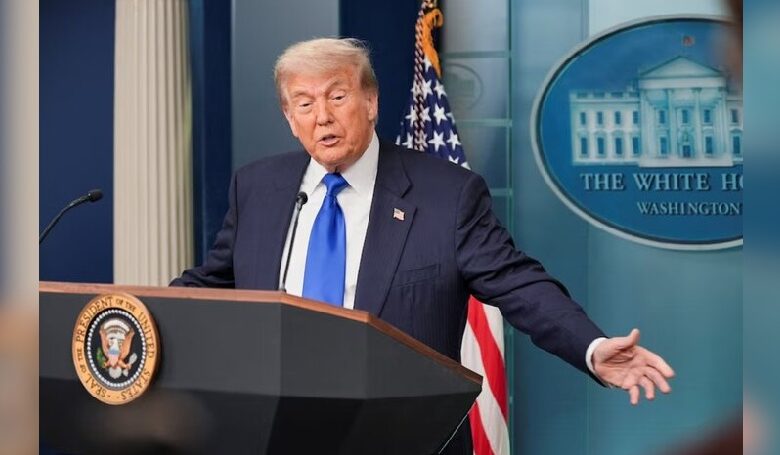
Trump once again spoke of expanding the Abraham Accords and called Saudi Arabia’s participation the key to Middle East peace.
An agreement that, in his view, could bring even long-time enemies such as Iran and Israel together.
U.S. President Donald Trump stated on Friday, October 17, in an interview with Fox Business that he expects the Abraham Accords to expand soon and expressed hope that Saudi Arabia would also join the pact.
He said in this interview: “I hope Saudi Arabia enters this pact and I hope others join it too. I think when Saudi Arabia enters, the rest will follow.”
Trump also spoke of very good talks with countries that have expressed their willingness to join these accords and added: “I think all of them will enter very soon.”
The Abraham Accord, which first began in 2020 during Trump’s presidency, aimed to normalize relations between Israel and a number of Arab countries. The United Arab Emirates and Bahrain were the first signatories of this agreement; countries that, breaking one of the Arab world’s long-standing taboos, recognized Israel. After them, Morocco and Sudan also joined this process.
Trump, who is currently trying to reassert himself as an active player in Middle Eastern politics, was the host of a joint meeting last Monday in Cairo with leaders of Islamic and European countries regarding the future of the Gaza Strip. In that meeting, he described his plan to end the Gaza war as a prelude to “a broader regional peace” and said: “I think Iran wants such an agreement. Wouldn’t that be great?”
Although Trump is trying to present these accords as a legacy of “Abrahamic peace,” Christian analysts and regional observers believe that the Abraham Accord has in fact become the catalyst for new geopolitical changes and religious competition in the Middle East, rather than being a harbinger of peace.
In Christian worldview, the name “Abraham” recalls a common father for the faith of Jews, Christians, and Muslims; however, in the political arena, the pact known by this name is actually viewed as a tool for strategic alliance against the Iran axis and to consolidate Israel’s position in the region.
Critics say that this plan, although presented with the slogan of “peace,” can in practice deepen the rift between Arab and Muslim communities and even lead to ignoring the Palestinian issue, a matter that for many Middle Eastern Christians has both human and divine dimensions.
In this regard, Christian sources close to the churches of Jerusalem have said that any real peace in the Middle East without justice for the Palestinian people would be meaningless.
Trump’s recent remarks about the possibility of Saudi Arabia and even Iran joining the Abraham Accords demonstrate an effort to redefine a new order in the Middle East centered on Israel and backed by Washington. But as one of the region’s bishops told church media: “Peace that is built on the basis of political interests will not endure without reconciliation of hearts.”