Fresh Threat from Tehran’s Acting Friday Imam: ‘We Will Plow Tel Aviv and Haifa’
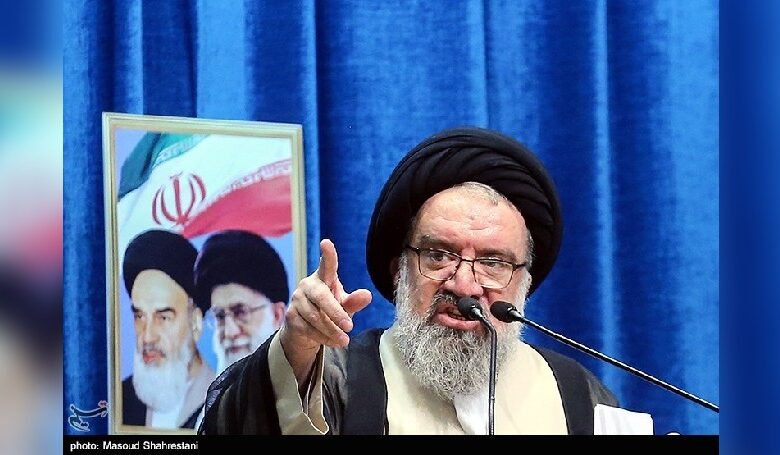
Tehran’s acting Friday imam, responding to Western pressures regarding Iran’s nuclear and missile programs, stated: “We will plow Tel Aviv and Haifa.”
“Ayatollah Seyyed Ahmad Khatemei,” Tehran’s acting Friday imam, delivered sharp and warning-toned remarks during Friday prayer sermons on the current day, October 2, cautioning against potential actions by the West and Israel, and emphasizing that Iran will stand against any threat.
Referring to American and European pressures against Iran’s uranium enrichment and missile development programs, he warned and stated: “It is we who will plow Tel Aviv and Haifa.”
Khatemei further addressed the U.S. State Department’s positions on enrichment and missile limitations, directly quoting his own remarks: “The U.S. State Department explicitly says Iran should not have enrichment, but one must say you are wrong unless you are helpless. America today says you should not have enrichment, tomorrow it will also say you should not have long-range missiles so they can plow Iran if they attack, but these fools do not know that it is we who will plow Tel Aviv and Haifa.”
He also referenced the effectiveness of mechanisms such as “snapback” and stated that the United States and Europeans are unable to impose effective pressures on Iran. He continued: “America has not been able to make any mistake for 47 years, and the Europeans cannot make any mistake by activating snapback either.” This statement has also been reflected in Persian-language media reports.
These remarks were made amid the context of prolonged Iran-Israel conflicts and escalating tensions with the United States. International media also covered these threats, describing them as part of a pattern of hardline rhetoric by some Iranian clerics toward Israel. Previously, similar statements by Iranian figures had been published that spoke of threats to destroy Israeli cities. Examples of this nature have also been reported in previous years.
From the perspective of international law and international politics, such statements can escalate concerns about regional stability and security consequences for civilians. Political observers say that threatening rhetoric, especially when heard from the voices of official authorities, increases the risk of sharper reactions domestically and abroad and makes the process of diplomatic negotiations more difficult.
It is noteworthy that while official authorities and religious institutions in Iran repeat such positions, civil groups and Christian religious leaders in the region and beyond typically emphasize the importance of protecting civilians, interfaith dialogue, and efforts to reduce tensions. Reflecting these views and reactions can provide a balanced picture of the potential effects of these statements on Christian communities and Christians living in the region.