Arrest of ‘Behzad Saeedi’: When Freedom of Speech is Considered a Crime
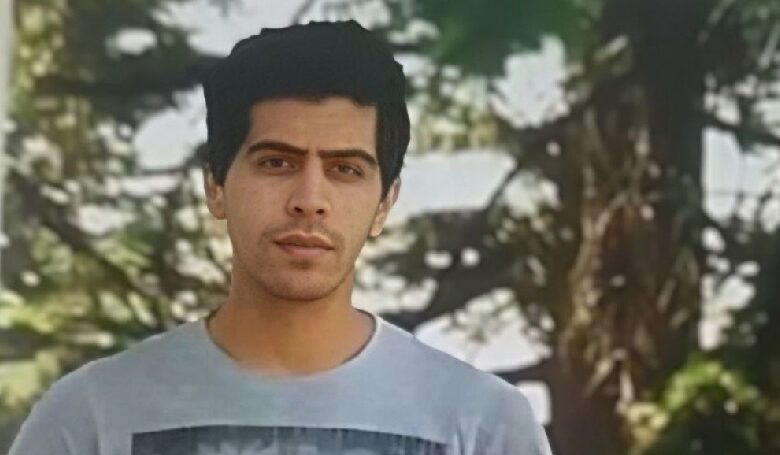
The deprivation of opponents of freedom of speech in the shadow of security crackdowns became the reason for the arrest of ‘Behzad Saeedi’, a 35-year-old nurse.
‘Seyyed Behzad Saeedi’, a 35-year-old nurse residing in Khomein, was arrested on charges of ‘propaganda against the system’ and ‘assembly and collusion to act against internal security’ and was sent to prison under a two-month detention order. Human rights sources say that the charges brought against him, including ‘sending images to foreign media outlets’, reflect the restriction of freedom of speech and the increase of security pressure on critical citizens in Iran.
According to the human rights organization ‘Hengaw’, on Thursday, October 23, Seyyed Behzad Saeedi, a 35-year-old nurse and resident of this city, was transferred to Khomein Prison after being charged in the prosecutor’s office of Khomein district, following the issuance of a two-month detention order by the prosecutor.
One day earlier, on October 21, he was arrested by the intelligence forces of the Islamic Revolutionary Guards Corps at his father’s home and transferred to the detention center of the intelligence department. Based on available reports, the charges brought against him include: ‘assembly and collusion to act against the country’s internal security’, ‘propaganda against the system’ and ‘sending images from sensitive points of the city to foreign media outlets’.
Human rights reporter Hengaw announced that Behzad Saeedi had no previously known political background and had been working in the field of healthcare.
At the time of preparing this report, the judicial or security authorities of the Islamic Republic have not made an official response to the arrest of Mr. Saeedi. In contrast, civil institutions and social media users have considered this arrest as another example of the restriction of freedom of speech in Iran.
Some activists on social media wrote: ‘In a country where speaking the truth is a crime, silence is a sign of fear, not consent.’
Legal observers have also warned that the repetition of similar arrests in small cities shows the expansion of control and security atmosphere even over non-political sectors of society, especially when the accused are from service or healthcare professions.
The case of Behzad Saeedi reflects a deeper reality: ‘In today’s Iran, the boundary between ‘reporting’ and ‘acting against national security’ has been drawn in such an ambiguous manner that any form of communication or transfer of information can be considered a threat by security institutions.’
The suppression of freedom of speech serves as a tool of social control. The arrest of individuals who have no political role or influence is not due to direct threat to the government, but rather to create public fear in society; a clear message that ‘anyone who speaks may be arrested.’
The charge of ‘sending images to foreign media outlets’ clearly shows that the government fears being seen. While transparency is a fundamental pillar of accountability in any political system, and turning it into a crime actually fuels concealment and public distrust.
As seen in other similar cases, harsh treatment of ordinary citizens in contrast to leniency towards those close to power discredits justice. In a system where speaking the truth is punished, the law becomes a tool for silencing.
The arrest of Seyyed Behzad Saeedi is a sign of the continuation of a policy that in recent years has considered every critical or independent voice as a security threat. In a country where reporting, dialogue, and peaceful criticism are considered crimes, freedom of speech is merely a slogan on paper. From nurses to teachers, journalists and civil activists, political activists and religious minorities, dozens of citizens have been arrested in recent months on similar charges, charges whose real nature is nothing but ‘the right to speak’.