Iran’s People in Poverty While Officials Make Promises of Support to Lebanon
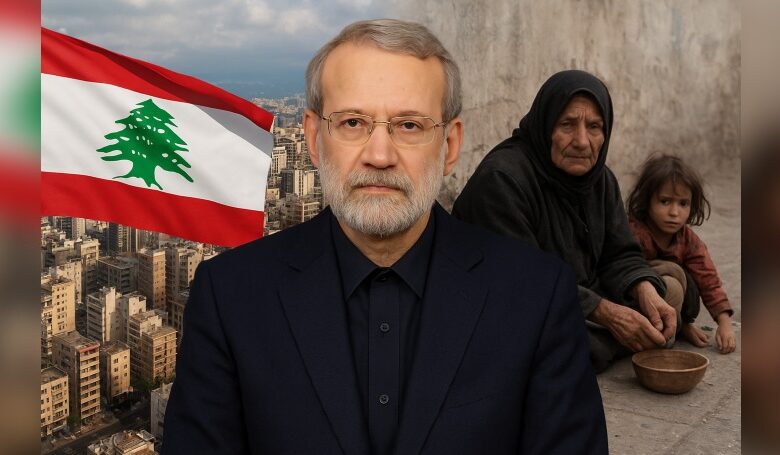
Officials are promising support to the Lebanese people while poverty among Iranians is on the rise.
The recent trip of “Ali Larijani,” Secretary of Iran’s Supreme National Security Council, to Lebanon and previously to Iraq, not only highlights the Islamic Republic’s regional policies, but also exposes the deep contradiction between the concerns of the Iranian people and the priorities of officials. While millions of Iranians are grappling with economic problems, astronomical inflation, unemployment, and basic shortages, the country’s officials are busy with regional maneuvers and negotiations to exploit proxy forces in other countries.
Ali Larijani arrived in Beirut on Wednesday, August 22, and upon arrival at the airport, he said in a speech: “If one day the Lebanese people are in distress, we in Iran will also feel this pain, and we will always stand by the dear people of Lebanon in all circumstances.”
These seemingly compassionate remarks were, in the view of many observers, a cover for the actual purpose of the trip—exerting influence over Hezbollah and using it as a lever in international negotiations, particularly Iran-US talks. Lebanese news website “Hana” reported that Larijani was carrying messages to Hezbollah that include requests for alignment with Lebanese government positions, aimed at political exploitation at the regional level.
Larijani continued in his speech: “We will always seek to realize the national interests of Lebanon. The suffering of the Lebanese people is our suffering, and the Islamic Republic of Iran will always stand by the Lebanese nation.”
Nevertheless, Lebanese analysts view these statements as a form of open interference and an attempt to “mobilize Hezbollah” and exploit it in the diplomatic arena. The newspaper “Nida al-Watan” described Larijani’s visit as an attempt to “seize the Hezbollah card” in negotiations with America, and local news agencies called it “shameless.”
On Monday, August 20, Larijani visited Baghdad, where he met with “Mohammed Shia al-Sudani,” Prime Minister of Iraq, and signed a security agreement between Iran and Iraq. In this meeting, al-Sudani said: “We support talks between America and the Islamic Republic, and we emphasize Iraq’s principled and steadfast position in condemning Israeli attacks against Iran.”
Informed sources in Iraq believe that one of the main objectives of this visit was to encourage Iraqi Shiite factions to pursue “approval of the Popular Mobilization Forces bill” in that country’s parliament, an issue used as a lever of pressure by Iran in regional and international negotiations.
Larijani’s visit to Iraq and Beirut and his speeches there were accompanied by strong criticism in Lebanon. Some political figures in the country found Iran’s interference in Lebanese internal affairs unacceptable and declared: “Everyone in Iran should know that Lebanese people do not accept their policies.”
These criticisms, along with analyses by Arab media, show that the view of Iranian officials toward the region is more instrumental and political than one of genuine compassion for the peoples. In contrast, Iran’s domestic situation has left millions in breadlines for food, medicine, and healthcare services, and the economic and livelihood crisis grows more severe with each passing day.
Ali Larijani further emphasized in his remarks: “Lebanon and Iraq are sufficiently wise and courageous and have no need to receive any advice or instructions from Iran.”
This claim stands in complete contradiction with the actual messages and goals of his visit. While the country’s officials devote time and resources to regional projects and proxy forces, the Iranian people struggle with life in difficult conditions and fundamental constraints.
The bitter reality is that the priority of Iran’s politicians is supporting proxy forces outside the country and geopolitical maneuvering, not solving domestic economic and social crises. Though diplomatic promises and regional visits may appear compassionate on the surface, in practice they reveal the deep gap between political power and the real suffering of the Iranian people.