Return to Evin: A Theatrical Transfer Marked by Real Violence
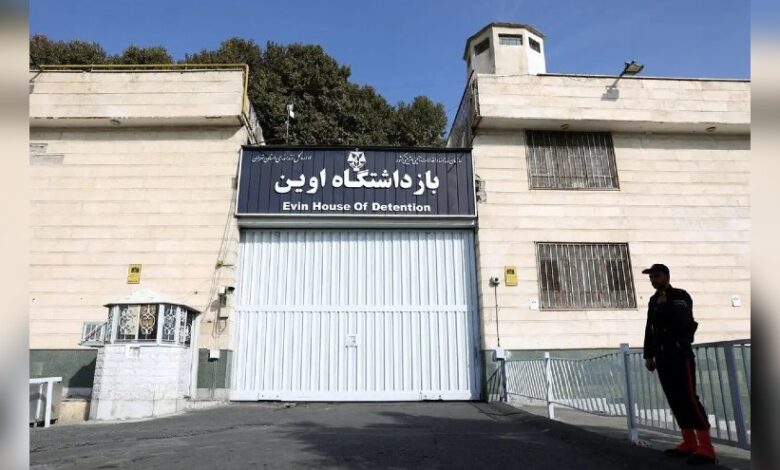
Political and ideological prisoners have been violently returned to Evin Prison following a theatrical transfer by regime officials.
As the legitimacy crisis deepens and international criticism of the Islamic Republic’s treatment of political prisoners intensifies, on the morning of Friday, the 17th of Mordad, approximately 600 political and ideological prisoners were returned to Evin Prison without notifying their families and under tight security conditions. The transfer was accompanied by widespread beatings and once again revealed the structural violence perpetrated against prisoners opposed to the regime.
These individuals, who had been transferred to Greater Tehran Prison following the Israeli attack on Evin Prison in Tir, have now been returned to wards 7 and 8 of Evin, where many of them faced severe physical violence simply for refusing to wear handcuffs and leg shackles. Well-informed sources emphasized that the transfer was carried out with the aim of staging a reconstruction of Evin’s damaged image, while significant sections of the prison remain destroyed and lack basic facilities.
Among those beaten, the names of well-known figures stand out, such as Abolfattah Ghadiani, Mostafa Tajzadeh, Mehdi Mahmoudian, Mohammad Baqer Bakhtiar, and Khashayar Safidi—faces that have become symbols of civil resistance against the repressive regime. According to witnesses, after resisting the humiliating conduct of security personnel, they were severely attacked and transferred to Evin with physical injuries.
These treatments were not limited to prominent political prisoners. Several other ideological prisoners, including Amirhossein Mousavi, Hossein Shanbehzadeh, Morteza Parvin, and Mohammad Reza Faghihi, were also targeted by violence from security forces during the transfer.
On the other hand, a group of prisoners sentenced to death have been transferred to Qarchak Prison in Karaj. Independent sources have revealed that these transfers were also accompanied by beatings, and prisoners such as Babak Shahbazi, Pouya Qobadi, Vejid Bani-Amerian, Mohammad Taghi, Babak Alizadeh, and Akbar Daneshvar have been subjected to severe pressure.
In response to these events, sources close to the prisoners emphasized that returning this number of prisoners to Evin is less of an indicator of genuine reconstruction than an attempt to restore a superficial appearance of order to a prison that was razed to the ground and now faces severe shortages of facilities and security.
The continued detention of hundreds of political and ideological prisoners under violent conditions and below minimum humanitarian standards—including deprivation of medical care, humiliating treatment, and psychological pressure—again demonstrates that the official policy of the ruling authority is not based on law and citizenship rights, but on the systematic control, intimidation, and humiliation of dissenters.
While official media merely mention the reopening of the prison, the reality within Evin’s walls is something else entirely—a place where voices of protest are kept silent in a harsh, more fragile silence than ever before.