“Rasoul Abdollahi,” Christian Citizen, Dies Following an Incident
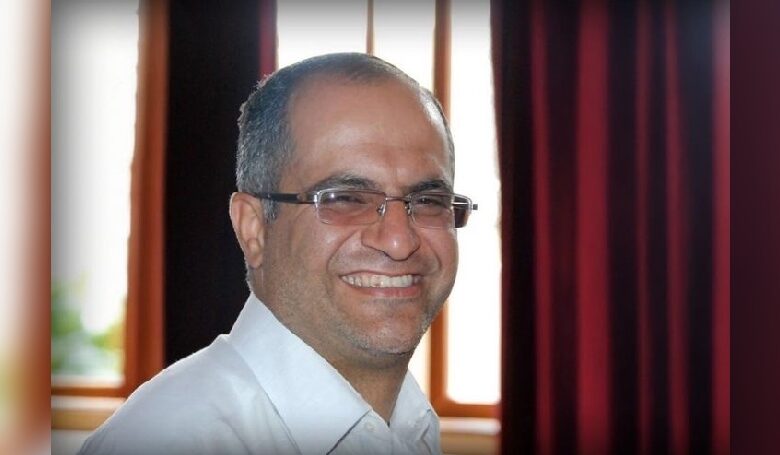
Rasoul Abdollahi, a Christian citizen and former political prisoner, died following an incident at his home.
Rasoul Abdollahi, a Christian citizen and former political prisoner, died following an incident at his home.
55-year-old Christian citizen Rasoul Abdollahi died on Tuesday, July 1st, corresponding to June 10th in the Persian calendar, following an incident at his home, and was buried on Friday, June 23rd. No information is available regarding the incident that occurred.
This Christian citizen was arrested by security forces on Christmas 2010 and sentenced to two years in prison. He was held for 4 months in solitary confinement in Ward 209 of Evin Prison and was tortured during interrogations.
One of Rasoul’s cellmates named “Farshid Fathi,” who is also a Christian citizen and former political prisoner, expressed deep sorrow upon hearing the news of his death, offered prayers for Rasoul’s daughter, son, and wife, and blessed them.
He writes about his acquaintance with Rasoul, who at that time was seeking Christian faith: “I met Rasoul 20 years ago. He first contacted me via email and sent a message saying he was interested in learning more about Christ. After that, I met with him.
At first I was a bit cautious, since I didn’t know who I was going to meet. We first met at a shopping center in western Tehran. We had a long conversation and I was honored to pray with him and guide him toward God.
That same day, 20 years ago, he became a follower of Christ, and from then on I began a discipleship period with him. He was an educated man, familiar with great poets such as Saadi and Hafez, and had memorized many beautiful poems. He was a person devoted to reading and reflection.
For eight months in the streets, cafes, and that same shopping center, we discussed the content of the discipleship program with each other.
Finally, after eight months, I said to him: “We gather in a secret place like an underground church and I want to invite you there.” He also joined our underground church.
After that, he completed a three-month leadership training course and became one of our church leaders and pastors. He founded a church in Qazvin. He was a very kind and respectable person.”
Farshid recalled a memory from their time in prison and continued: “Rasoul, like many of us, was arrested on December 26, 2010 (the 5th of Dey, 1389). His wife was also detained. He had two children: a son who was about seven or eight years old at the time (the same age as my daughter) and a daughter who was about 13 or 14 years old. He was held for four months in solitary confinement in Ward 209 of Evin Prison and was then released on bail in April 2011.
About a year later, I met him again in Ward 350 of Evin. I brought him to my cell and he became my cellmate and our friend in prison. When Rasoul entered the prison, as a Christian, he was very sad and withdrawn. He would say: “After my release from prison, no one even greeted me; no one came to pray with me and I was completely isolated.” But during that same period of imprisonment, God began to rebuild him in a miraculous way.
Everyone in prison loved Rasoul. He was a calm, dignified, and educated man. After some time, he moved to cell number 9 and shared a cell with several political prisoners, civil activists, and other prisoners. Everyone was fond of him. A few days ago when I announced the news of Rasoul’s death, I received beautiful messages. One friend wrote: “We saw only kindness in Rasoul while in prison; he never complained.” This is how Rasoul spent his time in prison.
We had precious moments together, especially in prayer. On Sundays, like other Christians, we would gather beside my bed to worship and celebrate communion. Later he was transferred to Rajaishahr Prison, where I was also held. Eventually Rasoul was released from Rajaishahr. He had been sentenced to three years in prison, but after two years, he was released on conditional parole. I was honored to pray with him and bid him farewell before his release.
His only concern in prison was his family. He worked in a state-owned industry and after his arrest, they took his house from him and his family was forced to rent a house with the help of friends. One of the most bitter parts of his story was how he was treated during interrogations in Ward 209. He was severely tortured, especially in his feet. When I saw him later, he could hardly walk. Only when I noticed and asked him did he describe what happened. Even one of the interrogators had suggested he file a complaint against the interrogator who had beaten him. Of course, I don’t know if this suggestion was serious or merely a facade, but they had told him: “They had no right to beat you.”
Yes! They tortured him, but nevertheless there was no sign of bitterness or complaint in him. He was a man who carried his cross with peace and silence. Nevertheless, I believe that his prison time was an opportunity for his rebuilding. He would say: “I was like parched earth that God brought me back to prison to rebuild.” This is what Rasoul would say: “God brought me back to prison to rebuild me.”
Farshid Fathi, Rasoul’s 20-year friend, speaks about the image of him that remained in the minds of their cellmates: “What I remember most about Rasoul is his strength and inner power. During interrogations he remained silent for 22 or 23 days, even longer than I did, and despite torture, he said nothing. He was a very strong man who loved God with all his being. This is the image I have of him.
He was not one for pretense or controversy, he only carried his cross. He loved poetry, loved Hafez and Saadi very much, and was devoted to God’s word. Among those who sent me messages yesterday, two things stood out about him; both were from his students in Qazvin before his imprisonment. One of them wrote: “He was a man of God.” Another said: “He was like a firm pillar to me that I could lean on.” Rasoul had exactly such a personality; a kind man with a humble heart, familiar with God’s word and faithful to God’s path.”
He added at the end of his remarks about Rasoul: “The last thing I want to say is my deep sorrow that we could not bury Rasoul as a Christian. He was not just a Christian; he was a person who suffered for God and was tortured. But now there is no possibility of holding a Christian funeral service for God’s servants in Iran, and he was buried in an Islamic manner, something that has deeply grieved my heart. Nevertheless, we must celebrate his life, because now he is with God and lived for Him. I firmly believe with all my being that he remained faithful to God, the beginning and the end, to the very end.”