Prince Reza Pahlavi’s Strong Reaction to Possible Name Change of Persian Gulf
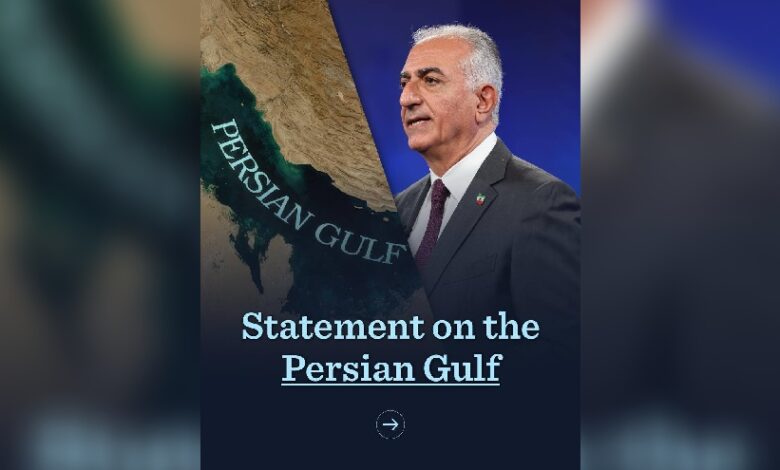
Prince Reza Pahlavi reacted strongly to the possible name change of the Persian Gulf, stating: “Iran’s national heritage is not negotiable.”
Reports published by American media outlets regarding Donald Trump’s possible decision to use the term “Arab Gulf” or “Saudi Gulf” instead of “Persian Gulf” have sparked widespread reactions among Iranian political figures and social media users.
CNN news network also announced today that while reporting Trump’s trip to Saudi Arabia, Qatar, and the United Arab Emirates, citing two U.S. government officials, Donald Trump intends to use alternative names for the Persian Gulf, and if this decision becomes final, it will result in widespread diplomatic and nationalist reactions.
Prince Reza Pahlavi responded harshly and strongly to this news, saying: “Iran’s national heritage is not negotiable. The Persian Gulf is not just a name, but a historical reality. For thousands of years, Iranians, Arabs, and Westerners have known this body of water between Iran and the Arabian Peninsula by its true and unique name: the Persian Gulf. The reported decision by President Trump to distort history, if true, is an insult to the Iranian people and our great civilization.
However, the real culprit behind this shameful action is none other than Ali Khamenei and his anti-Iranian regime, who have weakened our country to such an extent that foreign powers allow themselves to distort world history and insult Iran’s national identity.”
In his harsh remarks, the Prince also added: “The Islamic Republic is the author of this national crisis, and we will not gather under the flag of this usurping regime. Rather, all of us Iranians, regardless of our orientation, beliefs, or political views, must unite once and for all under the flag of the Lion and Sun to raise this flag once more over Iran and the forever Persian Gulf. The Persian Gulf is our national heritage, and defending its honor and name is a national responsibility that each of us must shoulder in every possible way. Long live Iran, eternal be the Persian Gulf.”
“Hamed Esmailioun” also responded to this decision by posting on his Instagram page: “Ceremonial correspondence with Ali Khamenei on one hand and the intention to change the name of the Persian Gulf on the other drives some people to support oppressive ideologies. The history of Iran and the Persian Gulf transcends governments and will endure.”
“Tomaj Salehi,” a protest singer and former political prisoner, while emphasizing that “Donald Trump’s possible decision stems from his inability to distinguish between the Iranian people and the Islamic Republic,” posted a message on the social media platform X: “Changing the name of the Persian Gulf is a distortion of history and denial of reality. This issue transcends political orientations, and Iranians are united in defending their historical identity.”
“Abbas Araghchi,” former Deputy Foreign Minister, also responded to this news by posting in English: “Political motives to change the historical name of the Persian Gulf demonstrate hostile intent against Iran and its people and are strongly condemned. Iran has never objected to other names for seas, but this attempt to distort a historical name is disrespectful to humanity’s collective heritage.”
“Mohammad Javad Zarif,” Iran’s former Foreign Minister, also responded to Donald Trump’s decision, saying: “Using a fictitious name for the Persian Gulf angers any patriotic Iranian.”
Some analysts also commented on this report: “The name Persian Gulf is recognized as the official name in historical documents and world maps, and attempts by some Arab countries to change it to the Arab Gulf have repeatedly led to diplomatic crises. Therefore, if Trump formally decides to use the Arab Gulf instead of the Persian Gulf, Iranian relations with Arab countries in the region will undoubtedly be affected and will create new tensions, especially given the current situation in which some Arab countries and Tehran have taken steps to improve bilateral relations.”