Akbar Ganji to Prince Reza Pahlavi: An Israeli Who Considers Himself Iranian
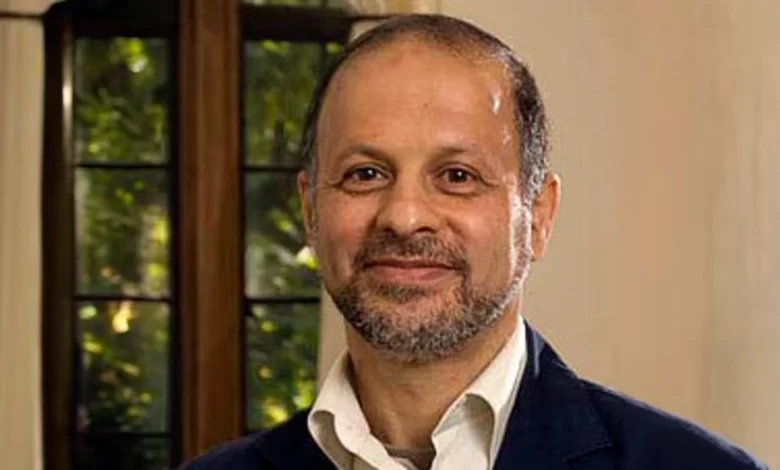
Akbar Ganji responded to Prince Pahlavi’s statements regarding Iran’s situation by addressing him as an Israeli who considers himself Iranian.
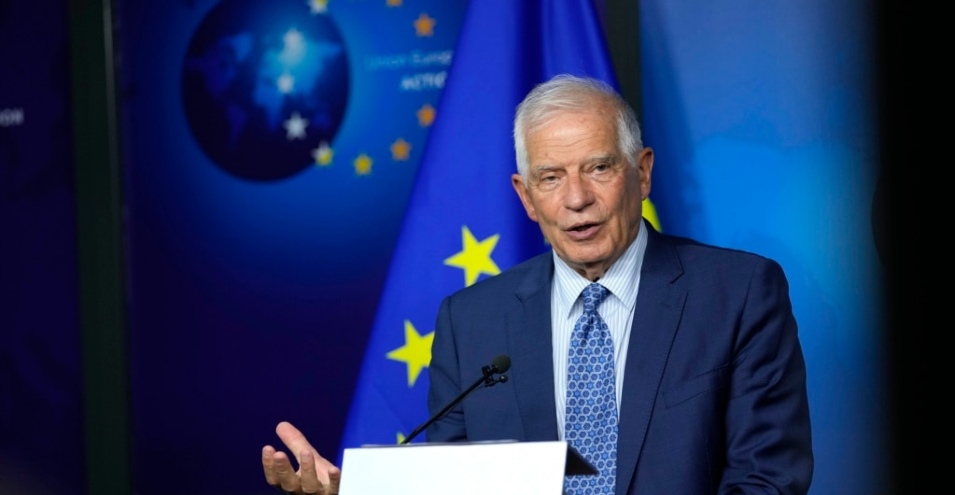
Prince Reza Pahlavi had an interview with the “Independent Farsi” network on Sunday, November 5, discussing Iran’s situation over the past year and evaluating it. In that interview, he said: “The issue that becomes the secret to the success of every movement at its conclusion is that we move from the stage of hope to the stage of belief. We all know we are dealing with a regime that has been extremely brutal and very oppressive, and operates in a way that seeks to instill fear and terror. We witness how they treat political prisoners and society as a whole. The only way to save Iran from this situation is for it to free itself from this government.”
In response to a question about concerns regarding the Islamic Republic’s biased policies on the Hamas-Israel war and Iran’s involvement in these conflicts, he added: “The people of Iran have been the first occupied country in the past 40 years under an anti-Iranian and anti-national government, and the most prominent slogan they have raised recently with the content ‘Not Gaza, Not Lebanon, My Life for Iran’ means that the Islamic Republic, through warmongering and with the money of the Iranian people, is not fighting for Iran but for its own survival and the export of a religious ideology globally, which has nothing to do with Iran and its people. It is completely clear to the people that this regime has acted in its own interests until now, not for Iran and the Iranian people.
The whole world should know that instead of placing maximum pressure on the regime, they should implement sanctions policies to tie the hands of the system so it cannot use oil revenues to finance repression in Iran and regional adventures in the Middle East, and conversely, they should increase maximum support for the Iranian people.
Now some countries have just realized that the best way to eliminate all the troubles that the Islamic Republic has created since its inception, including the nuclear issue, support for terrorists, influence in Middle Eastern regions and so on, is regime change—that is, the departure of the Islamic Republic government.”
Akbar Ganji responded to Prince Pahlavi’s interview with Independent Farsi by addressing Prince Pahlavi’s identity as Israeli on his X network, writing: “An Israeli who considers himself Iranian is none other than Netanyahu’s friend who intends to form an absolute monarchy through Israel in Iran. To achieve his goal, not only does he pursue Israel’s exact objectives against Iran, but the language he uses to achieve this purpose is exactly the expressions of Israeli Prime Ministers. He, who previously sought to make Syria out of Iran through the West, is now asking Israel and Western governments instead of bombing and destroying Gaza, to bomb and destroy Iran because that is where the octopus’s head is and it should be cut off.”
Akbar Ganji is himself a current Iranian political activist who was a street activist during the 1979 Revolution. Safar Harendi claimed in 2011 that Akbar Ganji used to pursue young women who had a few strands of hair showing and would throw acid on them, and would attach pliers to the foreheads of young girls who dressed differently, which is why he became known as “Akbar Pliers.” When the Revolutionary Guards were formed, he joined them and was a commander of the Revolutionary Guards for a time. After leaving the Revolutionary Guards, he worked at the Ministry of Culture and Islamic Guidance. He later became acquainted with a group of activists and journalists under Mohammad Khatami’s supervision, who formed the Kiyan circle and published the Kiyan Monthly magazine.
Through his actions, he made revelations about serial killings and was imprisoned after participating in the Berlin Conference. After his release from prison, he went to Europe and then to America, and from that time on began his activities in Western media and newspapers.