Court Ruling on Hamid Nouri; Iran Summons Swedish Chargé d’Affaires

Following the issuance of a conviction ruling against Hamid Nouri by the Stockholm District Court for crimes related to the 1988 mass executions, Iran’s Ministry of Foreign Affairs announced on Thursday that it has summoned the chargé d’affaires of the Swedish embassy.
Hamid Nouri, also known as “Hamid Abbasi,” former prosecutor of Gohardasht Prison, was tried for nine months in the Stockholm District Court on two main charges of “international war crimes” and “premeditated murder,” and was ultimately found guilty and sentenced to life imprisonment.
In response to this ruling, Iran’s Ministry of Foreign Affairs announced that the head of the Western Europe Division of the ministry, while summoning the Swedish embassy’s chargé d’affaires, conveyed its formal protest against “the media statement and the ruling issued by the Stockholm District Court of Sweden against Mr. Hamid Nouri, an Iranian citizen imprisoned in that country.”
Iran’s Ministry of Foreign Affairs has deemed the Stockholm District Court’s ruling against Hamid Nouri “illegal and in violation of international law standards.”
Iran’s Ministry of Foreign Affairs has deemed the Stockholm Court “lacking jurisdiction” in examining this case and stated that conducting such a court “violates” the principle of state sovereignty and independence in international law.
The head of the Western Europe Division of Iran’s Ministry of Foreign Affairs also told the Swedish embassy’s chargé d’affaires that it holds the Swedish government responsible for the consequences of this court’s ruling for “relations between the two countries.”
The Stockholm District Court stated in its ruling that Hamid Nouri, as deputy prosecutor of Gohardasht Prison in Karaj, “in cooperation with others who were involved in the executions of [1988], participated in the killings.”
The Stockholm District Court stated in its ruling that the mass executions of 1988 were “a serious crime against international law.”
Hamid Nouri’s lawyers have also announced that they will appeal this ruling by the Stockholm District Court against their client.
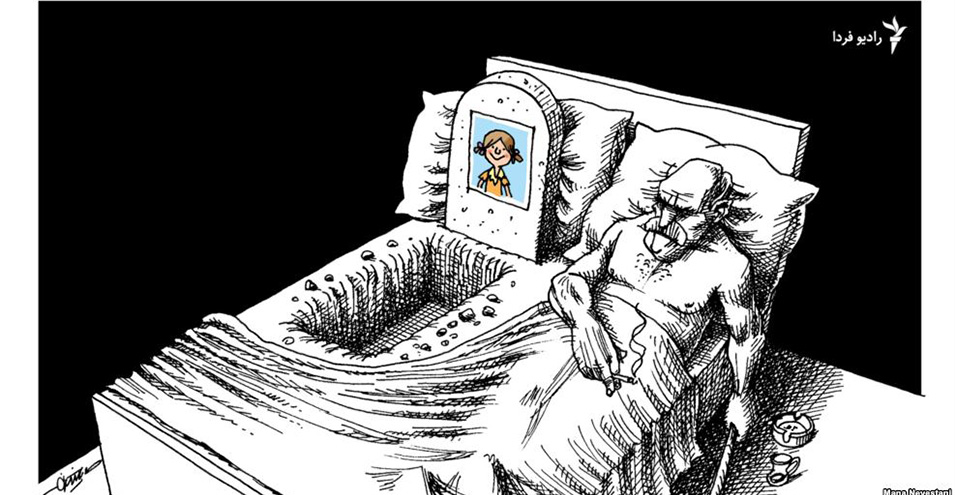
This is the first time in more than three decades since the mass execution of political prisoners in summer 1988 in Iranian prisons that one of the accused in this case has been tried and convicted in court.
Ayatollah Ruhollah Khomeini, the founder of the Islamic Republic, in summer 1988 appointed a four-member committee, the “Death Commission,” to review the cases of thousands of political and ideological prisoners who were serving their sentences in prisons.
Hosein-Ali Nairi, Morteza Eshraqi, Ebrahim Raisi, and Mostafa Pour-Mohammadi were the four judges and main figures of this “Death Commission.”
According to Amnesty International’s report, in summer 1988, at least 4,482 male and female political prisoners were executed within a two-month period.
In that same year, Hossein-Ali Montazeri, then deputy leader of the Islamic Republic, in a meeting with the “Death Commission,” called their actions “the greatest crime in the history of the Islamic Republic” and referred to these individuals as “criminals.”
Ebrahim Raisi, whose role in these executions became a subject of discussion, particularly during the two previous presidential elections in Iran, has defended these executions.
Mr. Raisi, after winning the presidential election, defended his role in the Death Commission with “pride” at his first press conference as president-elect and said: “If a prosecutor defends the rights of the people and the security of society, he should be appreciated and encouraged.”
Continued Reactions to the Hamid Nouri Court Ruling
In this regard, more than 208 civil and political activists announced in a statement that the Stockholm court’s ruling in the conviction of Hamid Nouri “is a historic victory and a new beginning for the justice-seeking movement.”
The statement reads: “We hope that the end of this trial will be an auspicious beginning for deepening and expanding the lessons that this historic experience has brought to the justice-seeking movement and human rights struggles.”
Towhidi Neero, Royin Jazani, Taghi Rahmani, Shahla Sherkat, Shirin Ebadi, Masih Alinejad, Mehr Angiz Kar, Nasser Kakhsaz, Hedayatollah Matin-Daftari, and Azar Nafisi are among the signatories of this statement.
Source: Radio Farda