Why the Hamid Nouri Case and the Stockholm Court Verdict is a Historic Turning Point for Iranian Justice Seekers?
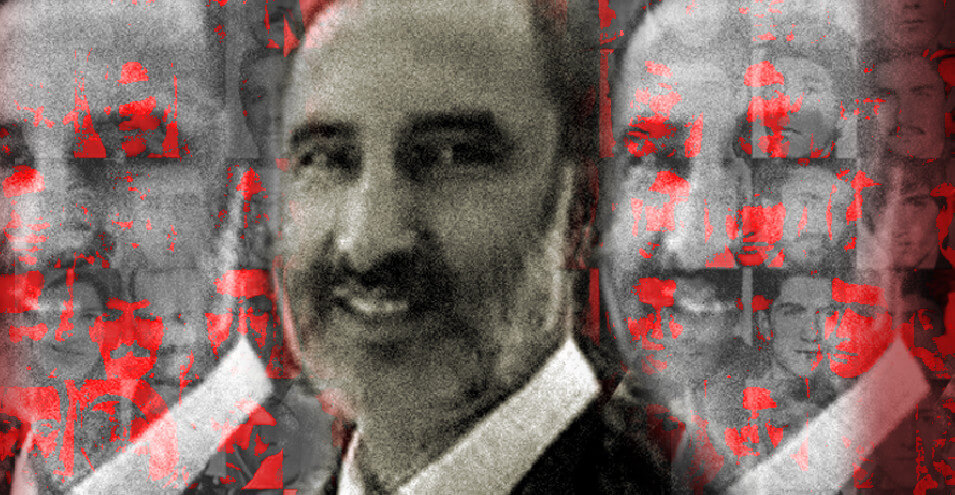
After holding 92 court sessions to review the case of Hamid Nouri, a former judicial official and defendant in the massacre of political prisoners in the 1980s, the Stockholm court issued a life sentence for Hamid Nouri.
Why is holding this court important for the justice-seeking movement in Iran? What lessons did the events of this trial offer to Iranian justice seekers and public opinion? What points does the comparison between the process of holding this court and Sweden’s judicial mechanisms based on international law highlight when compared with the Islamic Republic of Iran’s judiciary? It appears that the process of Hamid Nouri’s trial and the resistance and persistence of families who lost their loved ones more than thirty years ago created a solid and precise image of the concept of justice-seeking in the eyes of public opinion in Iran that will undoubtedly have an important impact on the future of Iran’s justice-seeking movement.
The Path of Fair Trial Until the Verdict is Issued
When we talk about “fair trial” in a judicial system, we are actually discussing a connected and systematic chain in all structural and legal components that ultimately results in a verdict that is referred to as a “fair” or “defensible” judgment.
The path taken in Hamid Nouri’s case and ultimately the issuance of a life sentence is a precise example of this connected and systematic judicial chain that implemented fair trial procedures under the rule of law and international judicial standards and, of course, a democratic political structure that guarantees the rule of law.
This lawful chain, or as it can be described, the chain that strengthens the rule of law, is obtained through a process in which laws consistent with international standards and human rights are established, and as a result, filing a case in such a judicial system is done in accordance with international legal standards, and consequently the trial process begins and in fact reaches the next link in the chain, namely holding the court, which ultimately issues the verdict. According to the rules of universal jurisdiction competence in Sweden, the prosecutor, the plaintiff, or the convicted person can appeal the court’s verdict and request a retrial. A path that is in fact the product of the continuity of the rule of law chain.
What took place during more than 90 sessions of Hamid Nouri’s court hearing was a clear picture of the process of fair adjudication of a human rights case. Specifically, in this case, among the prominent examples in the process of fair judicial proceedings, the following can be mentioned:
- Holding 92 open court sessions (approximately one year)
- The defendant’s (Hamid Nouri) constant access to two lawyers
- The defendant’s (Hamid Nouri) access to mass media and tablet
- The possibility of full and continuous defense by the defendant (Hamid Nouri) and his lawyers in court during various sessions
Besides all these matters, the appropriate atmosphere of court sessions, precise planning and advance announcement, and strict adherence to the procedures of conducting sessions should also be mentioned. Maintaining continuity and precise advancement of the trial process with this number of sessions and a large number of plaintiffs and witnesses is another dimension of fair trial procedure. A matter that even affected the defendant’s own defenses and the way he positioned himself against the judge or the tone of conversation with interpreters. Although Hamid Nouri attempted in some instances to ridicule the court with a specific tone, in many moments, the defendant’s admission to the fair conduct of the trial process could be openly observed between the lines of his statements.
From “Five-Minute Courts” with Pre-written Verdicts to 92 Court Sessions
Death sentences (judicial murders) of many political prisoners of the 1980s were issued in courts that took no more than ten minutes to conduct, and executions were carried out shortly after the verdicts were issued. Judicial murders that took place under the direct supervision of the “death committee” and with the cooperation of officials and agents such as Hamid Nouri. More than three decades after those years, the trial process and conducting courts related to political and civil activists and so-called “security” cases by authorities still follow the same pattern as those times. Although the judicial system of the Islamic Republic in Iran has tried to present a different appearance, the reality in dealing with political opponents and civil activists protesting against the regime has rendered the fabricated appearance of the judicial apparatus ineffective.
The holding of Hamid Nouri’s trial and the reflection of its various dimensions among public opinion and political and civil activists caused the comparison between conditions governing the judicial system and international legal jurisdiction in Sweden and the Islamic Republic of Iran to become a matter for reflection. Observing that Hamid Nouri, a former official of the Islamic Republic of Iran’s judiciary and convicted of participating in the murder of thousands of prisoners, can benefit from authorities and facilities, not even one of which is available to detainees in cases of political and ideological defendants in Iran, more than anything else reveals the intensity of discrimination in the courts of the Islamic Republic.
What we witness in the treatment of most political and civil activists and ideological prisoners during the judicial review of their cases is precisely the deprivation of the same matters that are denied to prisoners as an obvious right contrary to international and legal standards in the Islamic Republic of Iran; from the prohibition of using the right to have a chosen lawyer and the unavailability of the possibility of defense in court to the non-public nature of courts and lack of access to the simplest means and facilities of mass communication.
After the first sessions of Hamid Nouri’s court in Stockholm, Sweden began, Saeed Dehqan, lawyer for the Afkari family, compared the process of conducting Nouri’s trial in the judicial system of the Islamic Republic of Iran and Hamid Nouri’s court in a tweet and wrote: “In Sweden’s monarchical system, Nouri’s court schedule includes 72 open sessions over 9 months with 3 lawyers and a punishment other than execution, but in Iran’s Islamic system, Navid Afkari’s court was a 3-hour non-public single session without a chosen lawyer, investigation, and permission to defend.”
Even if we do not want to compare the process of reviewing Hamid Nouri’s case with the process of holding courts for political and civil activists and, for example, focus on the trial of a group of victims of the Ukrainian plane downing by the IRGC, we still see that during that court, the simplest legal standards and procedures are not observed. A court in which plaintiffs were not even allowed to see the faces of the defendants and were prevented from attending the court session.
Hamid Nouri’s Trial; A Historic Turning Point for Iranian Justice Seekers
As many justice seekers and observers believe, regardless of the outcome of the trial in issuing a life sentence for Hamid Nouri, the holding of this trial itself was the greatest achievement for the justice-seeking movement in Iran that in the past forty years, despite all the bitterness and hardships and government pressures that still continue, managed to make the voice of their demands for justice heard by the world and kept the concept of seeking justice alive in the public consciousness.
What caused the holding of 92 court sessions and ultimately the issuance of a life sentence was, more than anything else, the documentation and recording of events by families of justice seekers and activists who throughout all these years, without losing hope, did not stop documenting reality and believed in the light of truth. Recording and documenting those bitter realities in times when the means for this purpose (documentation of discrimination) were much less available than in the present day, makes the importance and firm belief of these justice seekers even more meaningful; a matter that gives credibility to the deep concept of justice-seeking in connection with the past and looking toward the future.
Although the despotic rule of the Islamic Republic of Iran has always sought to destroy the protest and demand movements of society with security tricks, scenario creation, and narratives based on lies, it can never use this trick to trivialize and destroy the narrative and resistance of justice seekers, because the narrative of justice-seeking is based on documentation of reality and affirms absolute transparency and the implementation of justice according to international and human rights standards and under the rule of law.
nd the justice-seeking movement in Iran has significant impact as well.
Source: Iran Human Rights Campaign