Notable land subsidence in western Tehran; ‘Silent time bomb’ threatens the capital
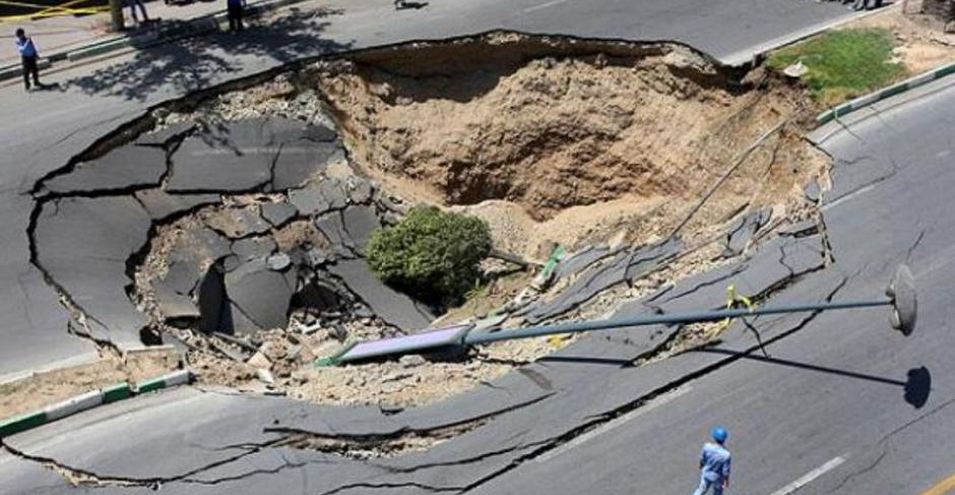
Land subsidence in Iran has become one of the major environmental problems in recent years. However, this issue has accelerated significantly in the Iranian capital, and many experts refer to it as a silent bomb.
According to a report by Shargh newspaper citing the head of the Geological Survey Organization, currently 609 plains across the country are grappling with land subsidence, with more than 400 plains in critical subsidence zones.
Now, the head of the Urban Development Committee of Tehran City Council has once again reported on land subsidence penetrating Tehran, saying that the Varamin plain from the Karaj side and from the south and southwest are dealing with this issue; a matter that has been warned about for years but has intensified in recent months and become the focus of media attention.
The head of the Urban Development Committee of Tehran City Council says that in Hasanabad, in Maskan Mehr housing, cracks have been observed in walls and on the ground.
He also added that there has been no clear mandate for organizations and institutions involved with this issue.
Some members of Tehran City Council say that southwestern Tehran experiences 30 millimeters of subsidence monthly.
The head of the Safety Committee of Tehran’s Islamic City Council said that the only place where “notable” subsidence has been observed is the southwestern border area of Tehran.
He attributed this subsidence to “excessive water extraction” for agricultural purposes.
According to Shargh newspaper, there are 50,000 licensed wells and 40,000 unlicensed wells in Tehran that extract groundwater and cause the groundwater table levels to drop.
Some time ago, Mehdi Zare, a geology professor at Tehran universities, described land subsidence as “the silent time bomb of Tehran Province” in interviews with domestic media.
Experts believe that the continuation of excessive extraction from groundwater will lead to further reduction in aquifer levels across the country and, as a result, will transform the land subsidence hazard into a crisis in various regions of Iran, particularly in central provinces.
However, this problem is not limited to the capital. In September, a video from southern Isfahan was circulated on social media showing deep holes near the Isfahan-Shiraz railway.
Some time ago, the governor of Isfahan announced the evacuation of one hundred schools in the province due to land subsidence. In recent years, with the intensification of water scarcity consequences in the country, objections to “incorrect water policies” and “mismanagement of water resources” have increased in many cities, which has constantly been met with suppression and detention of some protesters and critics by the Islamic Republic’s security agencies.
Although experts have warned about the destructive effects of land subsidence for a long time, evidence indicates the lack of fundamental and urgent will to solve this problem.
Environmental crises in recent decades in Iran have shown increasing growth, to the point that Ahed Vazife, head of the National Drought and Crisis Management Center of Iran’s Meteorological Organization, on the twenty-first of Farvardin, when comparing “rainfall statistics of the past 50 years of the country,” told the Tehran edition of “Hamshahri” newspaper that “Iran has become warmer” and reported “the beginning of migration” of residents of southern, southeastern, and central Iranian desert areas due to “climate change.”
Attempts to point beyond Iran’s borders occur as, according to experts, water bankruptcy in Iran, which began as a result of mismanagement by Islamic Republic authorities in past decades, continues. This phenomenon in recent years has also been accompanied by climate change and widespread drought.
Source: Voice of America