Shahram Gilabadi, Deputy Mayor in Tehran Municipality, Accused of Sexual Assault Against Multiple Women
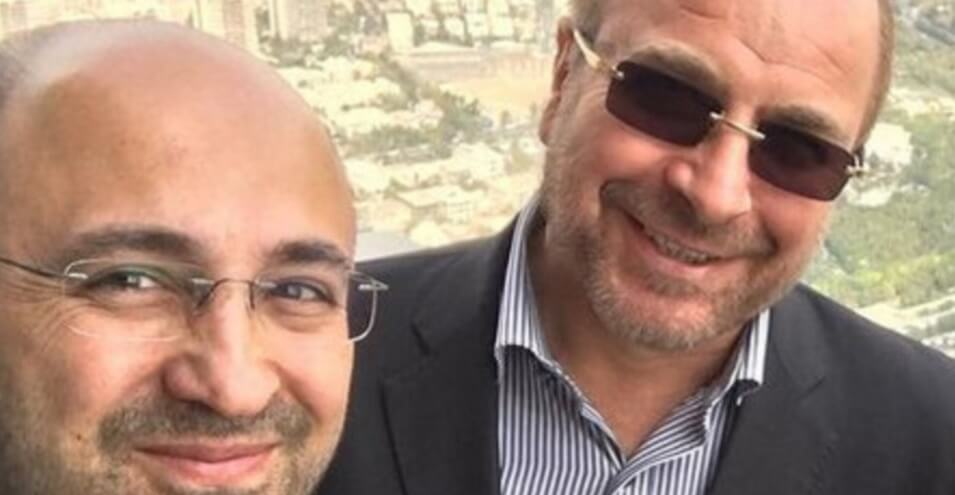
Accounts of abuse of “job position,” “harassment,” and “sexual assault” by Shahram Gilabadi, deputy to Mohammad Baqer Qalibaf in Tehran Municipality and one of senior managers of Islamic Republic of Iran Broadcasting, have been published on social media networks.
The “Me Too” movement account in Iran on Twitter has published accounts by sexual harassment victims of Mr. Gilabadi’s conduct, made when he was the head of the municipality communications center, i.e., Qalibaf’s deputy. Gilabadi has not yet responded to these allegations.
These are the first accounts of sexual harassment by a senior government manager that have been shared by this movement on social media networks.
One of the victims, who was working as a journalist in the social group of a media outlet at the time of the harassment, wrote that Shahram Gilabadi was managing the “night patrol” project at the municipality at that time and “every time he would take a group with him at night to see the strange corners of Tehran.”
According to this account, this senior municipality manager, under the pretext of showing “cardboard shelters, warm houses, and hideouts” to this female journalist who had appropriate knowledge in this field, establishes contact with her and, under the pretext of showing “somewhere you’ve never seen,” takes her to his office.
This journalist writes: “A day or two before Arbaeen, he called and said come. I said: I can’t right now. He had said before to tell him in advance. He said I’m leaving for Karbala tomorrow morning and I’m not used to leaving files open. When I go to Karbala, that’s why we have to go tonight. Where should I come pick you up? I felt a bit at ease from the spiritual atmosphere he gave.”
Continuing her account, this journalist writes that although Shahram Gilabadi “assaulted” her several times in his office that night, “he would occasionally send me messages or if we saw each other somewhere, he would behave in such a natural way as if nothing had happened.”
Another narrator also wrote that Gilabadi “assaulted” her in the same “night patrol” project, and the process of gaining her trust was accomplished through abuse of his job position. In addition, Shahram Gilabadi had an appearance of being “justified and devout,” with “his office full of religious elements.”
This harassment victim also, through phone calls and Gilabadi’s insistence, goes to his office, which was “part of a large government building” and “always had a guard and always had several people there,” and is harassed in a room where this Islamic Republic manager’s bed was located and “a prayer rug was spread there.”
To this frightened woman who was pleading with him to let her leave, he said: “See the prayer rug is spread there, I don’t do unlawful things, I know what is lawful and unlawful. Now we’ll do a temporary marriage and then you’ll leave,” and he began reciting something in Arabic, repeatedly asking: “Do you accept? Do you accept?”
When the woman, wanting to leave, says “yes,” Gilabadi interpreted this answer as the woman’s consent to the question “Do you accept?” and assaulted her.
She also added that “after that incident, he would sometimes send me messages and because of my job, I would see him at some events. But from a certain point on, I couldn’t anymore. I refused anything that had a trace of Shahram Gilabadi in it so I wouldn’t encounter him.”
Simultaneously, the fact that the sexual assault victim had to find “her headscarf” after the harassment by Shahram Gilabadi in order to escape the building has angered users of cyberspace.
From Shahram Gilabadi’s management background, one can mention: deputy of communications and research at the Secretariat of the Expediency Discernment Council, management of Tehran radio networks, Javan, Theater and Radio Performing Arts Center, deputy of communications and research, director general of foreign representatives of Islamic Republic of Iran Broadcasting, head of the communications and international affairs center of Tehran Municipality, member of the board of directors of the Cultural and Artistic Organization of Tehran Municipality, and member of the board of directors of Hamshahri Institute and secretary of the first and second Ashura Photo Competition for Students Across the Country.
In 2011, he was also introduced as a researcher and exemplary professor of Islamic Republic of Iran Broadcasting and has taught at institutions such as the Institute for Intellectual Development of Children and Adolescents, Surah University, Faculty of Fine Arts, Islamic Republic of Iran Broadcasting Faculty, and other educational institutions in Lorestan and Tehran.
Following the formation of the “Me Too” movement in Iran from summer 2020, following which Iranian victims shared their experiences of sexual harassment on social media, especially Twitter, familiar names from among men in the fields of cinema, television, music, and painting have been targeted with accusations.
Source: Radio Farda