Senate Votes to Extend “Terrorism-Related Sanctions” Against Iran
The U.S. Senate voted on a measure to extend “sanctions related to terrorist activities of the Islamic Republic.” The U.S. State Department also said the country is prepared for the scenario of failed Vienna negotiations.
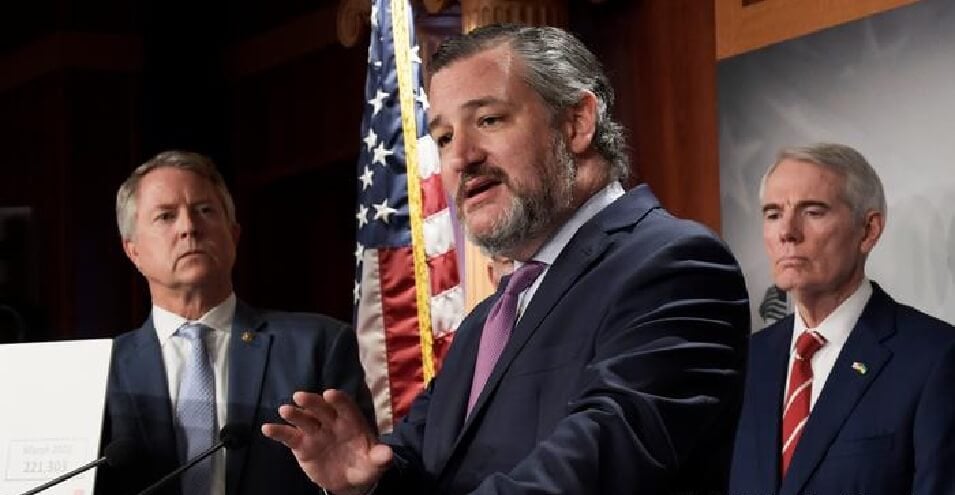
The U.S. Senate voted on Wednesday, April 4, on a bill aimed at maintaining and continuing sanctions “related to terrorist activities of the Islamic Republic.”
The bill was introduced by Ted Cruz, a Republican senator from Texas, and 86 of the Senate’s 100 senators from both the Democratic and Republican parties voted in favor of it. 12 senators voted against it.
The approved bill, in addition to maintaining and strengthening Iran sanctions in connection with “this country’s terrorist activities,” also addresses creating restrictions on military-economic cooperation between China and Iran.
The bill describes sanctions related to terrorism against Iran’s Central Bank and the Islamic Revolutionary Guard Corps (IRGC) as “necessary” to limit Iran-China cooperation.
Cruz, during his speech on the passage of this bill, described Iran and China as America’s most dangerous enemies and said, “The Islamic Republic, by supporting major terrorist groups, is the world’s primary supporter of terrorism.”
Reuters reported on the approved bill that while it currently has no mandatory enforcement, if it becomes law, continuing international cooperation with Iran within the framework of JCPOA negotiations would become even more complicated and difficult, although currently many of Washington’s European allies do not have much hope for JCPOA revival.
Ned Price, spokesman for the U.S. State Department, also announced on Wednesday that the United States is prepared for a situation in which no agreement is reached in Vienna negotiations on the JCPOA.
During a press conference, stating that America seeks to negotiate Iran’s return to full compliance with the JCPOA, he said: “We remain in contact with our European allies and support the constructive role of Enrique Mora (the European Union’s chief negotiator in Vienna talks) in conveying messages between the United States and Iran.”
Price, emphasizing that the Vienna negotiations process has taken longer than the U.S. expected, continued to describe a return to the JCPOA as in line with “the national security interests of the United States.”
He clarified in this regard: “Since the previous U.S. administration withdrew from the JCPOA in 2018, Iran’s nuclear program has advanced in a way that is unacceptable to us, and as a result, Iran’s nuclear breakout time has been reduced from approximately one year to several weeks.”
“America’s Preparedness for Various Scenarios”
The U.S. State Department spokesman viewed mutual return to JCPOA commitments as a means by which Iran’s nuclear breakout time would be meaningfully extended.
Continuing by stating that his country is prepared for both scenarios of agreement or disagreement with Iran, he emphasized the importance of contacts and dialogue with the United States’ allies and partners, including Israel, and announced that other tactics for dealing with various situations resulting from Vienna negotiations are under consideration.
The eighth round of negotiations related to reviving the JCPOA, which began on December 27, 2021, entered a cooling-off period on March 11, 2022 at the suggestion of Enrique Mora, the European Union’s senior negotiator and coordinator of Vienna talks, and negotiators returned to their capitals for political consultations.
Western diplomats say European officials intend to attempt to break the current impasse in negotiations by sending Mora back to Tehran.
The U.S. attributes the impasse in negotiations to Iran’s submission of proposals and demands beyond the JCPOA framework, including removing the IRGC from the terrorist list. According to U.S. officials, if Iran seeks sanctions relief beyond the JCPOA, it must also address U.S. concerns that go beyond the JCPOA.
However, Hussein Amirabdollahian, Foreign Minister of the Islamic Republic, said in his latest interview: “Vienna negotiations have not stopped; rather, they continue in a different process to lift sanctions and through the exchange of written messages with the American side through the European Union representative.”
Source: DW