UN: 20 Million People in Horn of Africa Face Famine Due to Drought
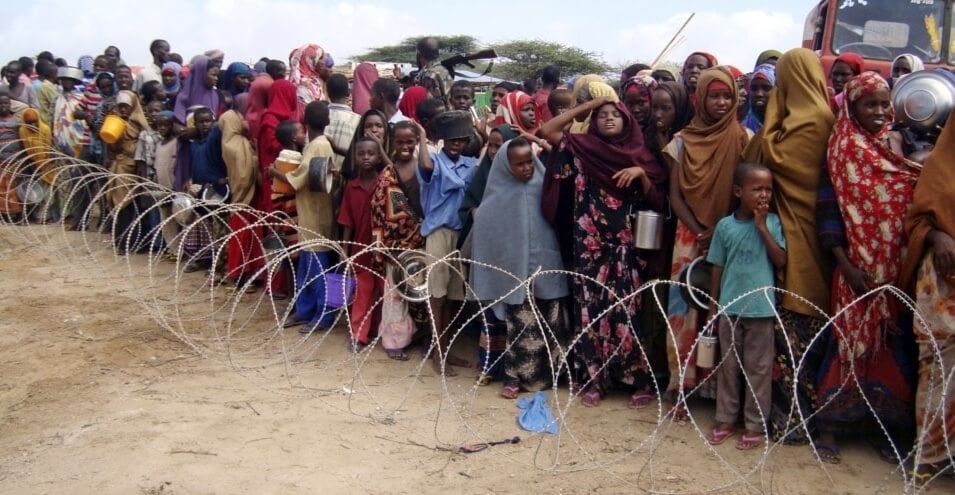
The United Nations warned on Tuesday, April 19, that due to delayed rainfall exacerbating drought in Kenya, Somalia, and Ethiopia, 20 million people are at risk of famine and hunger.
A months-long drought in the Horn of Africa has destroyed large portions of agricultural farms and livestock, forcing millions of people to abandon their homes in search of water and food.
The World Food Programme stated on Tuesday: “Due to a one-month delay in rainfall, the population exposed to drought throughout 2022 will increase from the current figure of approximately 14 million people to around 20 million people.”
The organization added in another section of its statement: “If current conditions continue, approximately six million or 40 percent of Somalia’s population will face severe food shortages, and the risk of famine becomes a serious threat.”
In Kenya, approximately half a million people are on the brink of hunger crisis, and residents of the northern part of the country who depend on livestock raising for food are at highest risk.
According to the World Food Programme, the population needing food assistance in Kenya has quadrupled over a two-year period.
Malnutrition rates in southern and southeastern Ethiopia, severely affected by drought, have exceeded the critical threshold, and in the northern regions of the country, food production and distribution have been disrupted due to the war between government forces and Tigrayan rebels that began 17 months ago.
The United Nations Food and Agriculture Organization states that parts of the Horn of Africa have faced food crises for years due to local wars, poverty, and locust invasions. The organization’s representative to African Union countries said: “Action must be taken now to prevent a humanitarian crisis.”
The World Food Programme says sharp increases in fuel and food prices and disruptions in international cargo transportation caused by the war in Ukraine have intensified the hunger crisis in the Horn of Africa.
The organization warned that lack of budget will lead to disaster and requested $473 million in financial assistance to continue humanitarian aid in the region over the next six months.
The organization states that following its previous financial assistance request in February this year, it has received only four percent of the required budget.
Meanwhile, the United Nations Food and Agriculture Organization says it has a 60 percent budget shortfall for providing food to 1.5 million people in three Horn of Africa countries.
The organization’s East Africa director said: “Previous experience has shown that swift action to prevent humanitarian disasters is very important, but due to lack of financial resources, we have been unable to take necessary measures so far.”
Eastern Africa experienced drought in 2017 as well, but humanitarian efforts by international organizations prevented famine in Somalia.
However, in a similar drought that occurred in the country in 2011, due to lack of foreign aid, at least 260,000 people, half of them children under six years old, died from hunger and hunger-related diseases.
UN experts and scientific institutions say that due to climate change on Earth, the frequency and severity of destructive weather phenomena such as droughts and floods have increased.
Source: Radio Farda