Hamid Nouri’s Trial Reaches 80th Session; A Witness Recounts Several Encounters with Hamid Nouri in the 1980s
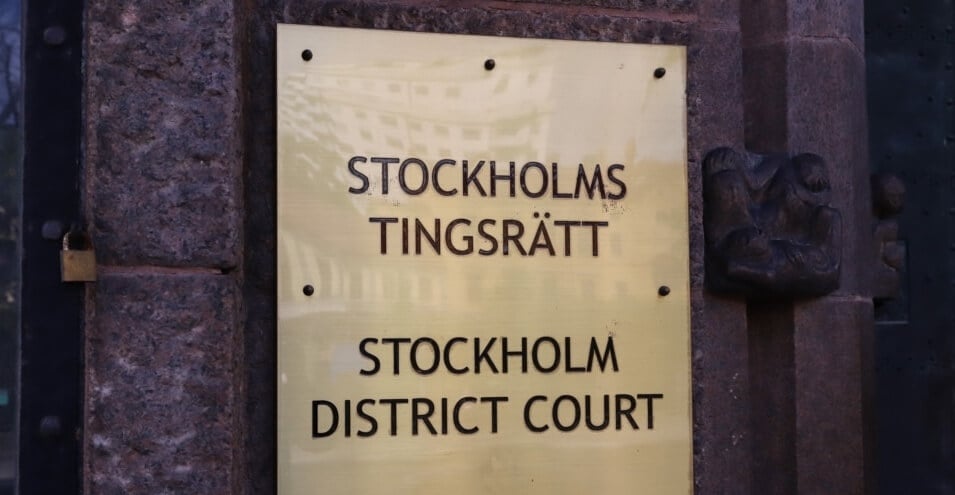
The eightieth session of the trial of Hamid Nouri, accused of participating in the execution of political prisoners in the summer of 1988 at Gohardasht Prison, was held on Thursday, April 1, 2022, with the testimony of Alireza Akbari Sepher at Stockholm court in Sweden. The witness participated in the court session via video from Australia.
Alireza Akbari Sepher was a supporter of the “Organization for the Liberation of the Working Class” at the time of his arrest; an organization that, according to the witness, had dissolved several months before his arrest. The witness was detained in the autumn of 1982 while leaving the country along with his pregnant wife at Zahedan Airport and was transferred to Zahedan Committee. Five to six hours later, they were transferred to Tehran and finally to Evin Prison. The witness’s wife gave birth on December 25 in prison and was transferred from solitary confinement to the general ward with her newborn son.
Three Encounters with Hamid Abbasi (Nouri)
Alireza Akbari Sepher had directly encountered and spoken with Hamid Nouri, the defendant in this court, a total of three times in Evin Prison. The first time was approximately two months after his wife gave birth, in interrogation ward 209 of Evin Prison, when Nouri introduced himself directly as “Hamid Abbasi, Prison Official” and informed him of the issuance of permission to visit his wife and newborn. After a ten-minute visit with his family, the witness again confronted the official Abbasi—this time without a blindfold—and made a request of him. The witness told Abbasi that he had 104 or 108 thousand tomans with him at the time of arrest and now wanted to give it to his family.
Alireza Akbari Sepher, approximately one month later, returned to the prison office to answer several questions about the aforementioned cash, including its source and transfer process, and for the second time stood before “Official Abbasi” without a blindfold.
Five to six months later, Alireza Akbari Sepher again personally and without a blindfold confronted the court defendant in the office of Evin Prison. The witness had been asked to sign documents related to permission for his newborn to leave Evin Prison.
The trial of Alireza Akbari Sepher was held four or five months after his arrest in Evin Prison, but no verdict was delivered to him. He was transferred from Evin Prison to Qazalhassar Prison in mid-summer 1983 and finally received his verdict formally after fourteen months of detention. According to the official who delivered the verdict, this sentence had been reduced from “execution” to “twelve years imprisonment” in an “in absentia trial.” The witness’s charge was listed as supporting the Peykar organization and waging war against the Islamic Republic.
Alireza Akbari Sepher was transferred from Qazalhassar Prison back to Evin Prison in late 1984 or early 1985. He never again encountered “Official Abbasi” in Evin Prison. The witness was ultimately transferred to Gohardasht Prison in early 1987 due to a group hunger strike. This group of prisoners transferred from Evin to Gohardasht Prison became known as the “Evin prisoners.”
The Death Tunnel Story
Alireza Akbari Sepher testified that he experienced a tunnel known as the “death tunnel” in the prison; a tunnel formed by Revolutionary Guards on both sides where prisoners were severely beaten. He testified that on the day of his entry into Gohardasht Prison, he went through this tunnel and later, along with several Mujahideen, nationalist, and sentenced prisoners, entered a ward. The Guards ordered them to undress while blindfolded and then attacked them with cables, hoses, and other implements.
Alireza Akbari Sepher testified that before the executions began, he heard the broadcast of Friday prayer sermons led by Hashemi Rafsanjani and chants of “the hypocrite prisoner must be executed” from the Gohardasht Prison loudspeaker along with his cellmates. He said that the same day, the Guards took the television out of the ward, allegedly because it was broken. Radio broadcasts and newspapers were also cut off, and prison visits were suspended. News of apparently group transfers of prisoners to inside Gohardasht Prison and the presence of the death committee including Niri, Eshragi, and Nasarian was mostly spread through morse code among the prisoners.
Alireza Akbari Sepher encountered and spoke with “Official Abbasi” this time in Gohardasht Prison in the corridor of death and later as well. The witness, during the executions, was in the presence of Lashkari and Hamid Nouri (Abbasi) and answered negatively to questions about performing prayers and interviews, but claimed to accept “resurrection and prophethood.” Two days later, after becoming completely certain of the executions, the witness agreed to perform prayers and conduct interviews. He was later transferred to Evin Prison and released in March 1989.
Alireza Akbari Sepher also confirmed the defendant’s identity based on the prosecutor’s request and with a direct look at him as one hundred percent accurate. The witness said that immediately after reading the news of the defendant’s arrest and seeing his photo, past memories repeated in his mind. He testified that Hamid Nouri, the court’s defendant, was definitely the same Hamid Abbasi with the same composition, only slightly older.
During his testimony, Alireza Akbari Sepher several times requested time to explain the motivation for his participation and testimony in Hamid Nouri’s trial. Thomas Sander, the court judge, in response to the witness’s requests, while emphasizing that he was obligated to appear as a witness in court, postponed this opportunity to the next session.
Hamid Nouri, the defendant, also objected during part of the court session to the noise around him, which apparently came from outside. The court judge announced that he was aware of this issue and had personally requested its investigation. Hamid Nouri asked the judge to switch places with the prosecutors. The judge responded by ordering the defendant to be silent.
The continuation of Alireza Akbari Sepher’s testimony was postponed to Friday, April 2, 2022.
Source: Voice of America