Ben’t’s Speech at Mossad: As Decision Time on JCPOA Approaches, You Have Much Work Ahead
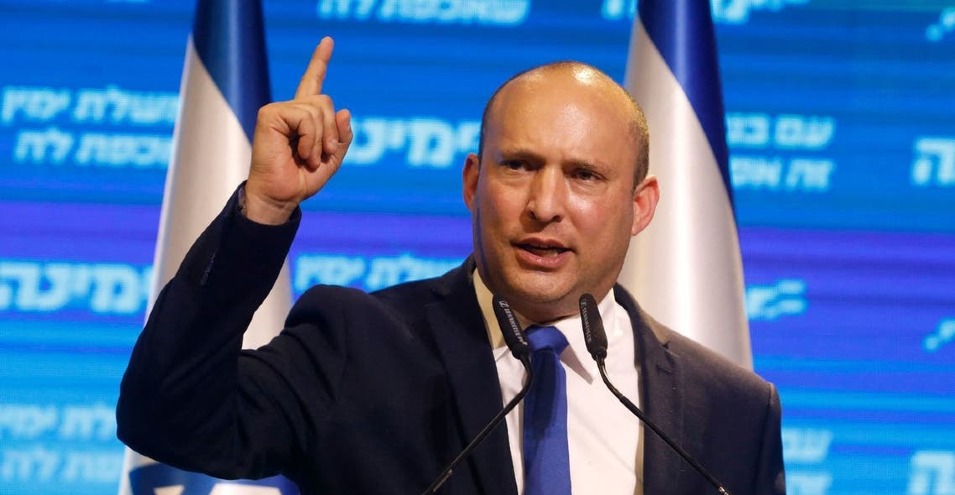
Naftali Bennett, Prime Minister of Israel, said on Tuesday, March 1st, in remarks to members of Mossad, Israel’s intelligence agency, that as the time approaches for a decision regarding an agreement between world powers and Iran, this organization has “much work” to do.
Mr. Bennett, who went to Mossad headquarters in Tel Aviv, referring to ongoing negotiations between Iran and the remaining parties to the JCPOA to revive the nuclear agreement, told David Barnea, head of Mossad, and other members of the organization that from what Israel is currently aware regarding the Vienna negotiations, it appears that many tasks will fall on the shoulders of your organization.
He provided no further explanation. Over the past more than a decade, numerous sabotage operations, including several explosions at Iran’s nuclear sites or the assassination of figures and officials in Iran’s atomic program, have been attributed to Israel.
Yossi Cohen, former head of Mossad, has alluded to Mossad’s role in the killing of Mohsen Fakhrizadeh, former deputy defense minister and “father of Iran’s nuclear program,” in an assassination in December 2020 in the suburbs of Tehran.
According to Israeli media reports, Naftali Bennett went to Mossad headquarters on Tuesday for a ceremony to honor those who invented new equipment to assist Mossad’s work. No further details about these equipment were provided.
Mr. Bennett told Mossad personnel: “The task that rests on your shoulders is serious: preventing Iran from becoming nuclear.”
However, he added that Mossad “has been involved for many years” in carrying out this mission, but now “it appears that we have approached a critical moment.”
Israel’s Prime Minister said that based on the “sunset clause” in the agreement being negotiated in Vienna, Iran will be able to install and operate advanced centrifuges again after two and a half years.
According to Mr. Bennett, the “sunset clause” is meaningless for Israel, because “the sun will never set for Israel’s security and the security of its people.”
He said that “I am not an interpreter and I do not know how the Vienna negotiations will end,” but I have said in the past that Israel “is not committed to any agreement” and its hands will not be tied by any agreement.
According to Y-Net website, while the world’s attention is focused on Russia’s all-out assault on Ukraine, away from the world’s eyes, the JCPOA, which Israel firmly opposes, is being revived.
Naftali Bennett, however, said that “one eye of his country is fixed on Kyiv and with the other eye, and with anxiety, we are watching a point west of Kyiv, which is Vienna.”
Mr. Bennett, with an implicit criticism of Benjamin Netanyahu, Israel’s former Prime Minister, also said that one should ask why, despite having all resources and capabilities in Israel, Iran has been able to make so much progress in its atomic program, and now “it is time for Mossad and the army to try to change these circumstances.”
Meir Ben-Shabbat, former Israeli National Security Advisor, said on February 28th that the West is reaching a half-baked agreement with Iran so it can quickly focus on the Ukraine crisis.
As Vienna negotiations approach a critical stage, the Iranian News Agency (IRNA) reported on March 1st from Vienna that “the possibility of an agreement equals the possibility of no agreement. Because some of Iran’s minimum demands still remain that relate to practical benefits from the agreement, and if they are not met, there will be no agreement.”
According to IRNA, several limited remaining issues are “important enough that their resolution could determine the fate of the agreement.”
Source: Radio Farda