Russia Recognizes Independence of Ukraine’s Separatist Regions; Tanks Enter Donetsk
Vladimir Putin signed an order on Monday evening, March 2, recognizing the independence of two separatist regions of Luhansk and Donetsk, which are under the control of insurgents in eastern Ukraine.
The Russian president also signed a “friendship and cooperation” agreement with separatists in eastern Ukraine.
Putin said NATO has completely ignored Russia’s security demands and accused the West of seeking to disregard Russia’s security concerns.
He claimed that he is forced to make a decision that should have been made long ago: the immediate recognition of independence and sovereignty of the “People’s Republics” of Donetsk and Luhansk.
Official Russian television simultaneously released images of the leader of Ukraine’s separatists attending Vladimir Putin’s speech venue.
The Russian president also ordered the country’s Defense Ministry to send forces he claimed were “peacekeepers” to the Russian separatist regions.
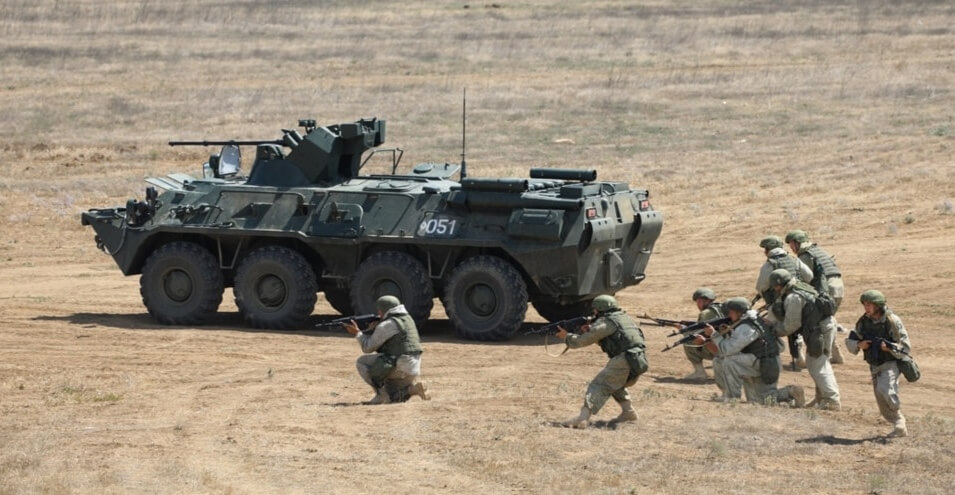
Hours later, Reuters reported, citing eyewitnesses, that columns of military vehicles, including tanks, entered the city of Donetsk.
The report stated that five tanks were seen on the outskirts of the city and two tanks were also spotted inside Donetsk.
The Russian president had previously held a meeting of the Presidential Security Council to discuss recognizing the independence of these regions.
This action occurs as Western countries believe Russia may use escalation of military clashes in these areas as a pretext for attacking Ukrainian territory.
At the Presidential Security Council meeting, it was stated that it is now time for Russia to recognize the independence of Donetsk and Luhansk regions.
After the 90-minute meeting, which was broadcast on the country’s state television, Vladimir Putin said: “I have heard your opinions. Today a decision will be made on this matter.” He ultimately signed the decree recognizing the independence of these regions.
Mr. Putin had previously informed the leaders of Germany and France of such an intention.
Europe and America Condemn; Sanctions on the Way
Russia’s action in recognizing Ukraine’s separatist regions faced severe condemnation from Western leaders, who emphasized they would impose sanctions against Moscow.
The White House announced that Joe Biden, the President of the United States, condemned Moscow’s action in phone calls with world leaders.
The White House statement says Biden, in a phone conversation with Volodymyr Zelensky, President of Ukraine, “strongly condemned Putin’s decision, President of Russia, to apparently recognize the ‘independence’ of the so-called Donetsk People’s Republic and Luhansk People’s Republic.”
Another White House statement also notes that Mr. Biden spoke with Emmanuel Macron, President of France, and Olaf Scholz, Chancellor of Germany, about their coordinated response to Russia’s action.
Also, Ursula von der Leyen, President of the European Commission, and Charles Michel, President of the European Council, announced in a joint statement that Russia’s action is a “blatant violation of international law.”
The statement adds that the European Union “will respond by imposing sanctions” and “reiterates its full support for Ukraine’s independence, sovereignty, and territorial integrity within its internationally recognized borders.”
Poland’s Prime Minister also called for sanctions against Russia.
Jens Stoltenberg, Secretary General of NATO, also condemned Moscow’s action and said Moscow is fueling the conflict in eastern Ukraine.
Boris Johnson, Prime Minister of Britain, called Russia’s action a “flagrant violation of Ukraine’s sovereignty and integrity” and strongly condemned it.
He said this is a clear violation of the Minsk agreement and the UN Charter, and Britain will be “alongside the Ukrainian people with a strong package of sanctions.”
Mr. Johnson added: Putin’s action could fuel a potentially devastating conflict between Russia and Ukraine.
The British government announced Monday evening that it will announce its sanctions against Russia tomorrow.
Liz Truss, British Foreign Secretary, also tweeted: We will not allow Russia’s violation of international commitments to go unpunished.
The Elysée Palace also released a statement in which Emmanuel Macron called Russia’s action a “unilateral breach of Russia’s international commitments” and an attack on Ukraine’s territorial integrity and condemned it.
The French president called for an emergency meeting of the Security Council and the implementation of “targeted European sanctions” against Russia.
The White House also announced that Joe Biden will impose new sanctions against Russia.
The Biden administration on Monday called Putin’s action of recognizing the independence of Luhansk and Donetsk regions a “blatant violation of Russia’s international commitments.”
The American president will, by signing an executive order, ban new investment, trade, and financing in the separatist regions of eastern Ukraine.
Annalena Baerbock, Germany’s Foreign Minister, also called Russia’s recognition of the independence of Ukraine’s two regions a “blatant violation of international law” and said Berlin will respond to this decision.
She stated that Germany is consulting with its partners to respond to Vladimir Putin’s decision.
Antonio Guterres, UN Secretary-General, also considered Russia’s decision a “violation” of Ukraine’s sovereignty.
Meanwhile, the Netherlands Prime Minister announced that European Union countries have agreed on imposing a limited set of sanctions against Russia.
Mark Rutte told Dutch television on Monday: “We agreed to impose a limited package of sanctions, which particularly targets those responsible for this decision.”
These sanctions are to be announced on Tuesday.
European Union Warning
Hours before Russia’s action, Olaf Scholz, Chancellor of Germany, strongly condemned Vladimir Putin’s statements about the possibility of recognizing the independence of Ukraine’s separatist regions.
The German Chancellor’s office released a statement announcing that Mr. Scholz warned the Russian leader in a phone conversation that such a decision is “a unilateral violation of the Minsk agreement” signed in 2014 to end the dispute over separatists in eastern Ukraine.
Mr. Scholz also asked Russia to withdraw its military forces from Ukraine’s borders. He said he is consulting with leaders of Ukraine and France on this matter.
On the other hand, the EU’s foreign policy chief warned that recognition of the independence of Donetsk and Luhansk would lead to sanctions against Russia.
Josep Borrell announced that we are asking Russia to comply with international law.
He said that Russia’s recognition of the independence of Ukraine’s separatist regions or the annexation of these regions to Russian territory is a valid reason for implementing part of the sanctions envisioned against the country, and the European Union will respond to Russia in a unified manner.
France’s National Security Council also held an emergency meeting on Monday regarding Russia’s plan to recognize the independence of Ukraine’s separatist regions.
The French president had previously had phone conversations with his Russian and Ukrainian counterparts.
The Russian Parliament, the Duma, on February 16 approved with a majority vote the bill to recognize the “independent republics” of Donetsk and Luhansk in Ukraine and sent it to the Kremlin for implementation.
Before the Russian president’s statements, separatist leaders in eastern Ukraine, in a televised statement, asked Mr. Putin to recognize the independence of these areas and sign military agreements with them as “a sign of friendship to defend this territory against attacks by the Ukrainian army.”
The Ukrainian government denied military attacks on these areas and, while intensifying shelling on the front line, accused Russia of provocative actions.
Putin’s Speech Against Ukraine
Before signing the decree recognizing the independence of two separatist regions in eastern Ukraine, the Russian president, in a televised speech, accused Western countries of helping the Ukrainian government carry out “criminal operations” and said Ukraine was trapped by “oligarch groups.” He claimed Ukraine has fallen into an “American colony” with a “puppet regime.”
Putin added that in recent months “a flood of Western weapons” has been sent to Ukraine. According to the Russian president, “Ukraine could threaten Russia by acquiring nuclear weapons.”
He claimed all this is a cover for the rapid deployment of NATO forces in Ukraine; “American drones are also constantly using Ukrainian territory to spy on Russia.”
Putin added: “The United States and NATO have brazenly turned Ukraine into a scene of potential military action against Russia.”
The Russian president said: “If Ukraine becomes a member of NATO, it will be a direct threat to Russia.”
In his remarks, he delved into history and said “modern Ukraine was completely built by Russia, to be precise by Russian communist Bolsheviks. This process began immediately after the 1917 revolution, and Ukraine became a Bolshevik state which even today can logically be said to have been designed by ‘Vladimir Ilyich Lenin’.”
Russia’s Initial Opposition
The Kremlin initially opposed the separatists’ request for independence of the two regions of Luhansk and Donetsk. Russia’s policy under the 2015 peace plan was to grant self-governance to areas controlled by separatists in a federal system of governance for all of Ukraine.
In recent days, as military clashes intensified on the front lines between separatists and Ukrainian government forces, the presidents of America and Russia agreed in principle to hold a summit aimed at preventing a military attack on Ukraine.
The U.S. government stated that if Russia attacks Ukraine, this summit would be canceled. Nevertheless, the possibility of a direct meeting between Joe Biden and Vladimir Putin has somewhat increased hopes for diplomatic success and preventing a devastating war and severe economic losses for Europe.
Assessments by Western governments indicate that Russia has deployed between 160,000 and 190,000 troops near Ukraine’s borders. Western leaders have warned that Vladimir Putin is now seeking a pretext for a military attack on Ukraine.
Beyond escalating clashes in eastern Ukraine, Russia announced that it had thwarted a Ukrainian forces infiltration operation. Meanwhile, Moscow announced that Russian military exercises on Belarusian territory have been extended.
Amidst growing risks of war, Emmanuel Macron, President of France, succeeded on Sunday in persuading the presidents of Russia and America to participate in a bilateral summit.
The French Presidency office announced that leaders of America and Russia agreed in principle to hold this summit, after which a broader session with all interested parties would be held to discuss European security and strategic stability.
The tone of Washington and Moscow’s approach to this proposal was cautious, but neither side denied the possibility of holding this summit.
Jake Sullivan, U.S. National Security Advisor, said Washington has always supported talks aimed at preventing war, but is also prepared to respond to any attacks.
Dmitry Peskov, spokesman for the Kremlin, also said on Monday that if possible, Russian and American leaders might meet, but it is too early to comment on planning this summit.
The French Presidency office said Russian and American foreign ministers would prepare the ground for this possible summit in their Tuesday meeting.
Despite increased diplomatic efforts, there are signs that these efforts may not prevent the start of war.
On one hand, Russia has extended the duration of its military exercises in Belarus. According to military analysts, one of the main gathering centers of Russian forces in Belarus is about 100 kilometers away from Kyiv, Ukraine’s capital.
On the other hand, mutual artillery and heavy weapons fire continues between Russian-backed separatists and Ukrainian forces in the east of the country, with each side accusing the other of ceasefire violations.
Source: Radio Farda